The revival of the MH370 search mission marks one of the most significant developments in modern aviation history. More than eleven years after Malaysia Airlines Flight MH370 vanished during its journey from Kuala Lumpur to Beijing, the Malaysian government has formally authorized a new deep-sea search led by Ocean Infinity, a marine robotics firm that has become central to past search efforts. The renewed mission picks up the threads of the unresolved mystery that has weighed heavily on aviation experts, investigators, and the families of the 239 passengers and crew.
The disappearance of the Boeing 777-200ER in March 2014 remains one of aviation’s most perplexing enigmas. Despite extensive multinational investigations, satellite analysis, drift modeling, and the recovery of a handful of confirmed aircraft fragments, the main wreckage has never been located. The absence of conclusive evidence has kept the tragedy suspended between speculation and scientific inquiry, making every new search effort a potential turning point for closure and clarity.
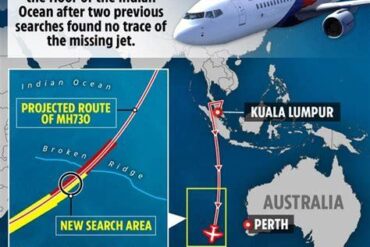
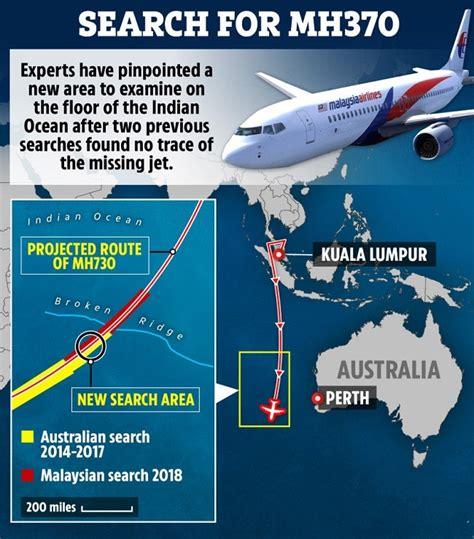
Investigators previously searched an expansive 120,000-square-kilometer area of the southern Indian Ocean from 2014 through early 2017, followed by a highly advanced but ultimately unsuccessful 2018 expedition conducted by Ocean Infinity under a “no find, no fee” agreement.

New Government Agreement Rekindles Global Attention
The Malaysian government’s announcement in late 2024 triggered worldwide attention by confirming a new agreement in principle with Ocean Infinity valued at $70 million, again structured under a performance-based arrangement ensuring payment only if substantial wreckage is discovered. This decision signaled not only political will but renewed confidence in advancements in underwater search technology and additional data believed to be credible.
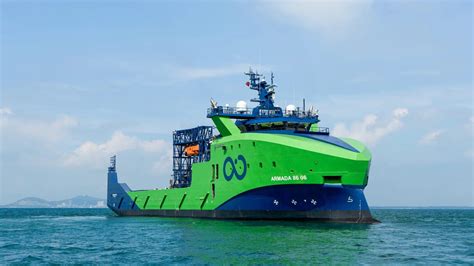
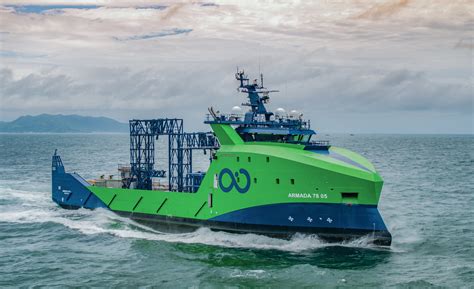
In March 2025, Ocean Infinity deployed the support vessel Armanda 7806 along with a fleet of autonomous underwater vehicles (AUVs) to a more narrowly targeted search zone approximately 1,900 kilometers southwest of Perth. This 15,000-square-kilometer area—far smaller than earlier search regions—was selected based on refined drift analysis, improved satellite data interpretation, and updated modeling of the aircraft’s presumed final trajectory. Severe weather forced the suspension of the mission in April 2025, temporarily pausing hopes of a breakthrough.
A Renewed 55-Day Mission With Improved Precision Tools
The upcoming search, scheduled to begin 30 December 2025, will span 55 operational days conducted intermittently depending on sea state and vessel positioning. Ocean Infinity emphasized that its latest-generation AUVs, enhanced sonar arrays, and high-precision mapping systems outperform the technology used in 2018, enabling more detailed imaging of deep-sea terrain and potential debris fields.
The Malaysian Ministry of Transport highlighted that the refined search zone is now considered the area with the “highest probability” of locating MH370. Although the government has not publicly disclosed the full analytical basis for this confidence, officials indicated that new supporting data—sourced through international collaboration—merited renewed investment and technical deployment.
Scientific, Technical, and Human Stakes Remain Profound
The renewed mission carries considerable scientific and emotional weight. Locating the wreckage would not only bring long-overdue closure to families, but also provide critical evidence for understanding how such a large commercial aircraft could vanish in the age of satellite navigation and digital surveillance. Without the flight recorders, aviation experts still lack definitive answers regarding the aircraft’s final moments, potential system failures, and human factors.
Past examinations of recovered debris—mainly along the coastlines of Madagascar, Réunion Island, and Mozambique—suggest the aircraft impacted the ocean with significant force, but the extent of breakup and distribution of debris remains uncertain. Ocean Infinity’s upcoming exploration aims to clarify whether the wreck lies largely intact on deep seabed plains or in more rugged underwater terrain that could complicate detection.
Ocean Infinity’s History With MH370 Searches
Ocean Infinity’s 2018 mission remains the fastest and most comprehensive deep-ocean search of its kind, covering an immense area with unprecedented speed. Although the company did not identify MH370 during that expedition, it produced high-resolution seabed data that redefined modern underwater survey standards. At the time, its CEO expressed the firm’s deep connection with the mission and its motivation to provide answers to families who had waited years without resolution.
The unchanged payment structure—still capped at $70 million—has drawn attention as one of the few major contracts not affected by post-pandemic inflation. Analysts suggest the company’s willingness to pursue the mission again without guaranteed compensation indicates strong internal confidence in both the new data and the capabilities of its improved search platforms.
Global Desire for Closure Drives Renewed Effort
The resurgence of the MH370 search represents the last major opportunity, at least in the foreseeable future, to solve the defining aviation mystery of this generation. Governments, investigators, and international aviation bodies continue to emphasize the importance of understanding the cause of MH370’s disappearance to prevent similar tragedies and strengthen global flight-tracking standards.
For families, the renewed mission carries emotional weight after years of uncertainty. Many have campaigned tirelessly for a relaunch, advocating for transparency, accountability, and an unwavering commitment to finding the truth. The hope is that Ocean Infinity’s return to the search zone—guided by new insights and equipped with more capable technologies—will produce the long-awaited breakthrough.
Outlook for the 2025 Search Window
The upcoming 55-day search beginning in late December provides the most targeted and technologically sophisticated effort yet. Whether the combination of refined data, new mapping capabilities, and renewed government backing will finally lead to the discovery of the main wreckage remains uncertain, but the determination behind the mission signals that the global aviation community is not yet ready to let the mystery of MH370 remain unsolved.
The world now waits to see whether this final push will illuminate the truth that has remained submerged for more than a decade.