More than 12 years after the disappearance of Malaysia Airlines Flight MH370, the search for one of aviation’s greatest mysteries has been granted another chance. The Malaysian government has officially extended its agreement with marine robotics specialist Ocean Infinity, allowing underwater search operations to continue until June 30, 2027. The decision reflects the country’s ongoing commitment to uncovering the fate of the missing Boeing 777, despite years of unsuccessful efforts and countless unanswered questions.
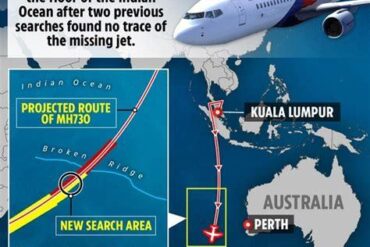
The extension was announced on June 29, confirming that Ocean Infinity will receive an additional year to complete its mission in the southern Indian Ocean. Investigators continue to believe that this remote region offers the strongest possibility of locating the aircraft’s wreckage. Although more than a decade has passed since the aircraft vanished, advances in underwater mapping technology and refined search analysis have renewed hopes that critical evidence may finally be discovered.
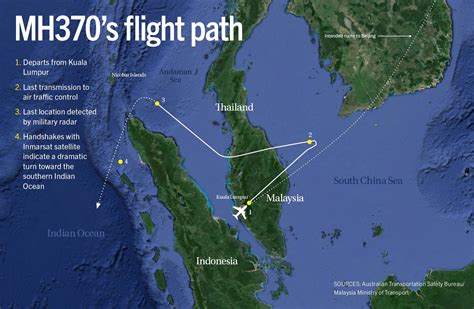
Flight MH370 disappeared on March 8, 2014, while operating a scheduled service from Kuala Lumpur International Airport to Beijing Capital International Airport. The aircraft was carrying 239 people, including 227 passengers and 12 crew members. Despite becoming the largest and most expensive search operation in aviation history, investigators have never recovered the aircraft’s main wreckage or the flight recorders that could reveal exactly what happened during its final hours.
Ocean Infinity Receives Another Year to Complete the Mission
Malaysia’s Cabinet approved the extension covering the period from July 1, 2026, through June 30, 2027, preserving the existing “no find, no fee” agreement with the UK-based exploration company. Under this arrangement, Ocean Infinity will receive payment of up to $70 million only if it successfully locates the aircraft.
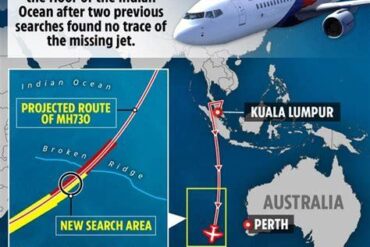
The additional time allows search teams to examine approximately 7,428 square kilometers of seabed that remain unexplored within the designated search zone. Malaysian officials explained that the extension became necessary because Ocean Infinity must temporarily redeploy its primary search vessels and autonomous underwater systems for other commercial projects between November 2026 and April 2027 before returning to continue the MH370 mission.
Malaysia’s Transport Minister Anthony Loke described the decision as a demonstration of the government’s unwavering commitment to providing answers and closure to the families who have spent more than twelve years living with uncertainty.
Why Investigators Still Believe the Aircraft Can Be Found
Although Ocean Infinity conducted an extensive search in 2018 without success, improvements in oceanographic analysis, drift modeling, and underwater survey techniques have reshaped investigators’ understanding of where the aircraft may have entered the ocean.
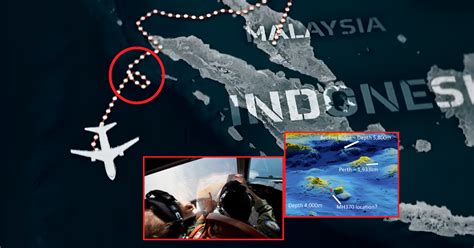
A renewed search began after experts identified a 15,000-square-kilometer target area based on updated data and refined mathematical modeling. While no confirmed wreckage has yet been located, authorities continue to regard this region as the most promising remaining search zone.
Searching the southern Indian Ocean remains exceptionally difficult. The area is characterized by extreme ocean depths, rugged underwater terrain, powerful currents, and unpredictable weather. These conditions limit operational windows and require highly specialized autonomous underwater vehicles capable of producing detailed sonar maps across vast stretches of the ocean floor.
Debris Discoveries Have Not Solved the Mystery
Over the past decade, investigators have recovered numerous debris fragments believed to have originated from MH370 after they washed ashore on islands and coastlines throughout the western Indian Ocean. Several components have been officially identified as belonging to the missing aircraft, while others remain highly likely to be associated with the flight.
Despite these discoveries, none has revealed the precise crash location or provided sufficient evidence to reconstruct the aircraft’s final moments. Without access to the fuselage, cockpit voice recorder, and flight data recorder, investigators remain unable to determine with certainty what caused the aircraft to disappear.
The absence of definitive physical evidence has fueled years of speculation, but official investigators continue to rely on scientific analysis rather than unverified theories.
Families Continue Seeking Closure After More Than a Decade
For the relatives of the 239 passengers and crew members, the search extension represents far more than another technical operation beneath the ocean’s surface. It offers renewed hope that long-awaited answers may finally emerge.
Family organizations have consistently urged Malaysian authorities to continue supporting search efforts whenever improved technology or new evidence becomes available. Many believe that ending the search before locating the aircraft would leave one of aviation’s most significant unanswered questions unresolved forever.
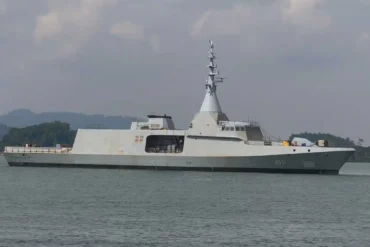
Ocean Infinity’s fleet of autonomous underwater vehicles represents one of the most advanced underwater search capabilities ever deployed. Using sophisticated sonar imaging and high-resolution seabed mapping, these robotic systems can examine areas previously beyond the reach of conventional search methods. Even so, the enormous size of the search zone and the passage of more than twelve years mean success remains uncertain.
If the wreckage is ultimately located, investigators may still face significant challenges reconstructing the aircraft’s final moments after years beneath the ocean. Nevertheless, recovering the aircraft would provide invaluable evidence, answer critical questions surrounding the disappearance, and finally deliver a measure of closure to families who have waited more than a decade for certainty.