The disappearance of Malaysia Airlines Flight MH370 remains one of the most perplexing mysteries in modern aviation. More than a decade after the Boeing 777 vanished from radar screens, a renewed search effort covering vast stretches of the Indian Ocean has concluded without discovering the aircraft’s wreckage. The latest mission, led by deep-sea exploration company Ocean Infinity, lasted 151 days at sea and mapped enormous areas of seabed, yet the final outcome delivered the same frustrating result: no confirmed trace of the aircraft.
For the families of the 239 passengers and crew aboard the ill-fated flight, the news is another painful chapter in a saga that has stretched across 12 years of uncertainty. Despite the investment of advanced technology, international cooperation, and the possibility of a $70 million recovery fee, the ocean continues to guard the secrets of MH370.
The Disappearance That Shocked Global Aviation
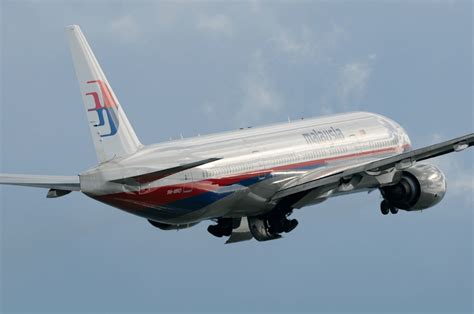
On March 8, 2014, Malaysia Airlines Flight MH370 departed Kuala Lumpur International Airport bound for Beijing Capital International Airport. The aircraft, a Boeing 777-200ER registered as 9M-MRO, carried 227 passengers and 12 crew members. The journey should have been routine—a long overnight flight across Southeast Asia toward northern China.
Instead, the aircraft vanished.
Initial flight data showed the jet flying normally along its planned northeast route toward China. Then something unexpected occurred. The aircraft changed course dramatically, turning back across the Malay Peninsula and continuing toward the Strait of Malacca before disappearing from radar coverage entirely.
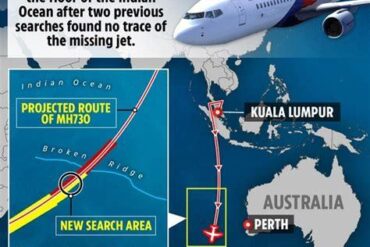
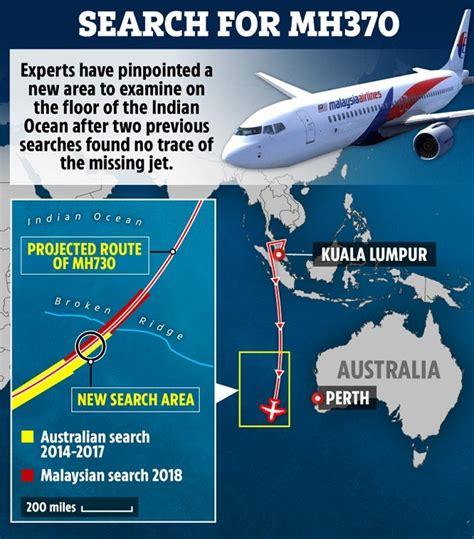
Investigators later reconstructed the likely path using satellite communications data, suggesting the aircraft continued flying for hours before ultimately ending somewhere in the southern Indian Ocean. Yet even with this data, the exact location of the crash remains unknown.
Ocean Infinity’s Massive Deep-Sea Search
In the years following the disappearance, multiple multinational search efforts attempted to locate the aircraft. The most recent and ambitious attempt was led by Ocean Infinity, a marine robotics company specializing in deep-sea mapping.
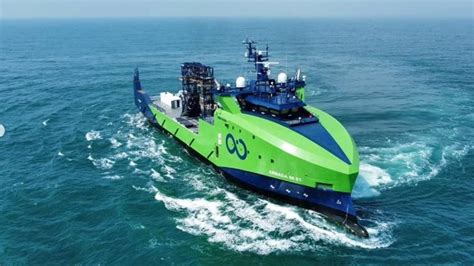
Using its advanced exploration vessel Armada, the company spent 151 days at sea scanning the ocean floor using fleets of autonomous underwater vehicles (AUVs). These robotic explorers are capable of diving thousands of meters beneath the surface while mapping terrain with high-resolution sonar.
Across several search phases dating back to 2018, the company successfully mapped more than 140,000 square kilometers of seabed. The most recent operational windows ran from March 25 to March 28, 2025, and later from December 31, 2025, to January 23, 2026.
Even during periods of rough weather in the remote Indian Ocean, the search team still managed to scan 7,571 square kilometers in just 28 days. Despite the impressive technological capability and extensive coverage, the search ended without detecting debris fields or wreckage consistent with the missing Boeing 777.
The $70 Million “No Find, No Fee” Gamble
The search operation carried a remarkable financial structure. Ocean Infinity proposed a “no find, no fee” agreement with the Malaysian government. Under this arrangement, the company would only receive payment if the aircraft wreckage was successfully located.
The potential reward was estimated to be around $70 million, reflecting the extraordinary difficulty of locating wreckage in some of the deepest and most remote waters on Earth.
This model shifted the financial risk onto the search company while giving governments a chance to continue investigations without committing large upfront funding. Despite the gamble, Ocean Infinity proceeded with the mission, relying on advanced ocean mapping techniques and improved search models based on previous data.
CEO Oliver Plunkett acknowledged the disappointment after the mission ended but emphasized that the search still produced valuable information. By thoroughly scanning large regions of the ocean floor, researchers can now rule out specific areas, helping refine future search zones.
Families Still Searching for Closure
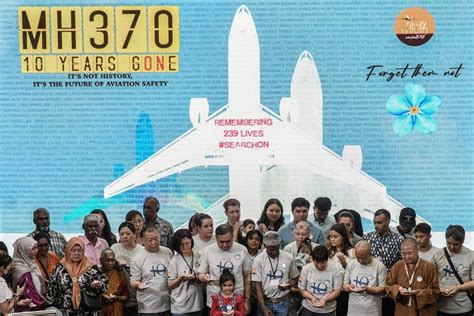
While scientific data and ocean mapping provide incremental progress, they offer little emotional relief to families of those on board MH370. For many relatives, the absence of wreckage means the tragedy remains unresolved.
Advocacy groups such as Voice370, which represents families of the victims, have continued pushing for further search operations. Their argument is straightforward: each new search improves understanding of where the aircraft might be.
Extending Ocean Infinity’s contract—without fundamentally changing its “no find, no fee” structure—could allow exploration to continue quickly while building on existing data.
For the families, the objective goes beyond aviation science. Finding the aircraft would provide long-awaited closure, answers, and a physical site of remembrance.
Debris Discoveries and Unanswered Questions
Although the main wreckage has never been located, investigators have recovered several pieces of debris believed to originate from MH370. Some fragments washed ashore on Indian Ocean islands and the eastern coast of Africa, including Réunion Island, Mozambique, and Madagascar.
One of the most significant finds was a flaperon, a control surface from the aircraft’s wing. The component’s identification confirmed that at least part of the aircraft ended up in the western Indian Ocean basin, supporting satellite data indicating a southern flight path.
Yet the debris also raised new questions. Ocean currents could carry fragments thousands of kilometers over many months, making it difficult to pinpoint the crash site accurately.
As a result, researchers continue refining models that combine satellite signals, drift analysis, aircraft performance data, and oceanography.
Aviation’s Most Persistent Mystery
More than 12 years after the disappearance, MH370 remains an enduring puzzle. The aircraft’s deviation from its planned route, the silence that followed its last radio transmission, and the vastness of the Indian Ocean search area have combined to produce one of the most extensive investigations in aviation history.
Even with sophisticated technology—from satellite tracking to robotic deep-sea explorers—the ocean has withheld definitive answers. Yet each search mission narrows the unknown.
Somewhere beneath thousands of meters of water lies the final resting place of Malaysia Airlines Flight MH370. Until it is found, the mystery continues to challenge investigators, captivate the public, and remind the aviation world how even in the age of satellites and global connectivity, an aircraft can still vanish into the vastness of the planet.