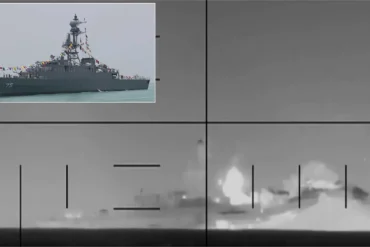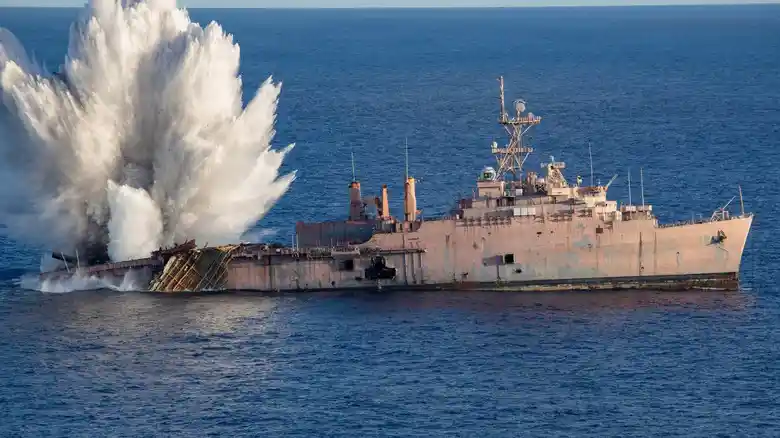
The USS Juneau (LPD-10) completed its final mission not in combat, but as the centerpiece of a major multinational military exercise that showcased the growing interoperability of allied naval forces across the Indo-Pacific. After serving the United States Navy for nearly four decades and remaining inactive since its decommissioning in 2008, the veteran amphibious transport dock was deliberately sunk off Guam during Exercise Valiant Shield, with the decisive strike delivered by a Japanese Maritime Self-Defense Force torpedo. The event marked the symbolic conclusion of a distinguished career while simultaneously providing invaluable combat training under realistic wartime conditions.
USS Juneau’s Final Mission Became a Realistic Combat Training Exercise
Rather than allowing the aging vessel to deteriorate indefinitely in reserve, the U.S. Navy transformed USS Juneau into a full-scale target ship after carefully removing hazardous materials and reducing its environmental footprint. Such preparations ensure that the vessel can safely become part of the ocean environment while providing one final service to the fleet. The sinking occurred near Guam during Valiant Shield, one of the Pacific’s largest multinational military exercises involving forces from the United States, Japan, Australia, Canada, and New Zealand.
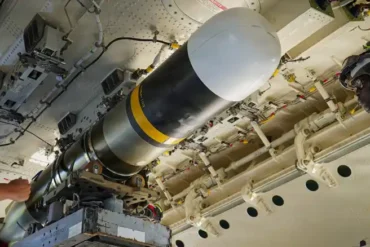
The exercise simulated the kind of coordinated combat operations that could unfold during a future high-intensity maritime conflict. Before the final torpedo strike, American naval, air, ground, and special operations forces inflicted progressive damage on the retired warship, replicating the cumulative effects of modern warfare against a large amphibious vessel. According to military officials, the Japanese Maritime Self-Defense Force then launched the finishing torpedo that sent the massive ship beneath the Pacific Ocean, concluding an operation designed to sharpen joint combat readiness and alliance coordination.
A Japanese Torpedo Delivered the Historic Final Blow
The decision to allow Japan to execute the final strike carried both operational and symbolic significance. Modern military exercises increasingly emphasize integrated command structures, shared targeting data, and combined weapons employment rather than isolated national operations. Allowing Japanese forces to complete the sinking demonstrated the confidence and interoperability that now characterize the U.S.-Japan security partnership.
Lieutenant Commander Katie Koenig, director of the Combined Joint Information Bureau, explained that multiple U.S. military branches first engaged the vessel before Japanese forces fired the decisive torpedo. The carefully choreographed sequence provided participating forces with realistic experience against a full-sized naval target, offering valuable lessons impossible to replicate through computer simulations or smaller target ranges.
The USS Juneau Built an Impressive Legacy Across Four Decades of Service
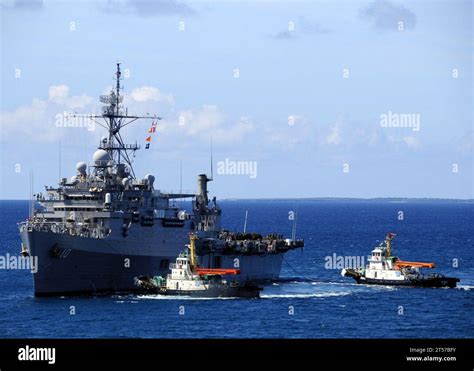
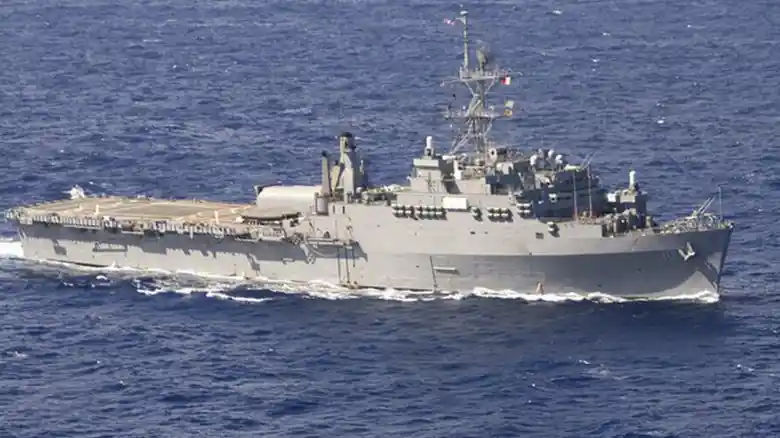
Although its final moments attracted widespread attention, USS Juneau’s operational history was far more remarkable than its dramatic sinking. Commissioned in 1969, the Austin-class amphibious transport dock entered service during the latter years of the Vietnam War, transporting Marines, equipment, helicopters, and supplies wherever expeditionary operations demanded.
Throughout its lengthy career, the vessel continuously adapted to changing military requirements. Beyond traditional amphibious missions, USS Juneau supported humanitarian assistance, crisis response, and logistical operations across multiple theaters. One of its most unusual assignments came after the Exxon Valdez oil spill, when the ship served as both a command center and temporary housing for environmental cleanup personnel. Later, it participated in Operation Desert Storm, further expanding a service record that reflected the versatility expected of amphibious naval platforms.
Following its decommissioning in 2008, the vessel remained berthed at the Naval Sea Systems Command’s inactive ship maintenance facility at Pearl Harbor, awaiting its ultimate disposition.
The Name USS Juneau Carries Deep Historical Meaning
The LPD-10 was actually the third U.S. Navy vessel to carry the name USS Juneau, continuing a lineage shaped by sacrifice and distinguished service.
The first USS Juneau, designated CL-52, became one of the most famous American naval losses of the Second World War after being sunk during the Battle of Guadalcanal in November 1942 by the Imperial Japanese Navy. Its destruction and the tragic loss of the Sullivan brothers became one of the war’s defining naval stories. The second USS Juneau, CL-119, entered service in 1946 and earned distinction as the first American cruiser to participate in the Korean War before eventually being retired and scrapped.
By inheriting the historic name, LPD-10 carried forward decades of naval tradition while creating an impressive legacy of its own.
An Underwater Farewell That Strengthens Future Naval Readiness
Although USS Juneau now rests on the Pacific seabed, its final mission delivered lasting value to allied militaries preparing for increasingly complex maritime operations. The controlled sinking provided realistic weapons testing, validated multinational coordination, and strengthened the operational integration of Indo-Pacific partners confronting evolving regional security challenges.
Rather than fading quietly into retirement, the veteran amphibious warship concluded its service exactly as it had spent nearly forty years at sea—supporting the readiness of American and allied forces. Its deliberate sinking represents more than the end of a single vessel; it symbolizes the Navy’s enduring commitment to transforming even retired ships into assets that help prepare future generations for the demands of modern naval warfare.