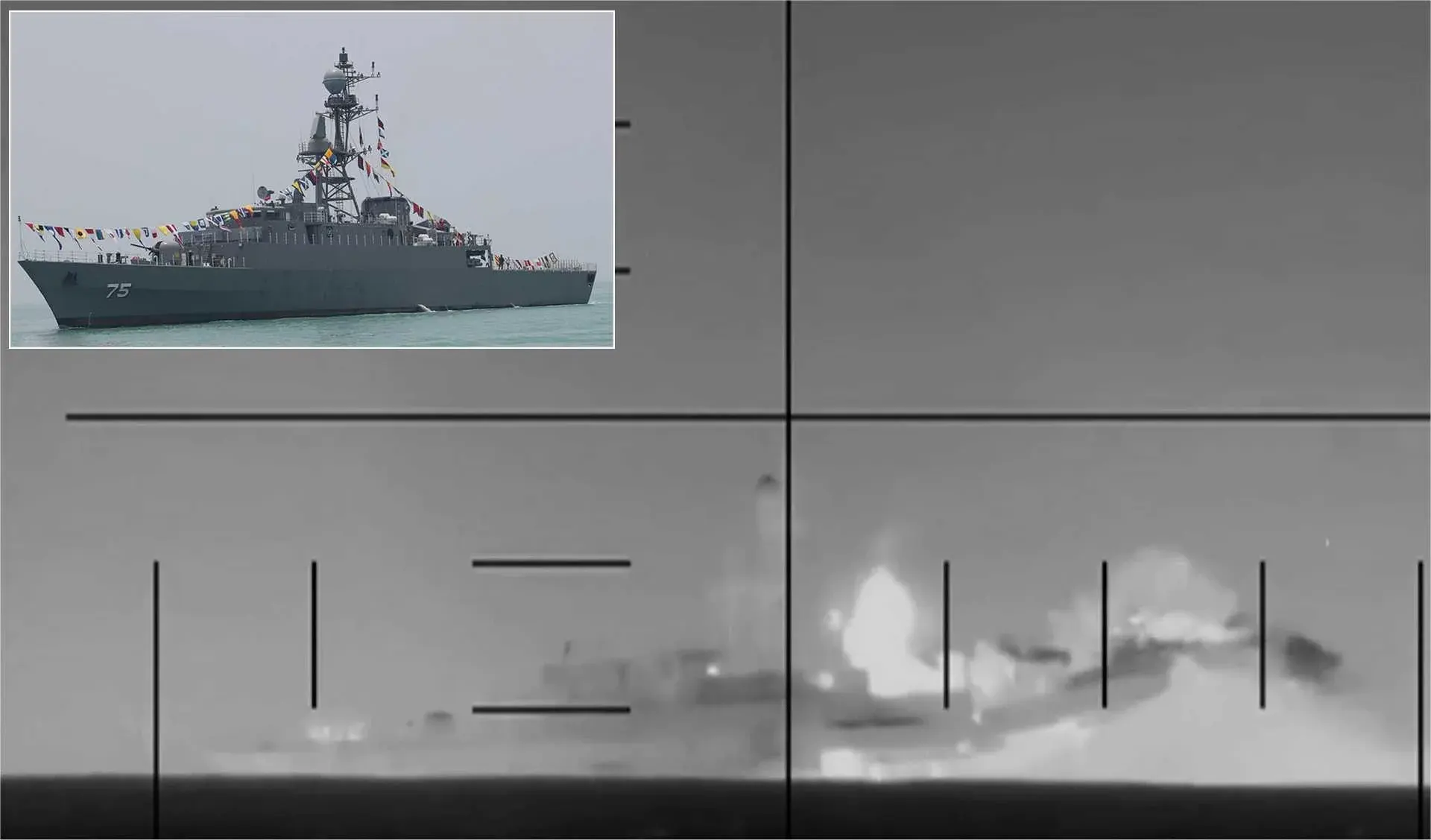
The sinking of the Iranian frigate IRIS Dena on March 4, 2026 marks a dramatic and historically rare moment in modern naval warfare. For the first time since the end of the Second World War, a United States submarine destroyed an enemy warship with a torpedo in combat. The attack occurred in the vast waters of the Indian Ocean, amid escalating tensions and military confrontation involving Iran, Israel, and the United States.
The strike was confirmed by U.S. Defense Secretary Pete Hegseth, who stated that an American submarine launched a torpedo at the Iranian Navy vessel while it was operating in international waters. The resulting explosion sent the frigate to the bottom of the sea, transforming what would normally be a routine naval patrol zone into the site of one of the most consequential submarine engagements in modern history.
The event stands out because submarine torpedo attacks against surface warships have become extraordinarily rare in the missile age. While submarines remain among the most lethal platforms at sea, their modern missions have largely shifted toward intelligence gathering, stealth surveillance, and long-range cruise missile strikes rather than classic torpedo ambushes against warships.
A Rare Torpedo Kill in Modern Naval Warfare
The destruction of the IRIS Dena represents only the third confirmed instance since 1945 in which a submarine torpedo attack sank a surface warship during combat. During the Cold War and the decades that followed, naval battles between major fleets became increasingly uncommon. Instead, maritime warfare evolved toward long-range engagements using guided missiles, carrier aviation, and sophisticated electronic surveillance systems.
Submarine warfare once dominated naval combat. During World War II, American submarines alone sank more than 1,300 Japanese ships across the Pacific theater. Torpedoes were the silent assassins of the sea, striking from below and often without warning. The ocean became a chessboard of invisible hunters and hunted.
Yet after 1945, the dynamics changed dramatically. Nuclear deterrence reduced the likelihood of direct great-power naval battles, and technological advances shifted naval tactics toward stand-off weaponry. Anti-ship missiles could strike targets hundreds of kilometers away, reducing the necessity of risky close engagements.
This shift in doctrine explains why the 2026 sinking instantly attracted global attention among naval strategists and defense analysts. A torpedo strike from a submarine remains one of the most devastating attacks possible at sea, but it is rarely witnessed in modern warfare.
Historical Precedents: Two Cold War Era Torpedo Sinkings
Before the 2026 incident, only two well-documented submarine torpedo attacks had sunk surface warships since World War II.
The first occurred in 1971 during the Indo-Pakistani War. The Pakistani submarine PNS Hangor fired homing torpedoes at the Indian Navy frigate INS Khukri in the Arabian Sea. The torpedoes struck with devastating effect, sinking the vessel and killing 176 sailors. The attack marked the first successful submarine sinking of a warship since the global conflict that ended in 1945.
A second case emerged a decade later during the 1982 Falklands War. The British nuclear submarine HMS Conqueror attacked the Argentine cruiser ARA General Belgrano in the South Atlantic. The submarine launched three torpedoes, two of which struck the cruiser and caused catastrophic structural damage.
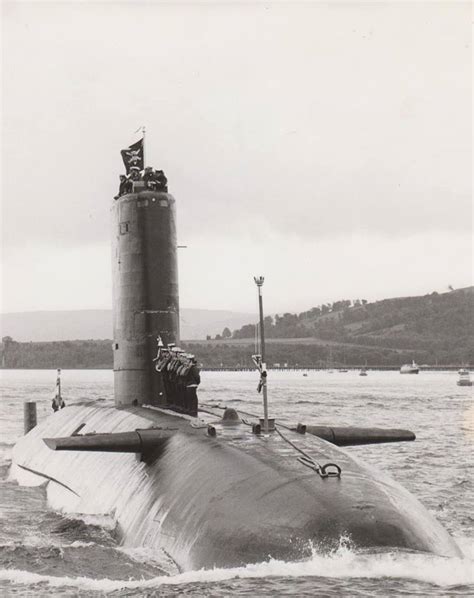
The cruiser quickly sank, taking 323 sailors with it. The consequences of the attack rippled far beyond the tragedy itself. Argentina’s navy withdrew most of its surface fleet from combat operations for the remainder of the conflict, demonstrating the enormous psychological power of submarine warfare.
For more than four decades after that event, no comparable torpedo sinking occurred—until the events of March 2026.
Escalating Conflict in the Middle East and Indian Ocean
The attack on IRIS Dena unfolded during a period of rapidly escalating conflict across the Middle East. Military strikes had intensified across multiple regions as tensions involving Iran, Israel, and the United States reached a dangerous peak.
Missile attacks and air strikes targeted infrastructure, military facilities, and allied forces throughout the region. Retaliatory operations spread across the Persian Gulf and neighboring areas. Lebanon also experienced strikes connected to the militant group Hezbollah.
By early March 2026, the conflict had already resulted in more than 1,000 deaths in Iran and dozens more in Lebanon. Energy markets reacted sharply as shipping routes and oil infrastructure faced uncertainty. Airlines rerouted flights across the Middle East while maritime traffic in strategic waterways slowed dramatically.
Against this tense backdrop, naval forces from multiple countries increased patrols across the Indian Ocean and surrounding seas. Submarines, aircraft carriers, and surface combatants quietly repositioned themselves in anticipation of potential confrontation.
It was within this tense maritime environment that the Iranian frigate met its fate.
The Torpedo Strike That Sank IRIS Dena
According to U.S. defense officials, an American submarine engaged the Iranian warship while it was sailing in international waters roughly 40 kilometers south of the Sri Lankan coastal city of Galle.
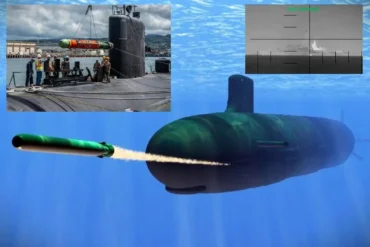
The submarine launched a heavyweight torpedo designed specifically for destroying large naval vessels. Moments later, the weapon struck the frigate beneath its hull.
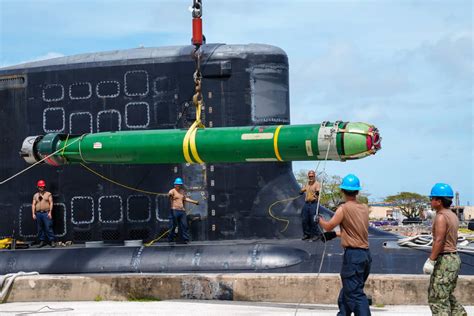
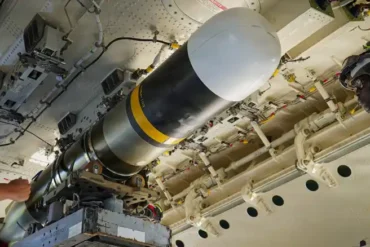
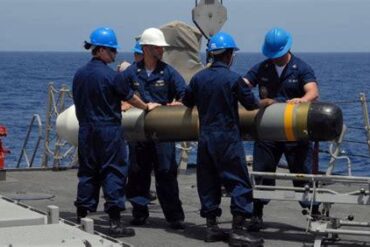
The torpedo used in the attack was almost certainly the Mk-48 torpedo, the primary submarine weapon employed by the United States Navy since the early 1970s. This formidable piece of engineering weighs approximately 1,670 kilograms and carries a 292-kilogram high-explosive warhead.
The weapon does not simply explode against the side of a ship. Instead, it detonates beneath the vessel’s keel. The blast produces a massive gas bubble that lifts the ship upward before collapsing violently. The sudden structural stress can literally break a ship’s spine, splitting the hull and sending the vessel to the seabed.
Naval engineers often describe the process as “breaking the back” of the ship. The technique maximizes destructive effect and ensures catastrophic structural failure.
Reports indicate that the Iranian frigate issued a distress signal shortly before sinking. The ship’s crew of roughly 180 sailors scrambled to respond as the vessel took on water.
Within minutes, the warship disappeared beneath the waves.
Rescue Efforts and Human Consequences
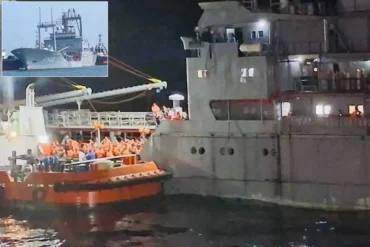
Following the distress call, Sri Lankan authorities initiated an emergency maritime rescue operation in the surrounding waters.
Naval and air units from Sri Lanka deployed ships and aircraft to search for survivors. Rescue teams eventually recovered 32 severely injured sailors from the sea and transported them to hospitals in Galle for emergency treatment.
Search operations continued across the surrounding waters as authorities attempted to locate additional crew members. International maritime law requires nearby nations to respond to distress calls regardless of geopolitical tensions, and Sri Lanka’s rescue effort followed those obligations.
The human dimension of naval warfare remains sobering. Warships carry crews whose lives depend entirely on the integrity of steel hulls and disciplined training. When those hulls fail in deep water, the margin between survival and catastrophe becomes frighteningly thin.
The Iranian Frigate IRIS Dena
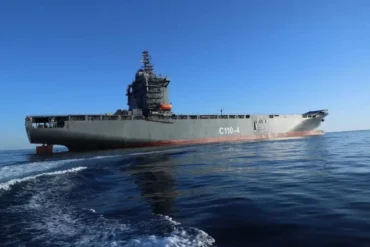
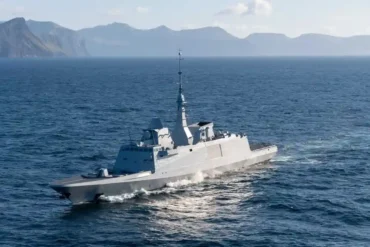
The lost vessel belonged to Iran’s domestically developed Moudge-class frigates, a class designed to expand the country’s naval reach beyond the Persian Gulf.
The IRIS Dena measured approximately 95 meters in length with a displacement of roughly 1,500 tons. Built at naval shipyards in Bandar Abbas, construction began in 2012. The ship launched in 2015 and entered operational service in 2021.
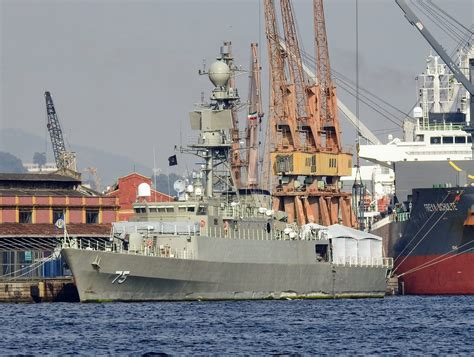
Propulsion came from four diesel engines capable of producing speeds up to 30 knots. The frigate carried a combination of weapons including:
- Noor (C-802) anti-ship missiles
- Sayad-2 surface-to-air missiles
- A 76 mm naval gun
- 40 mm and 20 mm defensive cannons
- Anti-submarine torpedo launchers
Electronic systems included the Asr three-dimensional radar and various electronic warfare sensors intended to detect threats in the surrounding environment.
Despite these capabilities, defending against a stealthy submarine attack remains one of the most difficult challenges in naval warfare.
Submarines exploit the physics of the ocean itself. Sound travels unpredictably through water layers of varying temperature and salinity, allowing submarines to hide in acoustic shadows where detection becomes extremely difficult.
From International Naval Event to Battlefield Casualty
In a twist that highlights the unpredictability of geopolitical events, the Iranian frigate had recently participated in multinational naval activities in India.
The ship attended the international fleet review hosted in the port city of Visakhapatnam. It also joined the multinational naval exercise MILAN 2026.
These events brought together naval forces from multiple countries for ceremonial gatherings and maritime training drills. Iran’s naval commander met senior Indian officials during the visit, reinforcing diplomatic and military engagement.
Within weeks of those events, the same ship found itself at the center of a lethal submarine strike thousands of kilometers from the exercise harbor.
History has a habit of pivoting suddenly.
Why Submarine Torpedo Attacks Are So Rare Today
Modern naval combat is dominated by missiles, aircraft, and networked surveillance systems. Warships today often engage enemies from distances far beyond the horizon using radar-guided weapons.
Submarine torpedo attacks require a different tactical situation. The attacking submarine must approach close enough to the target to launch the weapon while remaining undetected. That demands patience, stealth, and favorable acoustic conditions.
It is a bit like underwater stalking. The submarine captain studies sonar returns, ocean currents, and ship movements while waiting for the precise moment to strike.
In the missile age, such close-range encounters are increasingly uncommon. Yet when they occur, the result can be decisive.
The sinking of the IRIS Dena serves as a stark reminder that classic naval warfare tactics have not disappeared. They have simply become rarer—and perhaps more shocking when they reappear.
The deep ocean remains a domain where silent predators still lurk. Submarines glide through darkness beneath the waves, invisible to satellites and aircraft above. When one of them fires a torpedo, the physics of pressure, steel, and explosive force take over.
And in those moments, the modern world briefly collides with the brutal mechanics of twentieth-century naval combat.