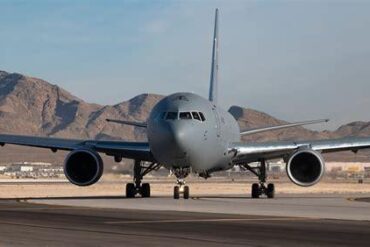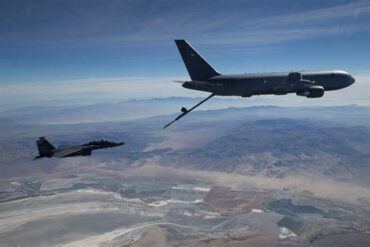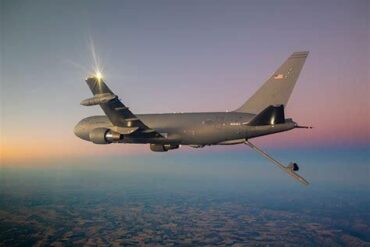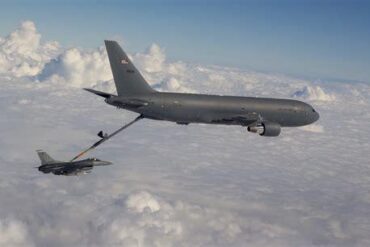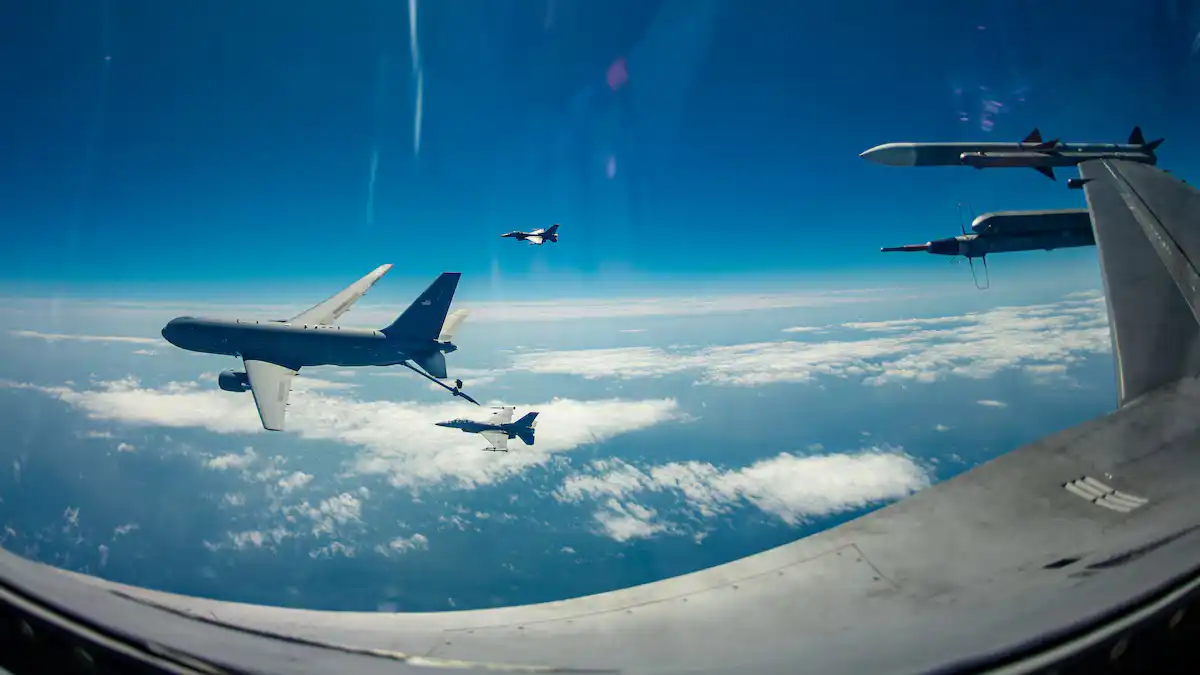
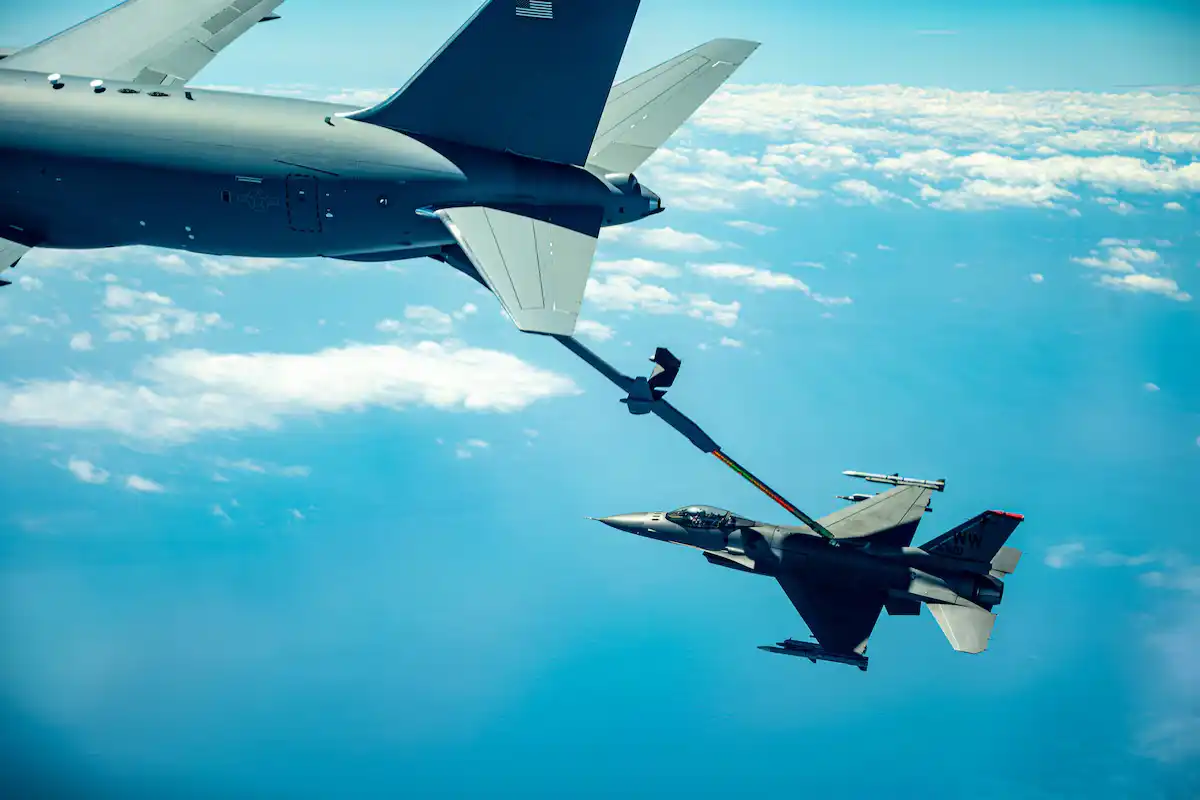
In a strategically critical show of force projection and air mobility, the U.S. Air Force’s KC-46A Pegasus, operated by the 60th Air Mobility Wing and 9th Air Refueling Wing at Travis Air Force Base (AFB), California, conducted a trans-Pacific deployment to Misawa Air Base, Japan. There, it played a vital support role in an off-station training mission, providing midair refueling to F-16 Fighting Falcons from the 14th Fighter Squadron (FS). This operation not only reaffirmed the global reach of U.S. airpower but also demonstrated the evolving synergy between air mobility and combat units under increasingly complex Indo-Pacific scenarios.
The mission, executed on June 5, 2025, was aimed at strengthening the operational readiness of fighter units stationed in Japan while showcasing the KC-46A Pegasus’s advanced refueling and defensive capabilities. The Pegasus’s flight from Travis AFB to Misawa AB covered more than 5,000 miles, completing a 10-hour sortie that culminated in a seamless rendezvous with the awaiting F-16s over the Pacific.
The Role of Aerial Refueling in Indo-Pacific Air Superiority
In an era defined by rapidly evolving geopolitical dynamics in the Indo-Pacific, aerial refueling has become the backbone of U.S. global strike capabilities. The KC-46A Pegasus, the Department of Defense’s newest aerial tanker, is specifically designed to support such extended operations. With fly-by-wire boom technology, defensive countermeasures, and the ability to carry both cargo and personnel, the Pegasus ensures fighters like the F-16 can remain airborne longer, strike deeper, and return safely.
The Indo-Pacific region, home to half the world’s population and some of the most contested airspaces, poses unique logistical challenges. According to Lt. Col. Bradford Waldie, 14th FS director of operations, the KC-46’s arrival after a 10-hour flight from California not only provided fuel but instilled operational confidence in theater-level mobility.
“Distance is the greatest challenge to projecting power in the Pacific,” Waldie stated. “Having a tanker available on short notice not only prolongs mission capability, but in many combat scenarios we face, having a tanker available is absolutely required for mission success.”
This sentiment reflects the broader strategy of Pacific Air Forces (PACAF) and Air Mobility Command (AMC): maintain persistent, flexible, and responsive force posture even in the face of anti-access and area-denial (A2/AD) environments increasingly fielded by adversaries.
Training with the 14th Fighter Squadron: Tactical Edge and Heritage
The 14th Fighter Squadron, part of the 35th Fighter Wing at Misawa AB, has a distinguished history dating back to World War II. Today, it serves on the front line of U.S. defensive and offensive air operations in the Indo-Pacific. The recent training with the KC-46 extended beyond simple refueling. It tested rapid deployment scenarios, aerial coordination, and real-world mission timelines, reinforcing the F-16’s multi-role capability under real-time combat conditions.
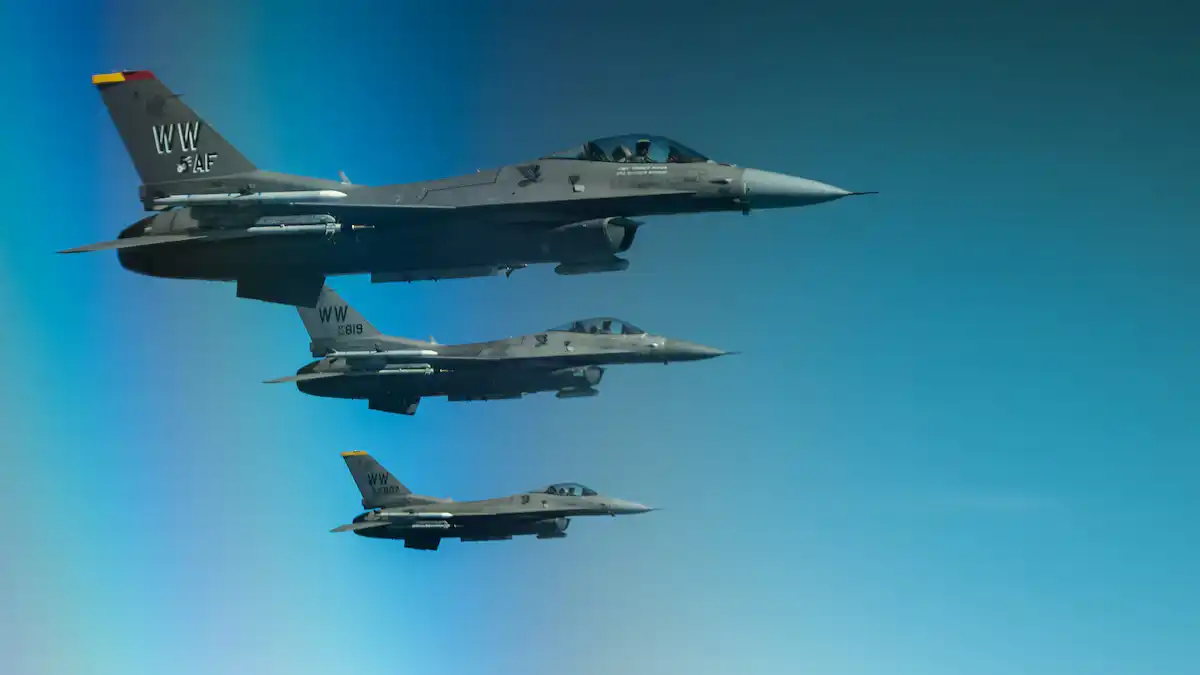
As tensions in the Indo-Pacific continue to fluctuate, the ability to move, refuel, and sustain fighter aircraft across dispersed bases has become an indispensable component of operational planning. The training scenario executed near Misawa reflected this doctrine, pushing boundaries on both ends—logistics and tactical execution.
Strategic Implications: Global Mobility as Deterrence
Secretary of the Air Force Troy Meink, in his May 29, 2025, commencement address at the U.S. Air Force Academy, described the Indo-Pacific as the defining battlefield of the current generation. He emphasized that America’s ability to maintain air dominance and deterrence is intricately tied to the performance of platforms like the KC-46.
“The Indo-Pacific will be your generation’s fight, and you will deliver the most lethal force that has ever existed to that fight,” Meink declared.
Such statements are not rhetorical; they are supported by deliberate operational moves like this recent Pegasus deployment. The message is clear: U.S. forces can and will operate globally, rapidly, and effectively—even across the vast expanses of the Pacific.
Reinforcing Indo-Pacific Partnerships Through Mobility
Beyond technical training and internal readiness, the operation played a key role in reassuring regional partners and demonstrating America’s commitment to collective defense. The Indo-Pacific theater, characterized by an archipelagic geography and expansive ocean distances, requires advanced logistics infrastructure. Every successful refueling sortie strengthens the interoperability between Air Mobility Command and PACAF, enhancing the broader distributed air operations framework.
Additionally, by rotating training locations and expanding the number of airfields where such missions can occur, U.S. forces reduce dependency on fixed, easily-targetable infrastructure. This creates a fluid, survivable force structure better aligned with the challenges posed by potential peer adversaries.
The KC-46A Pegasus: Transforming the Future of Air Refueling
The Boeing KC-46A Pegasus represents a generational leap in air refueling technology. Its ability to carry 212,299 pounds of fuel, coupled with multi-point refueling systems, enables it to support a variety of aircraft simultaneously. It also incorporates military avionics upgrades, threat detection systems, and the capability to carry cargo and medevac configurations—all while remaining fully networked for joint force integration.
For the Travis AFB-based aircrews, the June sortie was not just a refueling mission; it was a testament to their training, endurance, and command of next-gen refueling platforms. Each hour spent in the air was a validation of the USAF’s commitment to preserving an advantage in the most strategically significant region on Earth.
Misawa AB: A Forward Operating Jewel in the Pacific
Misawa Air Base serves as a vital node in the USAF’s forward-deployed infrastructure. Located in northern Japan, Misawa provides a critical launching point for operations into the East China Sea, Sea of Japan, and beyond. Housing both U.S. and Japanese forces, the base has become a symbol of bilateral strength and cooperation in regional security.
By conducting off-station training with support from Travis AFB, the base continues to integrate new capabilities, refine its interoperability, and build muscle memory for agile combat employment (ACE)—a doctrine gaining traction across the Pacific as the U.S. seeks to counter increasingly dynamic threat environments.
A Blueprint for Future Operations
The success of this mission lays the groundwork for future exercises involving long-range tanker deployments, rapid fighter redeployments, and multi-domain integration. It also validates that such missions can be repeated, expanded, and refined with minimal lag or degradation in performance.
As geopolitical competition intensifies, these types of operations will no longer be exceptional—they will become routine building blocks of national defense strategy. The KC-46’s role as a force multiplier ensures that the United States can uphold its commitments, deter aggression, and project power at any time, from any base, to any point on the globe.
The refueling mission of June 5, 2025, represents far more than a logistical maneuver; it is a tactical rehearsal, strategic signal, and operational milestone—all rolled into one.
Final Thoughts
With the Indo-Pacific theater rapidly becoming the focal point of global military balance, the ability to project force over vast distances is paramount. The recent KC-46 deployment from Travis AFB to Misawa AB is a striking reminder of the Air Force’s readiness to meet that demand, day or night, in peace or conflict. As platforms like the KC-46 evolve and missions grow in complexity, they will continue to play a defining role in securing America’s position in the skies—and ensuring that its fighter forces never run dry in the heat of mission execution.