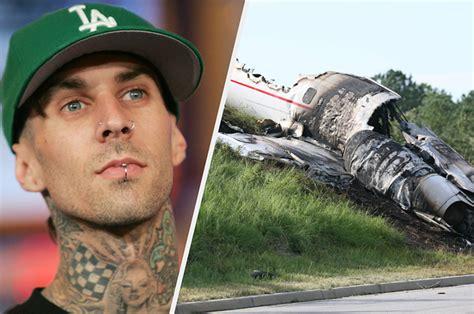
On the night of September 19, 2008, a chartered Learjet 60 prepared for takeoff from Columbia Metropolitan Airport (CAE) in South Carolina. Aboard the plane was Travis Barker, drummer of the legendary punk rock band Blink-182, along with his close circle: personal assistant Chris Baker, security guard Che Still, and long-time friend DJ AM (Adam Goldstein). What was expected to be a routine private flight to Los Angeles turned into a harrowing ordeal that would mark one of the darkest chapters in modern aviation tragedy.
The Catastrophic Takeoff: What Went Wrong
Just before midnight, the sleek two-year-old Learjet 60 with a mere 108 flight hours began its takeoff roll. In the cockpit were pilots James Bland and Sarah Lemmon, employed by Global Exec Aviation, a charter company based in Long Beach, California. Moments after acceleration, Travis Barker recalled hearing two explosive bangs—”like gunshots.” The aircraft, traveling at 144 knots, far beyond the takeoff decision speed (V1) of 136 knots, was already in a critical phase.
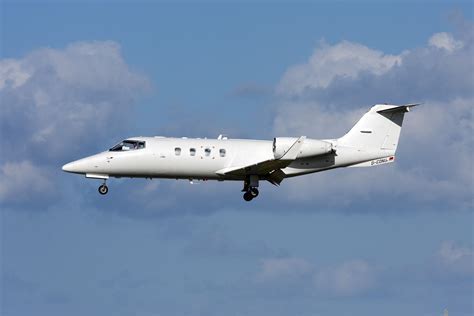
Despite protocol advising continuation of takeoff at speeds above V1, the pilots made a fatal decision to abort. Simultaneously, sparks were seen trailing the aircraft as multiple underinflated tires burst, scattering debris across the runway. The shredded tires damaged the hydraulic system, rendering the brakes inoperative. In a desperate attempt to stop the aircraft, the thrust reversers were briefly engaged—but a built-in safety mechanism interpreted the aborted takeoff as mid-air deployment and inadvertently stowed them.
The result was catastrophic. The Learjet overran the 8,000-foot runway, smashed through the airport’s fence, crossed a five-lane highway, and collided with an embankment. Moments later, it erupted into flames, creating a blazing inferno of metal and jet fuel.
Inside the Inferno: Travis Barker’s Struggle for Survival
As the jet was consumed by fire, Travis Barker and DJ AM managed to escape through the wing, both men doused in jet fuel and engulfed in flames. Their instincts kicked in—they ripped off burning clothes, slid across the fuselage, and rolled on the tarmac to extinguish the flames. Tragically, Chris Baker and Che Still were killed instantly. The pilots succumbed shortly after from burns and smoke inhalation.
For Barker and Goldstein, survival came at a grievous cost. Barker suffered second- and third-degree burns over 65% of his body, underwent 26 surgeries, received multiple blood transfusions, and endured skin grafts across his legs and torso. In interviews, Barker described the hospital as a blur of painkillers, agony, and confusion. “I didn’t even know my two friends had passed away,” he said during an appearance on The Joe Rogan Experience. The psychological trauma was as devastating as the physical.
Trauma, Pain, and the Path to Recovery
The toll of the crash reached far beyond physical injury. During his 11-week hospitalization, Barker required heavy sedation due to a high tolerance for opioids, a consequence of past recreational use. Doctors nearly amputated his foot, and medical staff had to remove his phone to prevent him from calling friends in a desperate attempt to end his own life. The pain was unrelenting, the despair profound.
His friend DJ AM, although surviving the initial accident, was plagued by PTSD and severe depression. Despite physical recovery, he struggled to reintegrate emotionally. Just under a year later, Goldstein died from a drug overdose. Those close to him believe the crash ultimately claimed his life.
Grounded by Fear: Barker’s Battle with PTSD and Aviation Phobia
Following the accident, Travis Barker developed an acute fear of flying. He couldn’t bear the sight of an aircraft, frequently experiencing panic attacks and flashbacks. “If I saw a plane, I was convinced it was going to crash,” he told Men’s Health. This aviophobia became a defining obstacle in his life and career, limiting his ability to tour and perform internationally.
For over 13 years, Barker refused to fly. His rehabilitation included intensive therapy for PTSD and survivor’s guilt. Yet, the path to emotional recovery was as nonlinear and grueling as his physical healing. Friends and professionals noted his resilience, but the trauma cast a long shadow.
First Flight After 13 Years: A Milestone of Courage
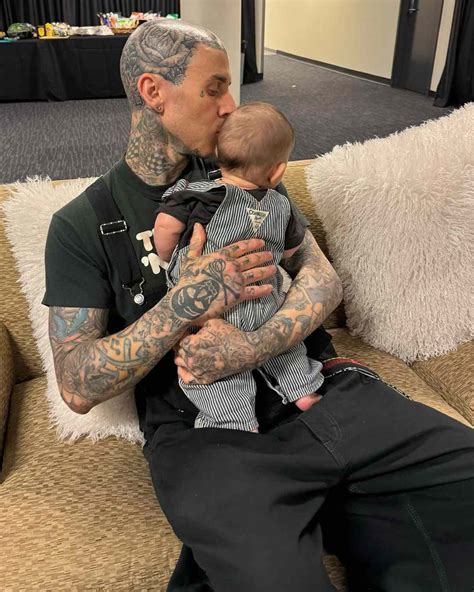
In August 2021, Barker took to the skies once again—this time accompanied by Kourtney Kardashian, his partner and later wife, aboard a private jet to Cabo San Lucas. It was a moment of immense personal victory. Barker later flew to Italy in 2022 to marry Kourtney in Portofino, marking a turning point in his relationship with flight and fear.
Still, each flight remains emotionally taxing. Speaking to Fox News in February 2025, Barker confessed: “It’s hard for me to get on flights… you tell yourself these things never happen, but lately, it feels like we’re seeing them almost every day.” His anxiety has been amplified by a string of recent aviation disasters, including crashes involving Jeju Air, Delta CRJ, and others.
Lessons from the Crash: What the NTSB Found
The National Transportation Safety Board (NTSB) published a detailed investigation citing multiple failures:
- Underinflated tires: Several tires were significantly below required pressure.
- Improper decision-making: The takeoff was aborted past the decision speed, violating standard procedures.
- Inadequate braking: The hydraulic system was destroyed by tire debris.
- Thrust reverser malfunction: A design feature caused automatic stowage during the critical abort sequence.
As a result, the NTSB issued specific recommendations:
- Mandatory training for Learjet 60 pilots on thrust reverser issues.
- Emphasis on pre-flight tire inspections and awareness of underinflation risks.
- Simulator scenarios involving tire failures during takeoff.
- Stricter pilot experience requirements before operating complex aircraft like the Learjet 60.
From Devastation to Determination: Barker’s Return to Music
Despite enduring unimaginable pain and loss, Travis Barker has emerged as a symbol of resilience. Blink-182 eventually reunited, and Barker resumed touring, recently completing the ‘One More Time’ world tour in November 2024. His performances remain energetic, a testament to his physical recovery and emotional fortitude.
Through the lens of public admiration, he is no longer just a rock icon. He is a survivor, a father, a partner, and an advocate for mental health and healing. The crash did not just alter his career—it transformed his philosophy on life. Barker abandoned substances, adopted a cleaner lifestyle, and channeled his focus into music and family.

Conclusion: A Life Redefined by Tragedy
The plane crash that nearly ended Travis Barker’s life was not just a freak accident; it was the result of a complex failure of systems, judgment, and oversight. The repercussions were severe, claiming the lives of four people and leaving lasting scars on the survivors. But from this tragedy emerged a story of endurance, of redefining purpose in the face of devastation.
Travis Barker’s journey from the charred wreckage in Columbia to the bright stages of global music tours is not merely inspiring—it is a masterclass in survival, accountability, and personal transformation. The pain may never fully fade, but it has given Barker a perspective that few possess: an unwavering appreciation for life, for the second chance he never thought he’d get.