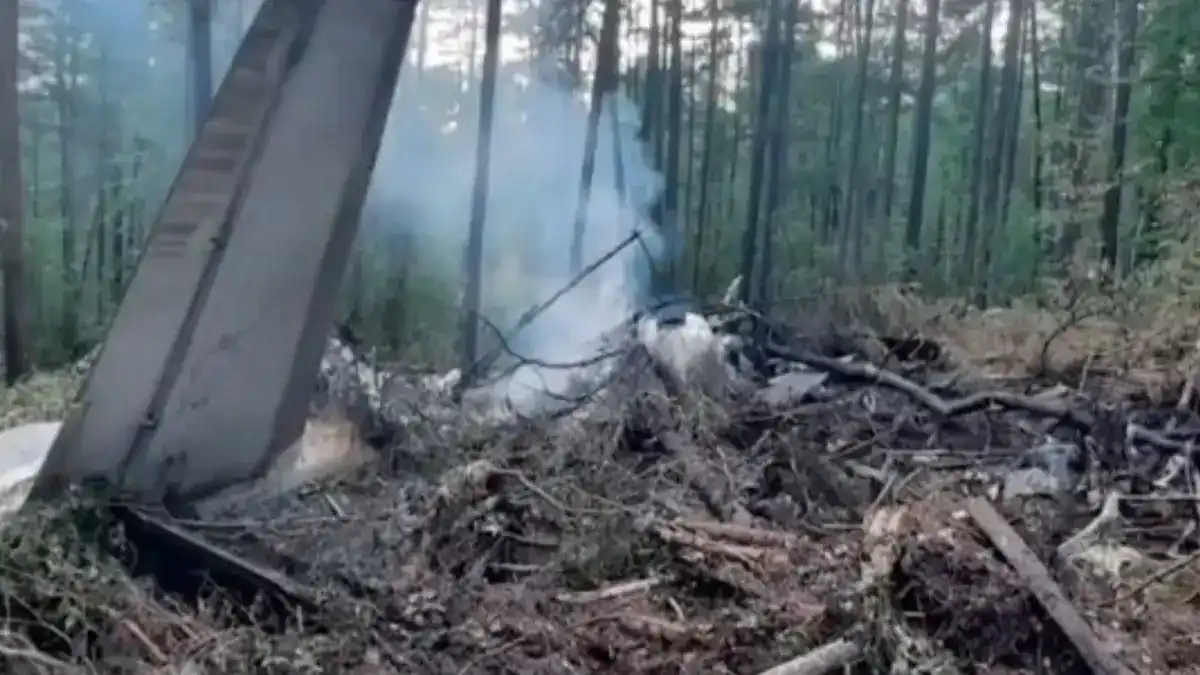
A catastrophic plane crash in Russia’s Amur region has claimed the lives of all 48 individuals on board, spotlighting severe risks associated with the continued use of aging Soviet-era aircraft. The Antonov An-24, operated by the Siberian regional airline Angara, was en route from Blagoveshchensk, near the Chinese border, to Tynda, when it disappeared from radar on July 24, 2025. The aircraft vanished during its second landing attempt after an aborted first approach.
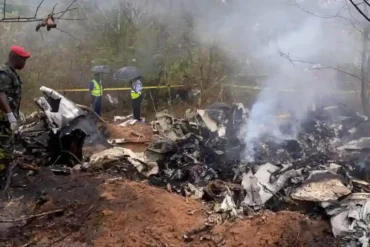
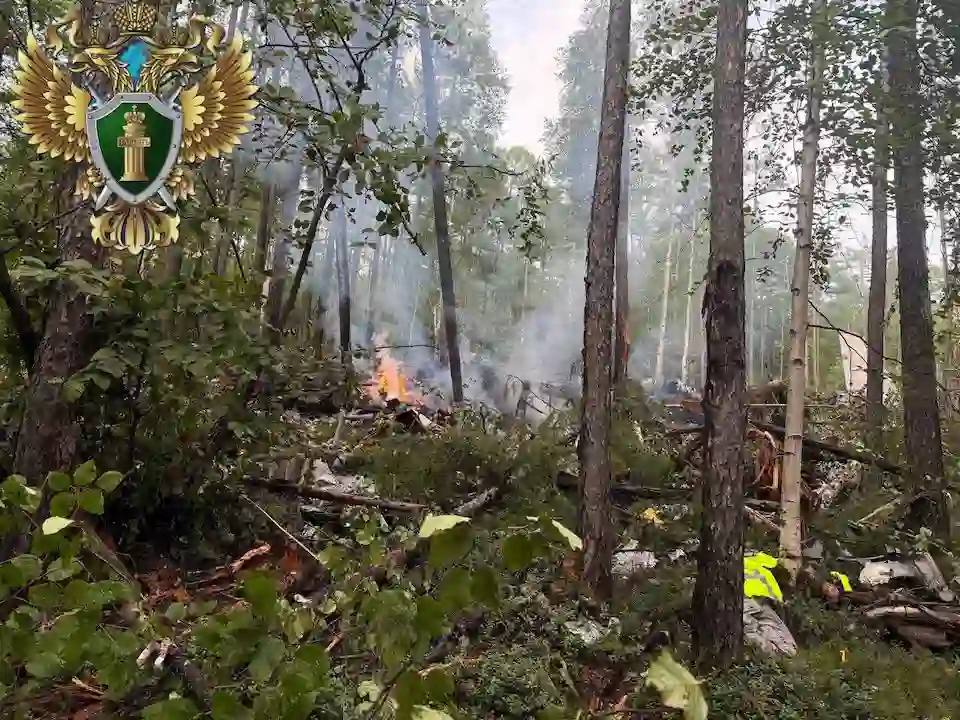
Search and rescue helicopters later located the burning fuselage deep within the forest, around 15 kilometers from Tynda, in rugged, roadless terrain. Emergency crews were forced to cut through dense forest with heavy machinery to reach the site. Federal investigators and the Far Eastern Transport Prosecutor’s Office confirmed that no survivors were found among the 42 passengers — including five children — and six crew members.
Aircraft Built in 1976: Aged Plane Raises Alarm
The doomed aircraft was nearly 50 years old, having been built in 1976 during the Soviet era. While it had reportedly passed recent technical inspections, the Antonov An-24 had a documented history of four previous minor incidents since 2018. Its continued operation, especially in remote territories, underscores growing concerns about Russia’s dependency on antiquated aircraft.
Russia has over 1,000 passenger planes, but a fraction of these are aging Antonovs, often referred to as “flying tractors” for their rugged design and reliability in harsh Siberian climates. However, the deterioration of spare parts supplies due to Western sanctions has significantly strained maintenance efforts.
Global Shock and Condolences
President Vladimir Putin expressed his deep condolences and ordered a minute of silence at a government meeting. Chinese President Xi Jinping, acknowledging that at least one Chinese national was among the victims, also sent his sympathies. Moscow has established a special commission to manage the aftermath and assist victims’ families.
The Russian Investigative Committee has initiated a criminal case citing violations of air traffic regulations resulting in mass casualties. Federal authorities have not ruled out negligence, although a formal conclusion remains pending.
Angara Airlines and the Burden of Isolation
Angara Airlines, based in Irkutsk, operates primarily in eastern Siberia and Russia’s Far East. It currently maintains a fleet of ten An-24 aircraft, all manufactured between 1972 and 1976. In 2024, Angara and another Siberian carrier jointly petitioned the government to extend the operational lifespan of these aging planes, citing the difficulty of replacing foreign-made aircraft due to sanctions.
In the wake of the Ukraine conflict and corresponding global sanctions, Russia’s aviation industry has struggled to sustain international supply chains. Western manufacturers have pulled out, and access to critical avionics and airframe parts has become limited. As a result, older aircraft like the An-24 remain in use beyond their expected service lives.
The Flight and the Fatal Final Approach
The flight from Blagoveshchensk to Tynda was routine — a regional route used by miners, local officials, and residents of the sparsely populated Amur region. Weather conditions at the time were reportedly within operational limits, but the aircraft aborted its first approach to the runway. On the second attempt, it lost contact and vanished from radar.
Initial footage captured from a rescue helicopter showed gray smoke rising above treetops, confirming the crash. The remote crash site, inaccessible by road, complicated recovery and investigative efforts. Authorities estimate the aircraft broke apart on impact, and initial signs indicate a fire broke out immediately after the crash.
Aging An-24 Fleet: A Statistical Red Flag
Out of the 1,340 Antonov An-24s originally built in the USSR, 88 have crashed, while 65 others have experienced serious, non-fatal incidents. Only 75 remain operational, according to the RussianPlanes database. These aircraft, designed for short-haul use on rugged airstrips, are well-suited for sub-Arctic and mountainous regions, but their structural integrity has become a growing concern.
Former President Dmitry Medvedev proposed a nationwide grounding of the An-24 in 2011, after a crash that killed seven people. However, without an immediate replacement, the aircraft continued flying. Newer alternatives, like the Ladoga regional aircraft, are not expected to enter mass production until 2027.
Safety Versus Accessibility in Remote Russia
Many remote regions in Russia depend on aircraft like the An-24, as rail and road access is sparse or nonexistent. For isolated communities in Siberia and the Far East, these aircraft remain a lifeline. But the trade-off between accessibility and safety is becoming increasingly dangerous.
Local experts argue that incremental modernization efforts, such as digital cockpit upgrades or engine retrofits, are insufficient to overcome the risks posed by fatigue in metal structures or obsolete avionics. Without a reliable domestic manufacturing replacement or renewed access to global aviation markets, the safety crisis is likely to worsen.
International Repercussions and Fleet Evaluations
The crash has drawn attention from aviation regulators around the world, especially in countries still operating the An-24. According to Russian aviation sources, North Korea, Laos, Kazakhstan, Ethiopia, Cuba, Myanmar, and Zimbabwe are among the few nations still flying these aircraft.
Aviation analysts believe these countries may now be compelled to re-evaluate their fleets, especially given that the maintenance ecosystem supporting the An-24 is concentrated in Russia and Ukraine, both now isolated from Western aerospace industries. Safety protocols, part availability, and pilot training standards will come under closer scrutiny globally.
Mourning a National Tragedy and Looking Ahead
As grieving families prepare to bury loved ones, the latest tragedy becomes a grim reminder of how aviation safety in Russia has been compromised by age, isolation, and economic pressures. Calls are growing louder for the government to prioritize replacements for outdated aircraft.
Despite efforts to revive domestic aircraft production, Russia remains years away from achieving full self-reliance in aviation. Until then, regional carriers like Angara are stuck between two grim options: ground critical services or risk further disasters.
A complete investigation into the crash is expected to take several weeks. Early speculation centers on possible pilot error, mechanical failure, or navigation system malfunction, but officials insist it is too soon to draw definitive conclusions.
Conclusion: A Systemic Wake-Up Call
This aviation disaster is more than a tragic accident — it is a clear warning about the condition of regional air transport in post-sanctions Russia. As aging aircraft continue to shoulder critical transport needs in Russia’s remotest corners, safety lapses could become more frequent and more fatal. It is no longer a question of if change is needed, but how soon Russia can act before the next catastrophe.