In a stark reassessment of Ukraine’s latest drone offensive deep into Russian territory, U.S. intelligence officials have significantly reduced the estimated number of Russian aircraft destroyed compared to figures released by President Volodymyr Zelenskiy. According to two U.S. officials speaking anonymously to Reuters, the total number of Russian warplanes hit in the operation is closer to 20, with approximately 10 aircraft confirmed destroyed—roughly half of Kyiv’s initial claim.
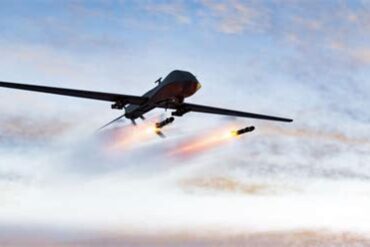
The operation, dramatically codenamed “Spider’s Web,” marked one of Ukraine’s most audacious strikes since the beginning of Russia’s full-scale invasion over three years ago. Ukrainian forces deployed 117 unmanned aerial vehicles (UAVs) in a synchronized assault on four Russian air bases. The drones reportedly originated from mobile containers strategically positioned near the targets, allowing them to bypass some of Russia’s early warning systems.

Zelenskiy’s Estimate vs. US Intelligence Assessment
In a press briefing held in Kyiv, President Zelenskiy announced that Ukrainian drones had damaged or destroyed 41 Russian aircraft, adding that half of them were likely beyond repair. He portrayed the mission as a strategic triumph with significant operational and psychological gains. However, the more conservative U.S. evaluation throws a different light on the outcome.
While American officials refrained from discrediting the effort outright, one of them emphasized the strategic gravity of the attack, noting its potential to push Russia into a more aggressive stance during ongoing U.S.-mediated peace efforts. The precision and ambition of the operation nonetheless stand as a testament to Ukraine’s evolving drone warfare capabilities and its growing confidence in penetrating Russia’s military heartland.
Targets and Strategic Bombers Hit
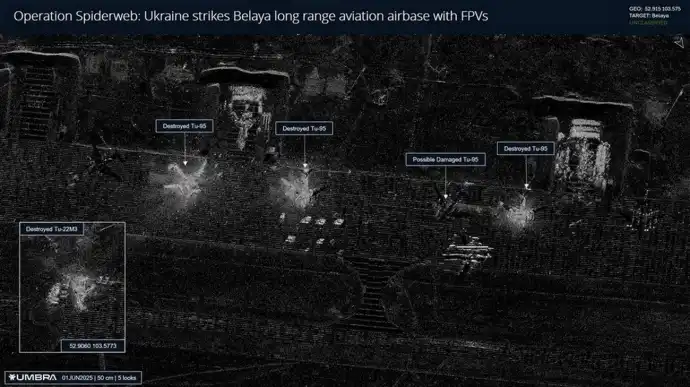
Ukraine released dramatic footage showcasing its drones attacking some of Russia’s most valuable aerial assets, including Tu-95 Bear and Tu-22M Backfire strategic bombers. These aircraft form the backbone of Russia’s long-range bombing capability and are frequently used to launch missile strikes against Ukrainian infrastructure and civilian areas.
Notably, drones were also observed landing on dome antennas of A-50 airborne early warning and control planes, rare and highly prized elements of the Russian Air Force. The A-50 is crucial to Russia’s air command and control system, and any damage to these platforms could significantly impair Moscow’s situational awareness over Ukraine and beyond.
Implications for the Nuclear Balance and Escalation Risks
The attack has ignited fears of a heightened escalation due to its implications for Russia’s nuclear triad—the strategic military posture encompassing land-based missiles, submarines, and airborne nuclear delivery systems. By striking strategic bombers, Kyiv touched one of the core pillars of Russia’s national defense doctrine, raising alarm bells in both Moscow and Washington.
Keith Kellogg, a national security adviser to former President Donald Trump, emphasized that such attacks on a nuclear power’s strategic delivery systems inherently raise the stakes. “When you hit part of a nuclear triad, you’re targeting their survival mechanism,” Kellogg noted. “You don’t know how they’ll respond, and that uncertainty increases risk exponentially.”
This sentiment was echoed by Russian leadership. President Vladimir Putin, in a direct phone call with Trump, expressed outrage and signaled that Russia would be compelled to respond. Though Trump described the conversation as constructive, he acknowledged that it fell short of laying the groundwork for immediate peace.
Damage Estimates and Strategic Fallout
Ukraine’s Security Service (SBU) has claimed the drone strike inflicted over $7 billion in damages and succeeded in hitting 34% of Russia’s strategic cruise missile carrier fleet. Satellite imagery supports some of these assertions, showing apparent destruction of multiple aircraft. However, independent verification remains limited due to the restricted access to Russian military installations.
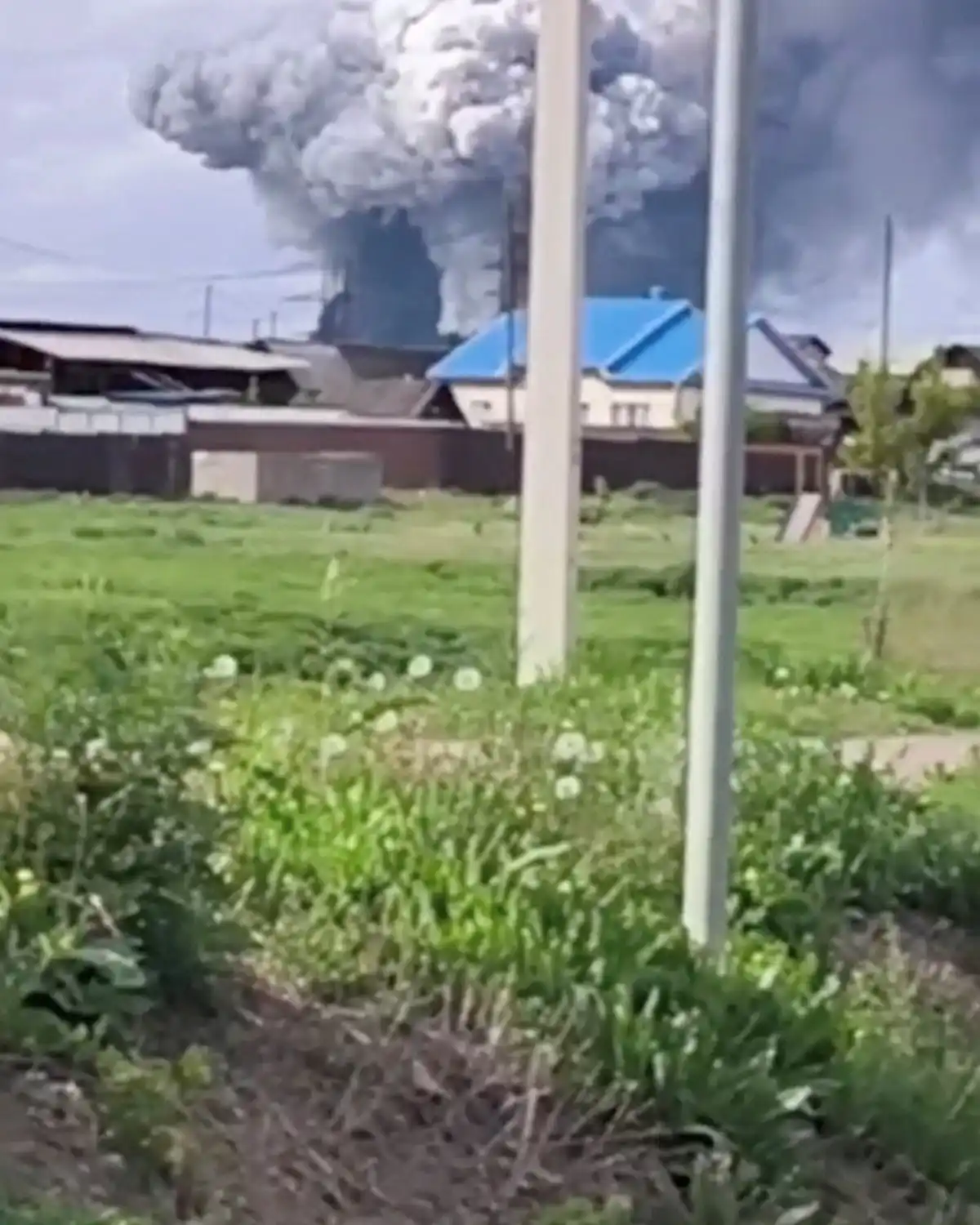
Russia’s Defense Ministry has confirmed the attacks took place across multiple regions—Murmansk, Irkutsk, Ivanovo, Ryazan, and Amur—but downplayed their success, asserting that UAVs were repelled in most locations and damage was minimal.
Nonetheless, reports from independent open-source intelligence groups analyzing commercial satellite images corroborate visual evidence of fire damage and craters consistent with aerial strikes, especially in Murmansk and Irkutsk.
Strategic Setback or Tactical Victory?
While the gap between Ukrainian claims and U.S. assessments might suggest a discrepancy in outcome, both sides acknowledge the symbolic and strategic value of the operation. The long-range precision strike—executed without prior U.S. notification—demonstrates that Ukraine retains the capacity to carry the fight deep into Russian territory, far beyond the front lines.
This capability is particularly vital in countering Russia’s airborne advantage, which continues to play a decisive role in supporting ground operations and launching missile barrages. By targeting aircraft that would otherwise fly uncontested across Ukrainian skies, Kyiv is shifting the operational tempo and showing Russia that nowhere is safe.
Russian Domestic Reactions and Military Criticism
The drone attacks have stirred up a firestorm of criticism within Russian nationalist and military blogger communities. Prominent figures accused the Kremlin of complacency and operational negligence, particularly targeting the aerospace command’s failure to safeguard critical strategic bombers.
This internal dissent, although not new, has been gaining traction as Russia struggles to maintain momentum in its broader offensive. The question arises whether these failures are isolated lapses or symptoms of deeper structural vulnerabilities within the Russian military establishment.
Drones Redefining the Battlefield
The success of the “Spider’s Web” offensive underscores how unmanned systems are reshaping the nature of modern warfare. What began as ad hoc, improvised drone strikes has matured into sophisticated, multi-vector operations capable of threatening high-value targets across thousands of kilometers.
This technological leap is narrowing the gap between a country’s asymmetric warfare capability and its opponent’s conventional military might. Ukraine’s ingenuity in repurposing commercially available components and fusing them into coordinated strategic strikes has drawn global military interest, possibly influencing future doctrines.
Washington’s Dilemma and Diplomatic Silence
The White House has thus far declined to publicly comment on Ukraine’s drone operation or the recalibrated U.S. assessment. Sources indicate that Kyiv did not inform Washington in advance of the strike—a move that, while showcasing Ukrainian independence, complicates the Biden administration’s efforts to balance support with escalation risk.
With the conflict entering its fourth year, U.S. policymakers are navigating increasingly turbulent waters. On one hand, Ukraine’s ability to disrupt Russian logistics and strike deep into enemy territory is viewed as a strategic advantage. On the other hand, attacks on nuclear-capable forces raise the specter of retaliation with unpredictable consequences.
The Biden administration remains under pressure from both domestic and international audiences to chart a clear path toward de-escalation without compromising Ukraine’s right to self-defense. The broader implications of Ukraine’s strike strategy could shape future U.S. support and recalibrate NATO’s defense posture in Eastern Europe.
Conclusion: A Turning Point or a Warning Shot?
The “Spider’s Web” drone campaign may not have inflicted as much tangible destruction as initially claimed, but it undeniably shifted perceptions on the battlefield. It signaled that Ukraine can adapt, innovate, and project force far beyond the front lines, sending shockwaves through the Russian military establishment.
As Washington weighs its next steps and Moscow contemplates its response, one thing is clear: the nature of this conflict is evolving. The air war is no longer Russia’s uncontested domain. With every UAV that slips through Russian defenses, Ukraine proves that the balance of power can be redefined—not just by firepower, but by agility, strategy, and technological ingenuity.