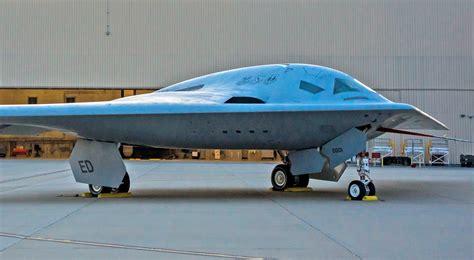
India’s defense establishment has categorically rejected media reports claiming that the country is developing an ultra-long-range strategic bomber akin to the American B-21 Raider. According to several prominent news outlets, the alleged Indian project would involve creating a stealth bomber with a range of 12,000 kilometers, intended to rival platforms such as the Russian Tu-160 Blackjack and the next-generation B-21 Raider. However, high-level sources within the Ministry of Defence have dismissed these reports as “misleading and inaccurate,” reigniting a critical debate about whether India needs such a capability in the first place.

Media Reports Trigger Global Speculation
The July 17th reports, quickly amplified by defense-focused publications, painted a picture of India’s ambition to leap into the strategic bomber club, reserved for military superpowers like the U.S., Russia, and China. The supposed project, attributed to a collaboration between the Defence Research and Development Organisation (DRDO), Hindustan Aeronautics Limited (HAL), and the Aeronautical Development Agency (ADA), claimed that India was exploring foreign technology transfers, especially from Russia and France. The aircraft was described as a stealth-enabled, nuclear-capable platform capable of delivering payloads across continents — potentially giving New Delhi a global strike option.
The B-21 Raider, currently under development in the United States, is expected to have a range between 9,000 to 11,000 kilometers. If India’s alleged bomber had indeed reached a 12,000-kilometer range, it would have surpassed existing Western and Russian benchmarks, positioning India at the forefront of next-generation strategic aviation.
Defense Officials: No Strategic Bomber Project in the Works
Despite the buzz, official sources within the Indian government swiftly debunked these claims. “India is not developing any strategic bombers. The reports published in the media are misleading,” one senior official told EurAsian Times, requesting anonymity.
This official rejection has not stopped experts and analysts from weighing in on whether India should pursue such a capability, especially given the evolving regional threat environment and the rise of long-range precision warfare.
A Historical Void: The IAF’s Legacy of Strategic Bombing
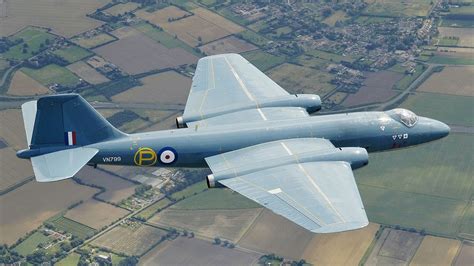
While the Indian Air Force (IAF) currently does not operate any bombers, that wasn’t always the case. Post-independence, India inherited and operated three squadrons of American B-24 Liberators, which were used until 1968. More prominently, the IAF inducted the English Electric Canberra in 1957 — a jet-powered medium bomber that served India well for nearly five decades.
The Canberra played pivotal roles in the 1965 and 1971 Indo-Pak wars, undertaking long-range bombing missions and reconnaissance tasks deep inside enemy territory. In a notable operation in 1961, six Canberra aircraft from No. 5 Squadron were deployed over 6,000 kilometers to Congo as part of the UN Multinational Force, marking India’s first fighter-bomber contingent to participate in an overseas mission.
Their legacy continued through multiple operations, including:
- Liberation of Goa (1961)
- Operation Pawan (1987) in Sri Lanka
- Operation Cactus (1988) in the Maldives
- Kargil War (1999), where a Canberra survived a missile hit and returned with vital intelligence
India finally retired the Canberra in 2007, leaving the IAF as one of the few major air forces without a strategic bomber.
India’s Brief Foray into Strategic Bombers: The Tu-22M Rumor
In 1999, India reportedly signed a lease-to-buy deal for four Russian Tu-22M bombers, equipped with Kh-22 cruise missiles, for maritime strike roles. These aircraft were expected to enter service by 2001. However, the deal was quietly cancelled, perhaps signaling New Delhi’s reluctance to invest in platforms with a steep logistical and financial overhead.
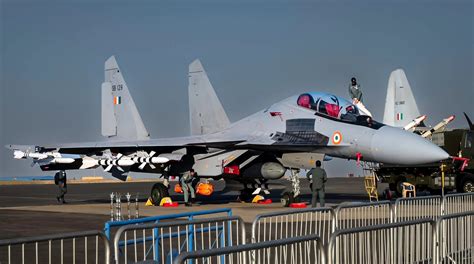
Since then, the IAF has focused on multi-role fighters with deep-strike capabilities like the Su-30MKI, Rafale, and Jaguar — supported by aerial refueling and cruise missile systems such as the BrahMos.
Strategic Bombers: Costly Prestige or Operational Necessity?
The idea of India possessing a B-21-like stealth bomber appeals to many for its deterrent value and potential power projection. However, critics argue that strategic bombers are ill-suited to India’s defense doctrine and geographic realities.
Regional Security Scope
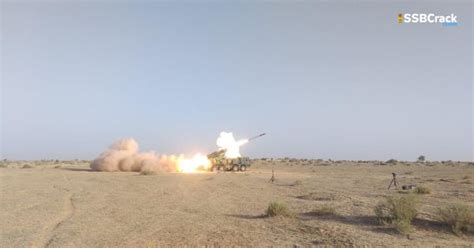
India’s primary security threats — Pakistan and China — lie well within the strike range of its existing fighter fleet. Even deep-penetration missions into Western China are possible with mid-air refueling. Moreover, India maintains a potent ballistic and cruise missile arsenal capable of reaching both adversaries.
In contrast, strategic bombers are designed for global operations and are typically fielded by nations with intercontinental ambitions. India’s strategic focus remains regional, centered on the subcontinent and the Indian Ocean Region (IOR).
Radar Signature and Survivability
Strategic bombers suffer from a large Radar Cross Section (RCS), making them vulnerable to advanced air defense systems such as China’s HQ-9 and Russia’s S-400, both of which are in service with India’s adversaries. Retired IAF Group Captain Kishore Kumar Khera argues that the large size and limited agility of these aircraft makes them easy targets in high-threat environments.
Sky-High Costs
A strategic bomber program is also economically prohibitive. The U.S. B-2 Spirit costs over $2 billion per unit, and even its operating cost per hour exceeds $60,000. In contrast, a frontline stealth fighter like the F-35A costs around $110 million.
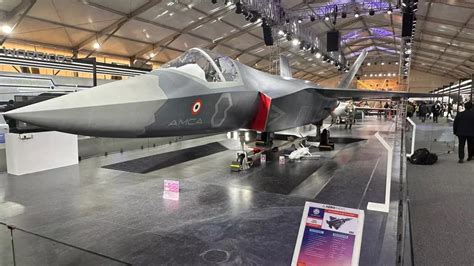
For India, which is already struggling to meet its sanctioned strength of 42 fighter squadrons (currently only at 31), pouring billions into a bomber project could cripple existing priorities — most notably the delayed Advanced Medium Combat Aircraft (AMCA) program.
The Changing Face of Warfare: Drones Over Bombers
The debate surrounding strategic bombers must also consider the evolution of modern warfare. Precision-guided munitions, stealth, and unmanned systems have largely replaced traditional bombing runs.
The Ukrainian conflict provides a stark example. Using low-cost drones, Ukrainian forces reportedly damaged or destroyed over 40 Russian strategic bombers, showing how vulnerable these behemoths are in the age of asymmetric warfare.
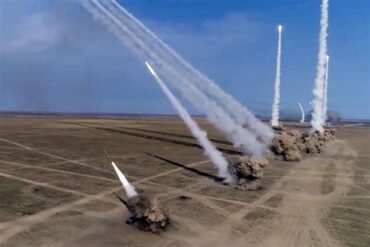
Moreover, India has begun investing in loyal wingman drones, hypersonic missiles, and satellite-guided precision weapons. These systems offer greater survivability, flexibility, and strategic impact at a fraction of the cost of a heavy bomber.
Voices in Favor: Strategic Value in the IOR
Not all defense experts agree that India should avoid bomber development altogether. Air Marshal Anil Chopra (Retd.) has argued that a strategic bomber could help extend India’s reach, especially in the Indian Ocean Region (IOR), where China’s presence is expanding.
Chopra believes bombers can serve as multirole platforms, integrating electronic warfare, nuclear strike, and command-and-control functions. In his view, bombers act as a credible deterrent and can ensure dominance over expansive maritime territories.
Still, even he acknowledges that for India to acquire such a capability, it would have to overhaul its defense priorities, build up industrial infrastructure, and ensure that programs like AMCA are completed first.
Conclusion: Strategic Bombers Not the Priority — For Now
While the idea of India fielding a B-21 Raider-like bomber is theoretically enticing, the realities of cost, doctrine, and threat environment suggest that India should focus on enhancing its fighter squadrons, accelerating the AMCA, and building up drone warfare capabilities.
India’s defense doctrine has always been pragmatic rather than aspirational, and its current trajectory appears aligned with the demands of regional security and future warfare trends. Until those change, the prospect of an Indian long-range stealth bomber remains a fantasy rather than a foreseeable reality.