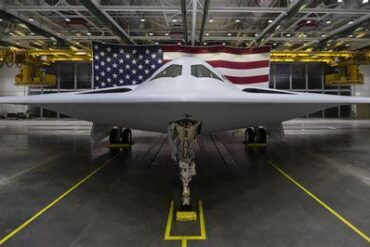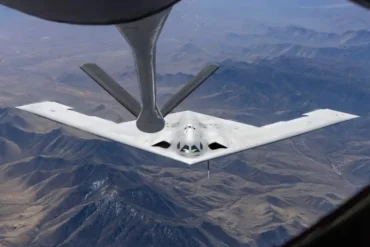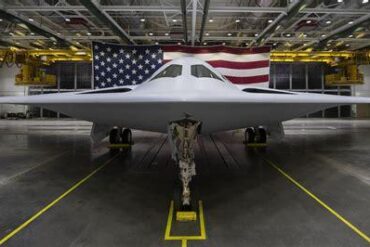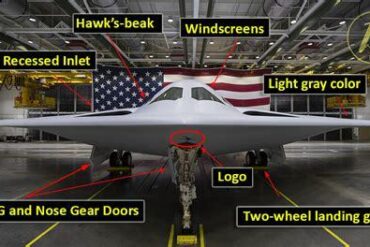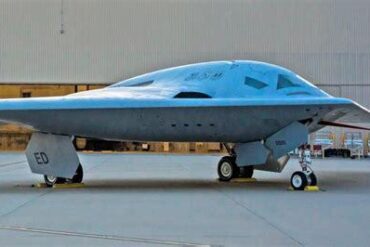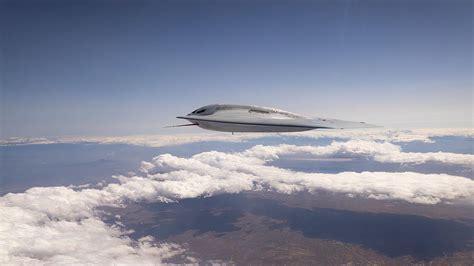
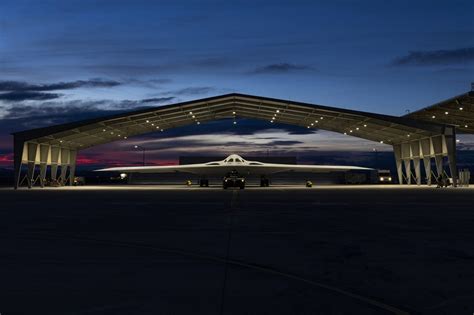
The Northrop Grumman B-21 Raider, the aircraft expected to redefine long-range strike capabilities for the United States Air Force, has reached another major milestone. A second B-21 prototype is now on its way to the service, signaling the steady progress of the program as the Air Force aims to replace its aging fleet of bombers with at least 100 next-generation aircraft by the early 2030s.
A Pivotal Step for the B-21 Program
The B-21 Raider entered low-rate initial production (LRIP) in early 2024 at Air Force Plant 42 in Palmdale, California, a facility renowned for its role in some of America’s most groundbreaking aviation projects. This stage has leveraged the same assembly tools and processes used to produce the six initial prototypes for flight testing. According to Gen. Thomas A. Bussiere, head of Air Force Global Strike Command, the second prototype—referred to as a “developmental test bird”—is close to beginning its own flight tests, an important precursor to expanding production and validating design refinements.
Northrop Grumman initially planned to produce seven to eight B-21s per year under the LRIP phase, but there is speculation that output could eventually increase to ten units annually as the program transitions to full-rate production (FRP). The company’s ability to scale production is key to meeting the Air Force’s timeline for fielding a fleet capable of replacing the Rockwell B-1B Lancer and Northrop B-2 Spirit.
“I’m pleased with the progress,” Bussiere told Air & Space Forces Magazine, underscoring confidence in the program’s trajectory despite its ambitious goals.
Why the B-21 Raider Was Developed
The B-21 Raider is more than just an updated bomber—it is a strategic response to evolving global threats. The aircraft made its first flight in November 2023, less than a year after its public unveiling at Northrop Grumman’s Palmdale facility. Since then, test flights have been conducted at a rate of roughly two per week, allowing engineers to gather vital data on aerodynamics, systems integration, and stealth performance.
The B-21 program was conceived to address a trio of critical needs:
- Enhanced Stealth: The Raider features advanced fifth-generation (Gen-5+) stealth technology, incorporating lessons learned from the B-2 program to achieve greater survivability in contested airspaces.
- Ease of Maintenance: Unlike the complex and costly B-2 Spirit, the B-21 has been designed with maintainability in mind, reducing downtime and lifecycle costs.
- Scalability: With a projected production of at least 100 units, the B-21 will provide the Air Force with a force structure capable of meeting global strike requirements well into the future.
In Bussiere’s words, the B-21’s design is “evolutionary, not revolutionary”—a deliberate choice to prioritize reliability, scalability, and mission readiness over experimental technologies.
Evolution from the B-2: Smaller, Smarter, Deadlier
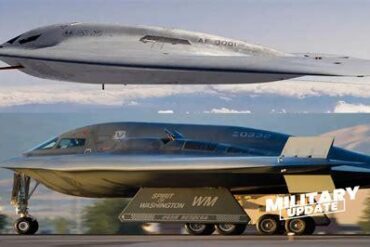
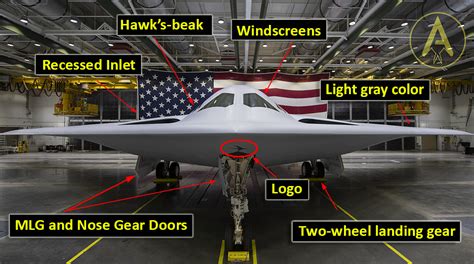
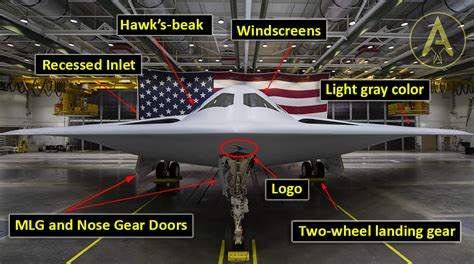
While sharing the flying wing configuration of its predecessor, the B-21 Raider is notably smaller and more compact, with a wingspan estimated between 130 to 140 feet, compared to the B-2’s 172 feet. This reduction in size is more than an aesthetic choice—it enhances stealth performance, improves operational flexibility, and allows the Raider to operate from a wider range of airfields, including forward-deployed bases.
“The B-2 features first-generation stealth technology, which, while still formidable, originated in the 1980s and 1990s,” wrote Harrison Kass for The National Interest. “In contrast, the B-21 leverages cutting-edge Gen-5+ stealth, representing the forefront of survivability in the modern battlespace.”
This leap in stealth capability ensures that the Raider can penetrate highly defended airspaces, including those bolstered by next-generation integrated air defense systems (IADS), while maintaining minimal radar signatures.
Operational Flexibility and Global Reach
One of the B-21’s most compelling features is its ability to operate from smaller, dispersed airfields, granting commanders the flexibility to deploy bombers closer to conflict zones. This shift allows for faster mission turnaround and reduces the strain of CONUS-to-CONUS (continental United States) missions—such as the 37-hour B-2 sorties conducted against Iranian targets—on both aircrews and aircraft.
By leveraging forward-deployed bases, the Air Force can maintain a persistent and scalable strike presence in regions of strategic interest, significantly shortening the time between mission planning and execution. This adaptability makes the B-21 not just a strategic bomber, but a multi-theater asset ready for dynamic global operations.
A Roadmap to the Future of U.S. Airpower
The B-21 Raider represents a cornerstone of the Air Force’s modernization strategy, aligning with its broader objectives of maintaining global air dominance, ensuring nuclear deterrence, and providing rapid conventional strike capabilities. Its development is particularly significant given the pace of adversarial advancements in hypersonic weapons, air defense systems, and cyber warfare.
Northrop Grumman’s production strategy—emphasizing digital engineering, modular open-systems architecture, and streamlined assembly processes—is central to ensuring that the program remains agile and cost-effective. These innovations will enable the B-21 to incorporate new technologies as they emerge, extending the aircraft’s relevance for decades to come.
Strategic Implications and Deterrence Value
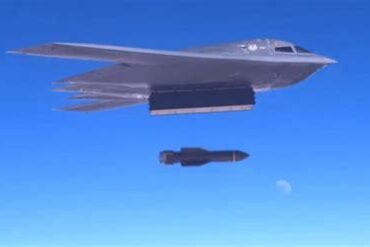
Beyond its technical specifications, the B-21 carries immense geopolitical weight. As great-power competition intensifies, particularly with China and Russia, the Raider provides a credible and flexible deterrent against peer and near-peer adversaries. Its ability to deliver both conventional and nuclear payloads ensures that it can play a decisive role in maintaining the strategic balance.
In an era where adversaries are investing heavily in anti-access/area denial (A2/AD) capabilities, the B-21’s stealth profile and global reach provide the United States with a penetrating strike platform capable of neutralizing high-value targets deep within enemy territory.
Looking Ahead: From Prototype to Operational Fleet
With at least six prototypes in various stages of testing and assembly, and a second prototype now preparing for flight trials, the B-21 program is steadily advancing toward initial operational capability (IOC). If Northrop Grumman can meet production targets and maintain cost discipline, the Raider will soon form the backbone of America’s bomber fleet.
As full-rate production ramps up in the coming years, the Air Force expects to see a gradual but decisive transition away from the B-1B and B-2 platforms, ushering in a new era of stealth, survivability, and operational flexibility.
The B-21 Raider is not merely an aircraft; it is a strategic investment in future airpower, designed to ensure that the United States retains its global strike advantage in an increasingly contested world. Its development, though measured and evolutionary, reflects the lessons of past programs while embracing the demands of 21st-century warfare.
In the words of Gen. Bussiere, the B-21 is the “backbone of the future bomber force.” As the second prototype moves closer to flight testing, that future is coming into sharper focus.