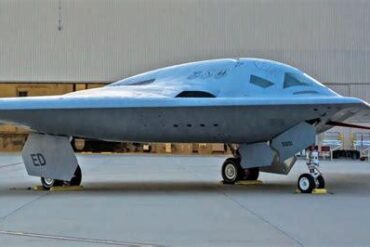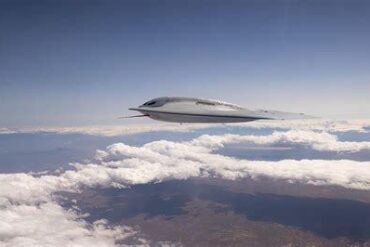
The United States is actively evaluating a significant acceleration in the production of the B-21 Raider stealth bomber, a move that could reshape the future of its long-range strike capabilities. At the center of this consideration is the potential establishment of a second assembly line, a strategic decision that reflects mounting geopolitical pressure and the urgent need to modernize America’s aging bomber fleet.
Defense officials, during a March 18, 2026 briefing to Congress, outlined the importance of increasing output for the next-generation bomber. The B-21 Raider, developed by Northrop Grumman, is not simply a replacement for legacy platforms like the B-1 Lancer and B-2 Spirit—it is a foundational element in maintaining credible deterrence across both conventional and nuclear domains. With tensions intensifying across multiple regions, particularly involving China, Russia, and Iran, the urgency behind scaling production has become increasingly evident.
The discussion surrounding a second production line signals more than just industrial ambition; it underscores a strategic pivot. Current plans aim for a baseline fleet of at least 100 aircraft, yet defense leadership is now openly supporting an expansion toward 145 B-21 bombers, a figure that would significantly enhance operational flexibility and global strike readiness.
Strategic Pressure Driving B-21 Production Expansion
The push to accelerate B-21 production is rooted in a rapidly evolving threat landscape. Over the past two decades, potential adversaries have invested heavily in advanced integrated air defense systems (IADS), long-range missile capabilities, and anti-access/area denial (A2/AD) strategies. These developments have fundamentally altered how the United States must approach power projection.
Unlike legacy bombers, the B-21 is specifically designed to operate in highly contested environments, where survivability depends on stealth, electronic warfare resilience, and real-time data integration. Increasing the number of available platforms ensures that the U.S. can sustain operations across multiple theaters simultaneously—a necessity in scenarios involving Indo-Pacific and European contingencies.
The idea of a second assembly line is therefore not merely about production speed. It represents a deliberate effort to mitigate risk, reduce bottlenecks, and ensure that industrial capacity aligns with strategic demand. In modern conflict planning, timing is everything—and delays in bomber availability could translate into reduced deterrence effectiveness.
Industrial Expansion and the Role of Air Force Plant 42
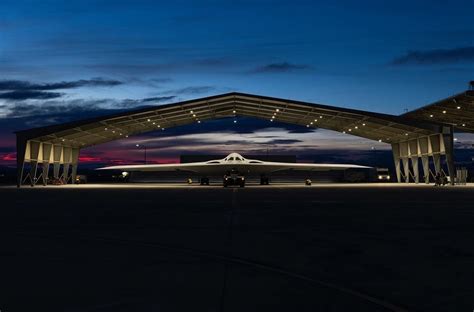
The industrial backbone of the B-21 program is already undergoing transformation. In February 2026, the U.S. Air Force awarded a $4.5 billion contract to Northrop Grumman aimed at expanding production capacity by approximately 25 percent. This investment focuses on Air Force Plant 42 in Palmdale, California, the primary site for final assembly and integration of the Raider.
While this expansion is expected to ease supply chain constraints, officials have been cautious about specifying when increased capacity will directly translate into higher delivery rates. The complexity of stealth bomber manufacturing—particularly the integration of low-observable materials and advanced avionics—means that scaling production is not a simple linear process.
The possibility of establishing a second assembly line introduces new variables. It would require not only infrastructure investment but also the replication of highly specialized expertise, quality control systems, and supplier networks. However, if executed effectively, it could dramatically shorten production timelines and stabilize output, ensuring that the Air Force receives aircraft at a pace aligned with operational requirements.
From Development to Deployment: B-21 Testing Milestones
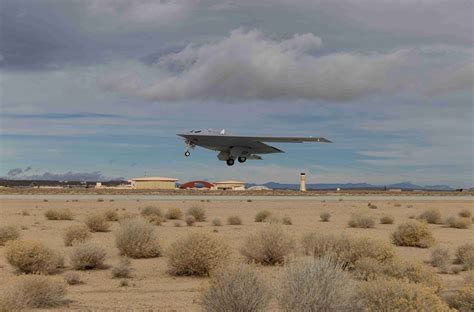
The B-21 Raider program has reached a critical transition phase, moving from development into early operational validation. Currently, two aircraft are undergoing flight testing at Edwards Air Force Base, where engineers and pilots are rigorously evaluating performance across a wide range of conditions.
These tests encompass everything from ground evaluations and taxi trials to full airborne missions, providing essential data on aerodynamics, stealth characteristics, and system integration. The first operational delivery is scheduled for Ellsworth Air Force Base, South Dakota, in 2027, marking the beginning of the Raider’s entry into active service.
This timeline is significant because it coincides with the gradual retirement of older bomber platforms. Any delay in B-21 deployment would risk creating a capability gap, further reinforcing the argument for accelerated production and expanded manufacturing capacity.
Engineering the Next-Generation Stealth Bomber
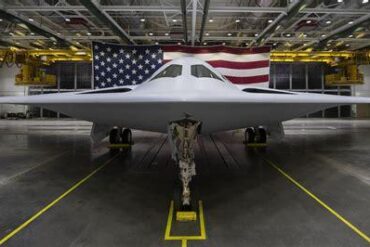
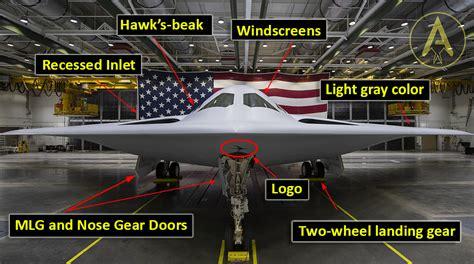
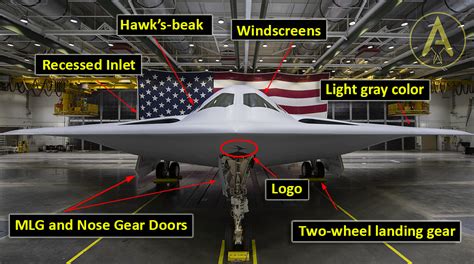
At its core, the B-21 Raider represents a refinement of the flying-wing design philosophy pioneered by the B-2 Spirit. However, it introduces substantial advancements in materials science, aerodynamics, and signature management. The aircraft’s reduced radar cross-section across multiple frequency bands enhances its ability to evade detection by modern radar systems.
With a wingspan of approximately 44.5 meters and a maximum takeoff weight near 124,000 kilograms, the B-21 is slightly smaller than its predecessor but more efficient. This design choice improves maneuverability while reducing operational costs—an important consideration given the scale of the planned fleet.
The propulsion system is expected to utilize stealth-optimized engines, likely derived from the Pratt & Whitney F-135 or PW9000 family. These engines deliver over 11,000 kilograms of thrust each, while minimizing infrared and radar signatures. The result is a bomber capable of cruising at around 870 km/h, with a maximum speed approaching 1,050 km/h, and a range of approximately 12,000 kilometers.
Advanced Weapons Integration and Mission Flexibility
The B-21 Raider is designed to carry a diverse payload of nuclear and conventional weapons, enabling it to fulfill a wide range of mission profiles. Its internal weapons bays preserve stealth characteristics while allowing for flexible loadouts tailored to specific operational requirements.
Key armament capabilities include:
- B61 and B83 nuclear gravity bombs
- Long Range Stand Off (LRSO) nuclear cruise missile
- Joint Direct Attack Munition (JDAM)
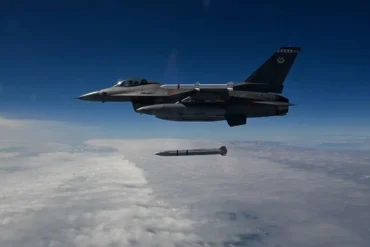
- Joint Air-to-Surface Standoff Missile (JASSM)
- GBU-57 Massive Ordnance Penetrator (MOP) for hardened targets
This versatility allows the B-21 to operate in both stand-off and stand-in roles, launching weapons from outside heavily defended zones or penetrating enemy airspace to deliver precision strikes. The platform is also expected to integrate future hypersonic weapons, further expanding its operational reach.
Network-Centric Warfare and Digital Superiority
One of the most transformative aspects of the B-21 Raider lies in its avionics and software architecture. The aircraft is built around a fully networked framework, integrating data from radar, infrared sensors, and electronic warfare systems into a unified operational picture.
This multi-sensor fusion capability reduces pilot workload while enhancing situational awareness, enabling faster and more informed decision-making in complex combat environments. The Raider’s electronic warfare suite is designed to jam, deceive, and evade advanced air defense systems, ensuring mission success even in heavily contested electromagnetic environments.
Equally important is its open-architecture design, which allows for rapid software updates and system upgrades. This ensures that the B-21 can evolve alongside emerging threats, maintaining technological superiority over its operational lifespan.
Congressional Support and Strategic Signaling
The debate over expanding the B-21 fleet has gained strong bipartisan support in Congress. Lawmakers increasingly view a larger bomber force as essential for addressing the demands of simultaneous global contingencies. The Indo-Pacific region, in particular, has emerged as a focal point, where long-range strike capabilities play a critical role in deterring aggression.
The consideration of a second production line sends a clear strategic signal. It demonstrates a commitment to sustained military modernization and reinforces the United States’ ability to project power across vast distances. In an era where speed, scale, and adaptability define military effectiveness, the B-21 program stands at the intersection of all three.
The Future of U.S. Long-Range Strike Capability
The potential acceleration of B-21 Raider production marks a निर्ण moment in U.S. defense planning. By investing in expanded manufacturing capacity and exploring the feasibility of a second assembly line, the United States is positioning itself to meet the challenges of a more contested global environment.
The Raider is not just a bomber—it is a strategic platform designed for the next generation of warfare, where stealth, connectivity, and adaptability determine success. Increasing its production is as much about preparing for future conflicts as it is about maintaining stability in the present.
As decisions unfold in the coming months, one reality is already clear: the B-21 Raider will play a defining role in shaping the balance of power in the decades ahead.