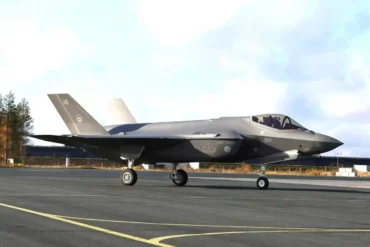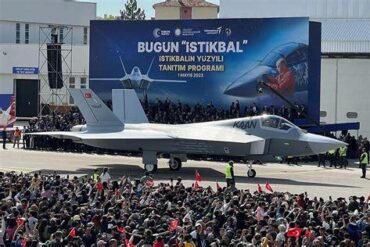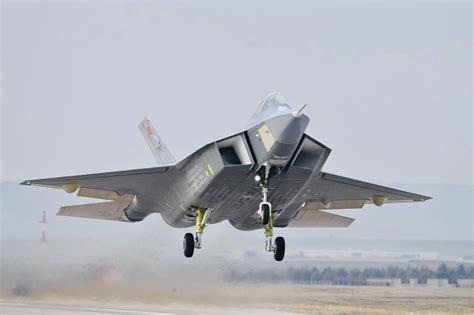
Saudi Arabia’s airpower story has entered a fascinating new chapter. With Washington finally opening the door to the F-35 Lightning II, Riyadh is no longer merely chasing access to fifth-generation fighters—it is shaping a diversified stealth future. Signals emerging from Ankara suggest that the Kingdom is now casting a serious eye toward Turkey’s KAAN, a domestically developed stealth fighter designed to rival the world’s most advanced combat aircraft.
This is not a story of indecision. It is a story of strategic abundance. Saudi Arabia, newly empowered by US approval and emboldened by its long-term Vision 2030 defense ambitions, appears to be asking a sharper question: why settle for a single stealth ecosystem when multiple pathways offer leverage, autonomy, and industrial depth?
The answer may lie in the quiet but accelerating convergence between Riyadh and Ankara—two regional heavyweights with overlapping security concerns, expanding defense industries, and a growing appetite for technological sovereignty.
Just months after President Donald Trump approved the long-sought F-35 sale to Saudi Arabia, Turkish President Recep Tayyip Erdoğan publicly hinted that the Kingdom is not merely admiring KAAN from afar, but actively exploring joint investment and cooperation. The timing is not coincidental. It reflects a recalibration of Saudi defense thinking in a region where air superiority is no longer optional—it is existential.
Riyadh’s Post-F-35 Strategy Is About Options, Not Replacements
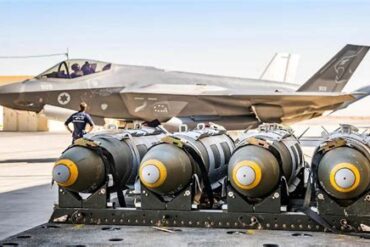
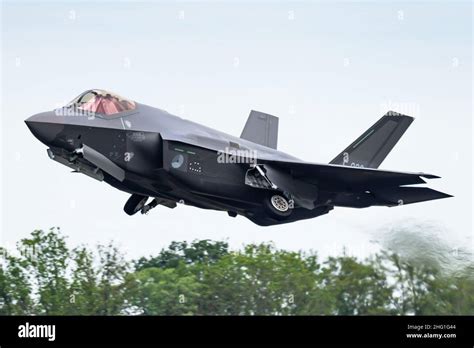
The F-35 approval was a diplomatic breakthrough, but it came wrapped in familiar caveats. Concerns over Israel’s Qualitative Military Edge (QME) continue to hover over any advanced US arms transfer in the Middle East. Analysts widely believe that Saudi F-35s could arrive with software-level limitations, restricting access to the most advanced sensor fusion, AI-assisted targeting, and networked warfare features enjoyed by Israel’s F-35I “Adir.”
That reality matters. In fifth-generation warfare, software is the aircraft. Radar performance, electronic warfare dominance, and data sharing are defined less by airframes than by code. A downgraded stealth jet is still formidable—but it is not absolute.
KAAN enters this equation as a different kind of asset. Designed outside US export control frameworks, it offers Saudi Arabia a potential second stealth pillar, one not constrained by Washington’s political red lines. This does not diminish the F-35’s value. Instead, it reframes it as part of a layered airpower architecture, where redundancy equals resilience.
KAAN: Turkey’s Answer to Exclusion—and a Statement of Intent
KAAN was born from frustration. Turkey’s expulsion from the F-35 program following its acquisition of the Russian S-400 air defense system forced Ankara to confront a hard truth: reliance on foreign platforms comes with strategic strings attached. The response was not retreat, but acceleration.
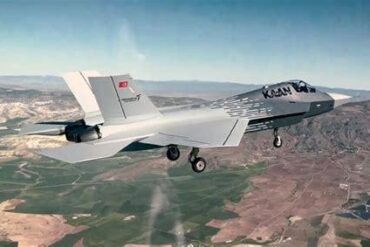
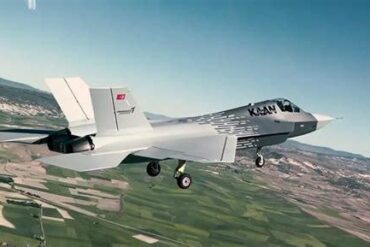
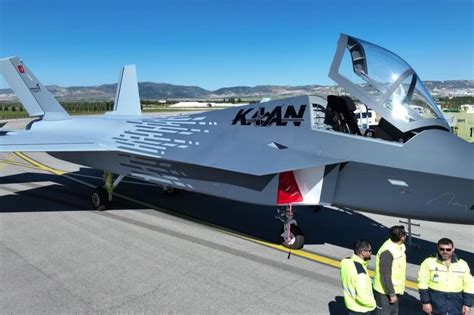
Developed by Turkish Aerospace Industries (TAI), KAAN is positioned as a twin-engine, fifth-generation stealth fighter optimized for air superiority but flexible enough for deep-strike and multirole missions. Turkish officials have repeatedly emphasized that KAAN is not merely a substitute for the F-35—it is an assertion of engineering independence.
Former TAI chief Temel Kotil underscored this ambition by highlighting KAAN’s heavier payload capacity—up to 10 tons of munitions, compared to the F-35’s roughly six. Two engines provide greater electrical power for sensors and electronic warfare systems, as well as enhanced survivability in contested airspace. In an era where stealth is increasingly contested by advanced radars, these design choices are deliberate.
For Saudi Arabia, KAAN represents something equally valuable: influence at the design table. Joint production, technology transfer, and localized maintenance ecosystems are all reportedly under discussion—an arrangement reminiscent of Saudi cooperation on Turkish Bayraktar Akinci drones.
Ankara and Riyadh: From Transactional Ties to Industrial Alignment
President Erdoğan’s remarks were unusually candid. He spoke not only of praise for KAAN from Saudi officials, but of joint investment that could be implemented “at any moment.” This language suggests momentum beyond polite diplomatic signaling.
Defense cooperation between Turkey and Saudi Arabia has already moved from theory to practice. Drone acquisitions, reciprocal visits by senior defense officials, and expanding industrial agreements have laid the groundwork for something larger. KAAN could become the flagship of this evolving partnership.
For Riyadh, the appeal is multifaceted. Participation in KAAN aligns neatly with its goal of localizing 50 percent of defense spending under Vision 2030. For Ankara, Saudi capital and potential Emirati participation could accelerate development timelines and reduce unit costs, transforming KAAN from a national project into a multinational stealth program.
This is how modern fighter ecosystems are built—not in isolation, but through shared risk and shared ambition.
Why Saudi Arabia Might Want Two Stealth Fighters, Not One
At first glance, pursuing both the F-35 and KAAN may appear redundant. In reality, it is strategically elegant.
The F-35 excels as a networked sensor node, integrating seamlessly with US and NATO systems. It is unmatched in coalition warfare scenarios. KAAN, by contrast, offers operational autonomy, customizable mission systems, and freedom from external political vetoes.
Together, they allow Saudi Arabia to hedge against uncertainty. Should geopolitical winds shift or upgrade pathways narrow, Riyadh retains options. Should regional threats evolve, it can tailor capabilities across platforms rather than force one aircraft to do everything.
This dual-track approach mirrors strategies seen in other major powers, where diversity of platforms enhances strategic depth rather than diluting it.
The Israeli Factor and the Software Question
Israel’s opposition to F-35 sales in the region is longstanding and rooted in doctrine. The QME framework ensures that Israeli systems remain technologically superior to those of its neighbors. Software differentiation is the quiet mechanism that makes this possible.
Reports suggesting a downgraded Saudi F-35—particularly in software—have not been officially confirmed. Yet the logic is sound. Mission systems, electronic warfare libraries, and data fusion algorithms can be selectively gated without altering the aircraft’s outward appearance.
KAAN complicates this dynamic. As a non-US platform, its capabilities would be defined by its partners, not by Washington’s export policies. For Saudi planners, that alone makes it strategically intriguing.
Production Timelines and the Window of Opportunity
Turkey has set ambitious delivery targets. The first 20 KAAN aircraft are slated for delivery by 2028, with serial production accelerating between 2030 and 2033. Hundreds are planned for the Turkish Air Force, ensuring a robust domestic baseline.
Saudi involvement at this stage would be perfectly timed. Early investment translates into influence over configuration, access to supply chains, and priority production slots. It also allows Saudi engineers and technicians to embed within the program from its formative years, building human capital alongside hardware.
This is not just about buying jets. It is about owning part of the future.
A Stealth Balancing Act Redefining Middle Eastern Airpower
Saudi Arabia’s apparent interest in KAAN does not signal dissatisfaction with the F-35. It signals maturity. Riyadh is no longer a passive recipient of defense technology—it is an active architect of its own security ecosystem.
By engaging both Washington and Ankara, the Kingdom positions itself at the crossroads of Western and emerging defense innovation. It gains leverage, flexibility, and industrial credibility. In a region where air dominance shapes deterrence, that combination is priceless.
KAAN, still in development, is not yet a proven combat system. The F-35, combat-tested and globally deployed, remains the benchmark. But history favors those who invest early in transformative platforms.
Saudi Arabia appears to understand this. In the age of stealth, the most powerful weapon may not be a single fighter jet—but the freedom to choose more than one path to the skies.