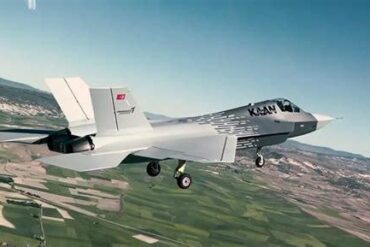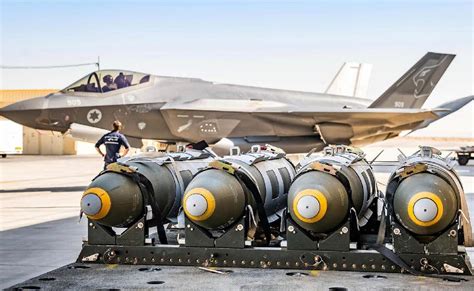
U.S. President Donald Trump’s renewed consideration of selling F-35 fighter jets to Türkiye marks a pivotal moment in transatlantic defense relations, coming at a time when Ankara is deep into the development of its indigenous KAAN fifth-generation fighter aircraft. On December 29, 2025, Trump stated he is “very seriously” evaluating the resumption of F-35 sales to Türkiye, a country once suspended from the Joint Strike Fighter program due to prior geopolitical frictions.
This development follows remarks by U.S. Ambassador to Türkiye and Special Envoy for Syria Tom Barrack, who confirmed that re-entry discussions into the F-35 ecosystem are ongoing. Ankara is seen as attempting to balance long-term national defense ambitions with immediate tactical requirements as the KAAN fighter jet continues its gradual progress toward operational status.
Türkiye’s Strategic Calculus: Bridging the Capability Gap
Behind the scenes of this diplomatic overture lies a strategic necessity for Türkiye. Its domestic fifth-generation program, while impressive, is not expected to reach full operational capability before the early 2030s. In the meantime, Türkiye risks falling behind regional competitors and NATO allies in the realm of fifth-generation aerial warfare.
The F-35 Lightning II, with its stealth design, sensor fusion, and advanced electronic warfare systems, offers a ready-made solution to cover this critical capability gap. Ankara’s defense establishment appears to view the jet not merely as an interim platform, but as a stepping stone toward tactical mastery, technological interoperability, and doctrinal evolution in the age of networked air combat.
The Rise of KAAN: Türkiye’s Indigenous Answer to the Future of Air Combat
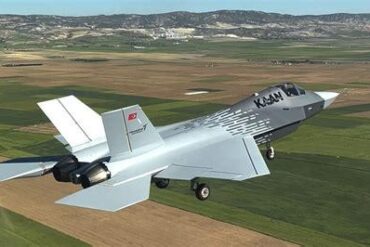
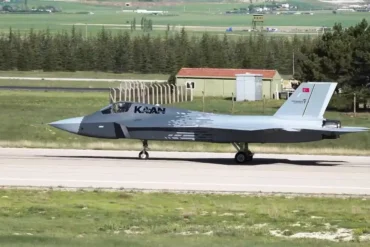
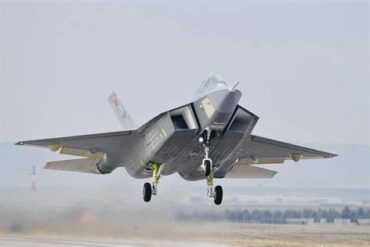
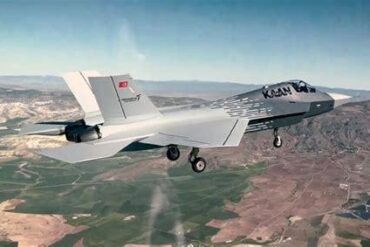
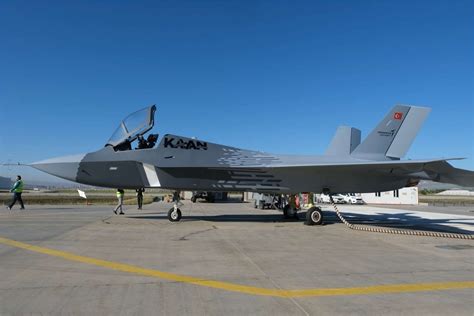
The KAAN project, spearheaded by Turkish Aerospace Industries (TAI), is Türkiye’s most ambitious aerospace initiative to date. Initially conceptualized as the TF-X (Turkish Fighter – Experimental) and officially designated Milli Muharip Uçak (MMU), the KAAN aims to replace Türkiye’s aging F-16 Fighting Falcons.
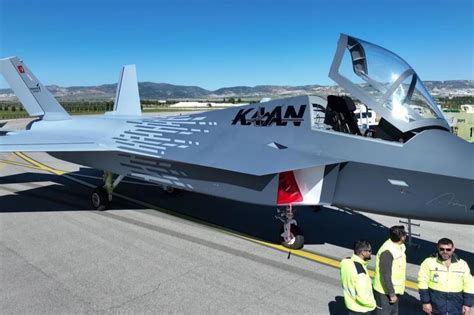
Launched formally in 2016 after years of conceptual development, the KAAN project is a collaborative effort involving ASELSAN, HAVELSAN, and TÜBİTAK, with TEI handling propulsion and TRMotor developing a future indigenous engine. The prototype conducted its maiden flight on February 21, 2024, a historic milestone that marked Türkiye’s entry into the select group of nations capable of designing and flying a fifth-generation combat aircraft.
Development Milestones and Technical Advancements
By early 2025, KAAN had successfully entered flight test phases, logging multiple test sorties at the Akinci Flight Test Center. These tests are validating critical technologies, including aerodynamic configurations, radar systems, and mission electronics. Engineers are refining radar cross-section reduction, integrating an AESA radar, and deploying advanced electronic warfare capabilities tailored for the future battlespace.
The roadmap anticipates delivery of the first production-standard KAAN aircraft by 2028, with Initial Operational Capability (IOC) by 2029-2030. A fully indigenous turbofan engine is expected to replace the current GE F110 engines in later production blocks, a step that will further cement technological sovereignty.
Tactical Synergy: F-35 as a Complement to KAAN
Türkiye’s renewed interest in the F-35 is not a contradiction of its domestic program, but rather a tactical complement to it. Operating the F-35 alongside KAAN would allow the Turkish Air Force to:
- Maintain fifth-generation capabilities throughout KAAN’s development window.
- Integrate with NATO’s air combat standards and networks.
- Train aircrews and support teams on stealth sustainment, sensor fusion, and digital mission planning.
- Bridge tactical doctrine from current platforms to next-generation systems.
This dual-fighter strategy would give Türkiye the flexibility to employ the F-35 in current high-readiness roles, while KAAN develops into a more strategically autonomous, regionally tailored platform. Defense experts also highlight that this dual operation would accelerate domestic know-how, especially in fifth-gen logistics chains, supply ecosystems, and software-driven warfare.
Congressional Hurdles and Geopolitical Realignment
Despite Trump’s verbal support, the path forward still requires U.S. Congressional approval, a step that will likely involve delicate negotiations over strategic alignment, human rights considerations, and NATO compliance.
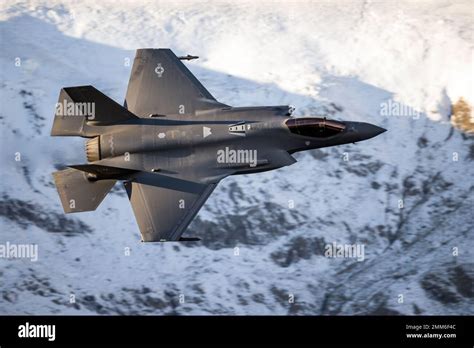
If approved, Türkiye could initially receive six F-35A units that were previously produced but never delivered due to program suspension in 2019. These aircraft are currently in U.S. Air Force storage. Future deliveries could be phased, depending on evolving defense ties and mutual defense assurances between Ankara and Washington.
This development also reflects a broader recalibration of Turkish-American defense relations. Where once political mistrust prevailed, the exigencies of global instability and NATO’s eastern flank security now appear to be driving pragmatic convergence. Trump’s posture indicates a readiness to resume strategic cooperation in recognition of Türkiye’s frontline position in both European and Middle Eastern theaters.
KAAN’s Long-Term Promise and Technological Autonomy
Türkiye’s decision to invest in KAAN represents more than a military ambition—it is a statement of national technological independence. The country is signaling its commitment to become not just a buyer but a developer and exporter of advanced defense systems.
From its initial conception in 2010, KAAN has symbolized Türkiye’s resolve to master the aerospace industrial complex. The collaboration between multiple Turkish defense entities aims to ensure a fully indigenous platform by the mid-2030s, potentially offering export opportunities to partner nations in Asia, the Middle East, and Africa.
Moreover, KAAN is expected to evolve with modular open-architecture systems, making it adaptable to future technologies such as AI-powered mission processing, hypersonic countermeasures, and loyal wingman UAV integration.
A Calculated Leap Forward
Far from signaling dependency, Türkiye’s pursuit of the F-35 program amidst the KAAN rollout reflects a realist defense doctrine. The goal is not to substitute one for the other but to operate in tandem, ensuring Türkiye’s armed forces do not experience a fifth-generation void during a decade of accelerated transformation.
This dual-track strategy strengthens Türkiye’s deterrent posture, fosters institutional experience in stealth combat operations, and prepares Turkish defense infrastructure to sustain and export a homegrown fifth-gen platform. It also underlines the country’s centrality in NATO’s strategic calculus and reaffirms its commitment to shared defense architectures.
Conclusion: The Intersection of Readiness and Sovereignty
Türkiye’s re-engagement with the U.S. F-35 program is driven by a triad of compelling factors: operational urgency, strategic alignment, and technological acceleration. While KAAN symbolizes the future of Turkish airpower, the F-35 represents an immediate bridge to ensure combat effectiveness, regional deterrence, and NATO interoperability.
In today’s volatile geopolitical landscape, where threats are hybrid and timelines are compressed, Türkiye’s approach reflects military pragmatism at its core. Rather than an abandonment of independence, the potential F-35 acquisition represents a calculated leap forward—anchored in the realities of readiness, but propelled by the ambition of sovereignty.