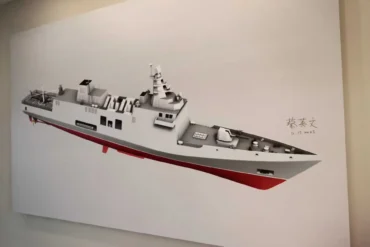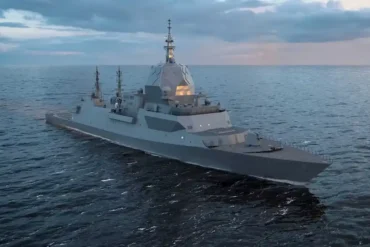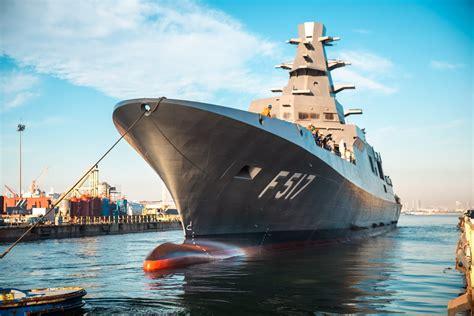
On July 26, 2025, at the IDEF 2025 defense exhibition in Istanbul, Türkiye unveiled a major breakthrough in its naval defense ambitions: the official export of two MILGEM Istif-class frigates to Indonesia. This historic deal, signed between Türkiye’s TAIS Shipyards and the Indonesian Ministry of Defence, signifies the first-ever export of Türkiye’s MILGEM-class warships, underscoring the nation’s growing influence in the global naval industry.
Türkiye’s Defense Leap: Exporting MILGEM to Southeast Asia
The announcement came amid a backdrop of rising interest in Türkiye’s indigenous defense platforms, notably its MILGEM (Milli Gemi – National Ship) initiative. The deal was inked with the presence of Prof. Dr. Haluk Görgün, President of Defence Industries, who emphasized the export as a “strategic inflection point” in Türkiye’s military-industrial trajectory.
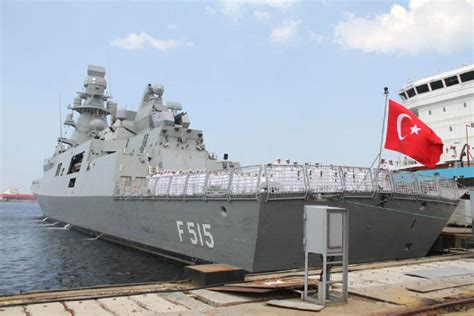
TAIS Shipyards, a powerful consortium composed of Anadolu Shipyard, Sedef Shipyard, and Sefine Shipyard, is the industrial force behind the program. The group was specifically established to consolidate Türkiye’s naval construction capability and has repeatedly proven its competence with timely deliveries and high-precision builds. The consortium launched two Istif-class frigates simultaneously for the Turkish Navy earlier this year — a testament to its scalable production ecosystem.
Anatomy of the Istif-Class Frigate: Cutting-Edge Maritime Engineering
The Istif-class, or I-class, represents the most sophisticated surface combatant Türkiye has ever produced. Evolved from the foundational ADA-class corvette design, the Istif-class introduces extended displacement, a significantly expanded sensor and weapon suite, and blue-water endurance, positioning it as a next-generation multi-role platform.
Measuring 113 meters in length and displacing around 3,100 tons, the frigate integrates a CODAG (Combined Diesel and Gas) propulsion system. This configuration enables it to operate with both high-speed agility and long-range efficiency — two qualities critical for naval dominance in the Indo-Pacific theater.
Weaponry and combat systems onboard are formidable:
- A 16-cell MIDLAS Vertical Launching System (VLS), compatible with HISAR air-defense missiles
- Atmaca long-range anti-ship cruise missiles
- A 76mm naval gun on the bow
- Close-In Weapon Systems (CIWS) for layered short-range protection
- AESA radar and indigenous electronic warfare systems integrated into a stealthy mast design
- Hull-mounted sonar and towed array sonar for anti-submarine warfare
- A hangar and deck suitable for S-70B Seahawk helicopters
This robust suite allows the Istif-class to handle a full spectrum of naval warfare — from anti-air and anti-surface roles to undersea dominance and expeditionary operations.
Indonesia’s Strategic Naval Modernization Gains Momentum
Indonesia’s decision to procure the Istif-class frigates is more than a weapons deal — it’s a strategic investment in the nation’s naval future. With growing geopolitical tensions across the South China Sea and a need for long-range maritime deterrence, Jakarta’s move is designed to enhance maritime domain awareness and power projection.
By acquiring these vessels, Indonesia gains:
- A stealth-capable, multi-domain platform suitable for extended patrol missions
- Enhanced air defense and anti-ship combat capabilities
- Integration into a NATO-compatible architecture, broadening interoperability with Western partners
- A foundation for technology transfer and industrial collaboration
The agreement reportedly includes local industrial participation, a component that aligns with Jakarta’s long-term ambition to build domestic naval production capacity. While specifics remain undisclosed, initial indicators suggest collaborative ventures could extend to radar systems, software integration, and weapons maintenance.
Türkiye’s Ascent in the Global Defense Marketplace
This deal is emblematic of Türkiye’s shifting posture from a domestic security consumer to an international defense exporter. Over the past decade, Ankara has invested heavily in defense self-sufficiency, particularly in shipbuilding, aerospace, and missile development. The results are now evident: a diverse suite of export-ready platforms drawing attention from governments worldwide.
From the Bayraktar TB2 and AKINCI drones to the TCG Anadolu amphibious assault ship and now the MILGEM-class surface combatants, Türkiye has successfully entered markets in:
- North Africa (e.g., Algeria, Tunisia)
- Southeast Asia (e.g., Indonesia, Malaysia)
- Eastern Europe and the Caucasus (e.g., Ukraine, Romania)
- Middle East and Central Asia
The Istif-class export to Indonesia is also likely to fuel additional interest from other Southeast Asian navies seeking modern yet cost-effective alternatives to Western or Chinese offerings. The versatility, modularity, and operational pedigree of MILGEM vessels make them attractive options for mid-tier navies seeking regional assertiveness without full-scale fleet renewal.
Future Prospects: A Blueprint for Regional Naval Expansion
Türkiye’s ability to export MILGEM warships demonstrates not only manufacturing competence but also strategic foresight. By coupling advanced design with appealing cost-performance ratios, Turkish shipbuilders are filling a critical niche in the maritime arms market.
For Indonesia, the Istif-class acquisition may be only the beginning. If successful, the program could evolve into a long-term naval partnership that includes:
- Co-production arrangements in Indonesian shipyards
- Joint R&D on next-generation surface combatants
- Advanced training programs for Indonesian crews
- Maintenance and lifecycle support contracts
The frigates are expected to be delivered by late 2027, aligning with Indonesia’s defense planning cycle for the 2030s. This timeline gives both nations the opportunity to deepen coordination on doctrine development, threat analysis, and maritime security operations.
A New Chapter in Turkish-Indonesian Defense Relations
Beyond hardware, this deal signals a profound shift in bilateral defense diplomacy. Türkiye and Indonesia, both emerging regional powers with historical ties and shared geopolitical interests, are poised to transform their defense relationship into a multidimensional partnership.
In recent years, Ankara and Jakarta have expanded cooperation across:
- Counterterrorism and border security
- Intelligence sharing
- Cybersecurity
- Defense industry investment
The MILGEM deal is now the flagship of this broader strategic alignment. It offers a powerful example of how middle powers can reshape traditional defense procurement dynamics — bypassing long-dominant suppliers and forming new strategic blocs built on mutual benefit.
Conclusion: An Export That Rewrites the Rules
Türkiye’s export of the Istif-class frigates to Indonesia is a landmark development that combines industrial maturity with strategic ambition. It validates years of domestic investment in naval architecture, strengthens Türkiye’s economic and geopolitical footprint in Southeast Asia, and positions both nations as partners in reshaping the Indo-Pacific’s maritime order.
As sea lanes become increasingly contested and defense self-reliance gains currency, this export underscores a pivotal truth: the future of naval power won’t be dictated solely by legacy fleets, but by those willing to innovate, invest, and collaborate. Türkiye and Indonesia have just set that standard.