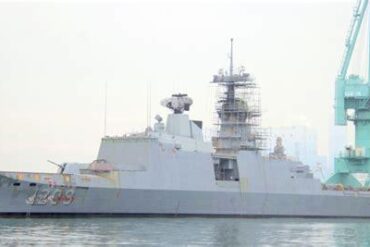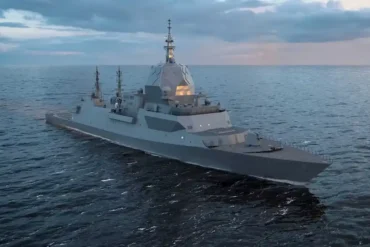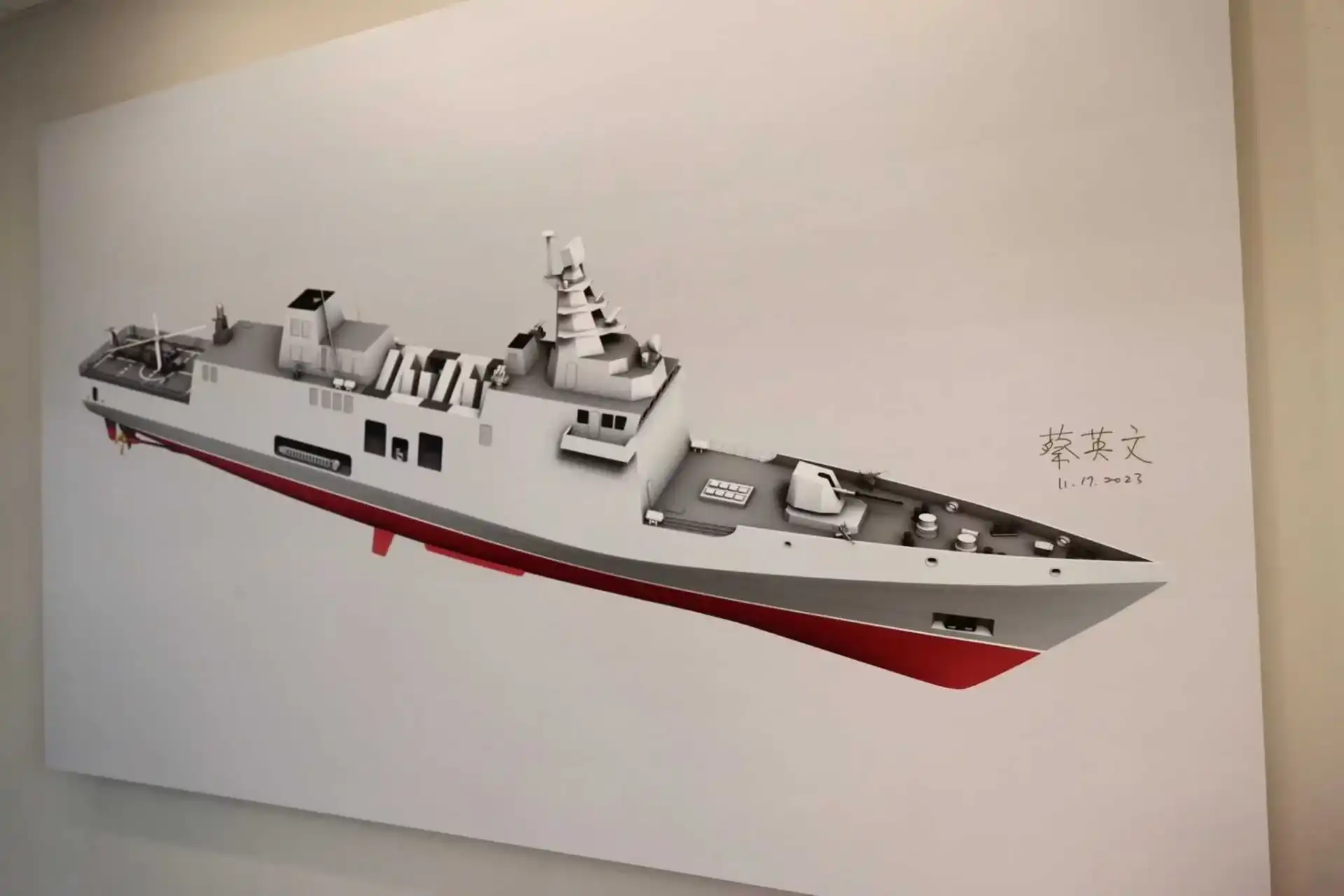
Taiwan has formally advanced one of the most consequential naval modernization efforts in its recent history, approving the construction of ten new light frigates purpose-built for air defense and anti-submarine warfare. The program is designed to reinforce persistent maritime security operations in the Taiwan Strait and surrounding waters while replacing surface combatants that have been operating under intense strain for decades. Service entry is planned to unfold gradually between 2028 and 2040, reflecting both budget discipline and the complexity of integrating modern combat systems into a domestically built platform.
This initiative sits at the heart of Taiwan’s long-term naval renewal strategy. Rather than focusing solely on high-end, capital-intensive warships, the Ministry of National Defense has chosen a balanced approach that emphasizes endurance, sensor coverage, and mission specialization. The light frigates are intended to conduct routine patrols, escort high-value units, and maintain continuous situational awareness in contested waters, freeing larger destroyers and missile platforms for surge operations.
Funding allocations underline the seriousness of the effort. Out of a $9.9 billion package covering six major naval construction programs, approximately $7.8 billion has been directed toward anti-air and anti-submarine capabilities. This prioritization reflects the operational reality Taiwan faces: sustained pressure from increasingly frequent naval and air activities near its maritime approaches, demanding ships that can stay at sea longer, see farther, and respond faster.
By committing to a ten-ship class rather than a token batch, Taiwan is signaling that these frigates are not experimental stopgaps. They are intended to become a structural backbone of the surface fleet for at least two decades, anchoring daily deterrence operations while integrating smoothly with submarines, missile corvettes, and shore-based surveillance networks.
A Dual-Configuration Frigate Built for Modern Threats
The light frigate program is deliberately split into two distinct configurations, each optimized for a specific mission profile. Five ships will focus on air defense, while the remaining five will be dedicated to anti-submarine warfare. This division allows Taiwan to tailor sensors, internal layouts, and combat systems without forcing compromises that often dilute multi-role designs.
The path toward full production began with two prototypes, one for each configuration. Construction of the air-defense variant started in November 2023, followed by the anti-submarine prototype in January 2024. Both ships are scheduled for delivery by October 2026, after which performance assessments will guide the final authorization of the remaining ten hulls.
This measured approach reduces technical risk while preserving momentum. Lessons learned from the prototypes, particularly in combat system integration and acoustic performance, can be incorporated into later ships without disrupting the overall production timeline. It is a pragmatic balance between urgency and engineering discipline.
Design Origins and the Evolution of the 2,500-Ton Concept
The new light frigates are based on an international design developed by Gibbs & Cox, adapted extensively to meet Taiwan’s operational requirements and domestic industrial capabilities. The air-defense variant measures 96 meters in length, with a 21-meter beam and a 3.3-meter draft, while the anti-submarine version stretches to 116 meters, retaining the same beam and draft to accommodate larger sonar arrays and quieter propulsion arrangements.
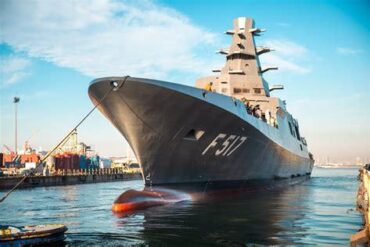
Although initially described as a 2,500-ton class, internal design growth pushed displacement closer to 3,000 tons, with length approaching 120 meters in the finalized configuration. This growth was not cosmetic. Additional volume was required to support modern radars, vertical launch systems, command spaces, and power generation margins for future upgrades. Visually and conceptually, the ship now resembles a scaled-down Constellation-class frigate, blending reduced radar cross-section shaping with conventional frigate proportions.
The design evolution reflects a hard-earned lesson: modern naval combat systems are unforgiving of cramped hulls. Sensors, weapons, and data-processing equipment demand space, cooling, and electrical power. By allowing the design to grow early, Taiwan has reduced the risk of expensive mid-life modifications later.
Replacing an Aging Surface Fleet Under Constant Pressure
Taiwan’s current surface fleet relies heavily on ships inherited or acquired during the Cold War and its aftermath. Knox-class frigates, already retired, were followed by continued service from Oliver Hazard Perry-class, La Fayette-class, and Kidd-class vessels. While repeatedly upgraded, these ships face mounting maintenance burdens after decades of high-tempo operations.
They are routinely tasked with tracking and shadowing foreign naval units operating near Taiwan’s maritime zones, a mission that demands endurance rather than headline-grabbing firepower. The cumulative effect has been compressed maintenance cycles and declining availability, a classic symptom of fleets asked to do too much with too few hulls.
The new light frigates are designed to absorb much of this daily operational load. With modern propulsion, updated sensors, and purpose-built mission layouts, they can remain on station longer with fewer personnel and lower lifecycle costs. In doing so, they preserve the readiness of higher-end platforms while maintaining a visible and credible maritime presence.
Air Defense and Anti-Submarine Warfare as Strategic Priorities
The decision to emphasize air defense and anti-submarine warfare is rooted in geography and threat assessment. The Taiwan Strait is narrow, shallow in places, and acoustically complex, making submarine detection both difficult and essential. At the same time, the proliferation of unmanned aerial systems, maritime patrol aircraft, and long-range missiles has increased the importance of layered air defense even for ships operating close to home waters.
The air-defense variant is expected to provide area coverage for task groups, extending the reach of shipborne sensors and interceptors beyond point defense. The anti-submarine version, with its extended hull and quieter acoustic signature, is optimized for persistent sonar operations, coordinating with maritime patrol aircraft and undersea sensors to track hostile submarines before they reach launch positions.
Together, the two variants form a complementary pair, reinforcing each other’s strengths rather than competing for limited internal space and power.
Close-In Defense and the Role of Domestic Weapon Systems
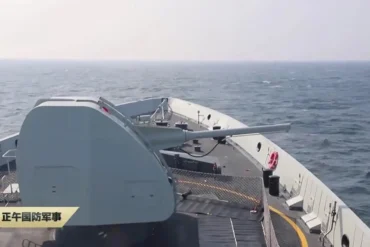
For close-range threats, the light frigates will be equipped with the XTR-102A2 dual-tube 20 mm remote weapon system, developed by the National Chung-Shan Institute of Science and Technology. The choice reflects both operational requirements and an emphasis on domestic industrial capability.
The XTR-102A2 employs twin T-75 20 mm guns, firing between 400 and 1,200 rounds per minute, with an effective range of up to 2,000 meters. Integrated electro-optical sensors allow precise engagement of drones, fast attack craft, and low-flying aerial targets, all of which have become increasingly prominent in modern naval conflict.
Standardizing this system across naval and coast guard platforms simplifies training and logistics while ensuring consistent performance across the fleet. It is a reminder that survivability often depends on the reliability of close-in systems, not just headline missile capabilities.
Force Mix Debates and the Frigate–Corvette Balance
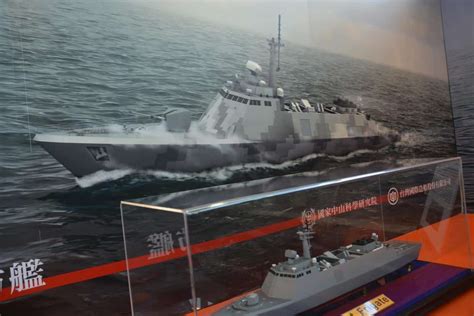
The light frigate program exists alongside Taiwan’s growing fleet of missile corvettes, particularly the Tuo-chiang class, which emphasizes speed, low observable features, and heavy anti-ship missile armament. These smaller vessels are optimized for rapid strike-and-withdraw tactics, exploiting coastal geography and networked targeting.
Some analysts question whether larger frigates, with lower acceleration and more visible signatures, can operate safely in the same contested environment. Yet history offers caution against simplistic conclusions. The Battle of Samar in 1944 demonstrated that well-handled surface ships, even when outgunned, can prevail through coordination, situational awareness, and determination.
In modern terms, frigates bring endurance, command-and-control capacity, and sensor reach that smaller craft cannot easily replicate. The light frigates are not intended to replace missile corvettes but to anchor the force mix, providing the persistent presence and coordination that allow faster units to exploit fleeting opportunities.
Industrial Execution and the Road to 2040
Hull construction for the prototypes was awarded to Jong Shyn Shipbuilding Company in May 2023, with combat system integration led by the National Chung-Shan Institute of Science and Technology. The prototype phase carries a combined budget of approximately NT$20 billion, covering hulls, sensors, weapons, and integration work.
Key milestones include steel cutting in late 2023 and early 2024, structural assembly ceremonies in November 2024 at the Xingao Shipyard in Kaohsiung, and final delivery targeted for October 2026. If performance targets are met, full production of the remaining ten ships will proceed in phases, ensuring a steady flow of new hulls into service through 2040.
This long horizon is not a weakness. It allows Taiwan to adapt incrementally, incorporate technological advances, and manage budgets without sacrificing strategic coherence.
A Quiet but Decisive Shift in Maritime Deterrence
Taken together, the ten new light frigates represent a quiet but decisive shift in Taiwan’s maritime deterrence posture. They are not symbols of excess or prestige but tools designed for relentless, unglamorous work: patrolling, tracking, escorting, and staying ready when tensions rise.
By investing in endurance, specialization, and domestic industrial capacity, Taiwan is building a fleet structure that acknowledges the realities of long-term competition at sea. These ships will not dominate headlines individually, but as a class, they are poised to shape daily maritime security in the Taiwan Strait for a generation.