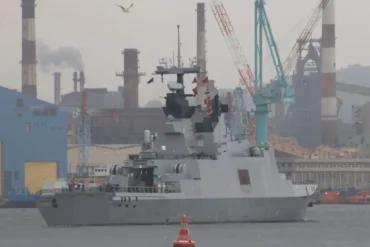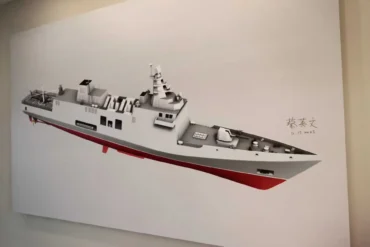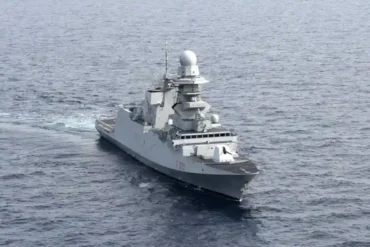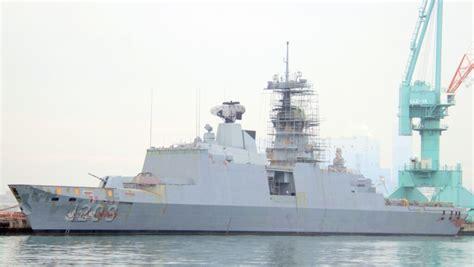
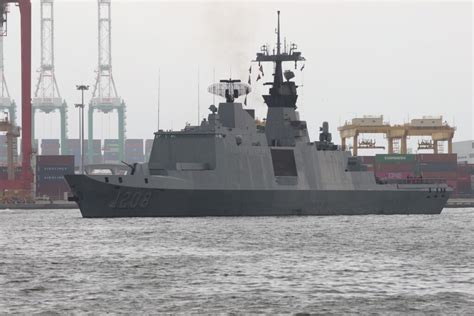
The Republic of China Navy (ROCN) has entered a critical phase in its naval transformation as it commenced the first sea trials of the modernised Kang Ding-class frigate, ROCS Chengde (1208), on 30 July 2025. This momentous event marks the initial implementation of Taiwan’s strategic plan to revamp its legacy surface combatants in response to an evolving maritime threat environment, particularly from China’s expanding naval presence.
Launched from Kaohsiung Naval Base, the Chengde is now the lead vessel in a multi-year modernisation effort that will reshape Taiwan’s maritime defense posture. This programme focuses on comprehensive upgrades to sensor suites, missile systems, and combat survivability, transforming the aging Kang Ding-class—originally adapted from France’s La Fayette-class—into a formidable 21st-century surface combatant.
A Technological Rebirth of a Legacy Platform
The modernisation of ROCS Chengde began in late 2023 and proceeded through a rigorous retrofit timeline, culminating in major milestones in Q2 of 2025. One of the most significant upgrades is the integration of the British-made Type 997 Artisan radar system, a next-generation 3D surveillance radar that replaces the obsolescent DRBV-26D “Jupiter II.” The Artisan radar brings multi-target tracking, anti-jamming capabilities, and a higher scan rotation rate, enabling faster threat acquisition and improved reaction time against modern aerial threats.
Complementing the sensor overhaul is the replacement of the Sea Chaparral short-range missile launcher—a system increasingly seen as inadequate in modern naval warfare—with a domestically developed Vertical Launch System (VLS) integrated into the ship’s hull. This VLS supports up to 32 Sea Sword II (Hai Chien II) missiles, which extend the frigate’s point-defense reach from 8 km to 32 km, significantly bolstering its ability to intercept fast-flying targets including cruise missiles, drones, and hostile aircraft.
A Decade-Spanning Upgrade Initiative
The ROCN’s modernisation plan doesn’t stop with Chengde. The remaining five Kang Ding-class frigates are scheduled to be upgraded on a one-ship-per-year basis starting in 2026, ensuring fleet-wide standardisation and combat readiness by 2031. This staggered upgrade cycle allows for operational continuity while keeping costs and logistics manageable for Taiwan’s limited naval budget.
These upgrades come at a pivotal time. Beijing has significantly increased PLA Navy activity around Taiwan’s periphery, including routine incursions and military exercises in the Taiwan Strait. The Kang Ding upgrade is not just a matter of hardware—it’s a direct response to a deteriorating regional security architecture.
Strategic Background: La Fayette Origins and Local Adaptations
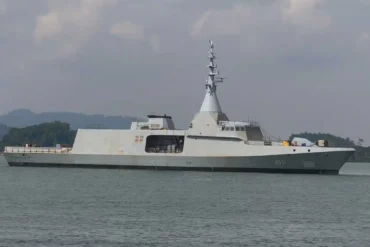
Originally commissioned in the early 1990s, the Kang Ding-class frigates were based on the French-designed La Fayette-class. Under a US$2.8 billion deal with France, Taiwan secured six hulls while most weapons systems and sensitive electronics were assembled domestically due to European export restrictions. Consequently, the ROCN had to outfit its vessels with US and locally sourced systems, leading to capability gaps that this new programme aims to rectify.
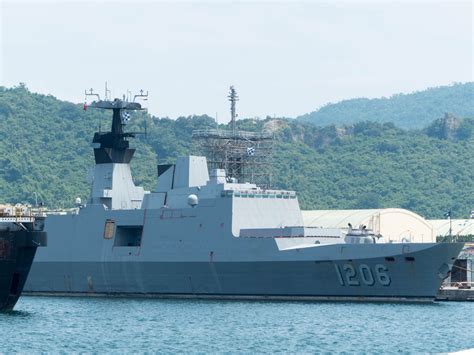
Despite their dated systems, the La Fayette-class hull design remains a robust platform. With a displacement of 3,600 tonnes, length of 125 meters, and a beam of 15.4 meters, the frigates were built with stealth in mind. Features like angled hull surfaces, radar-absorbent materials, and internalized equipment bays reduce their radar signature to that of a much smaller ship, providing tactical advantages in maritime surveillance and anti-surface warfare.
Key Performance and Armament Upgrades
Beyond radar and VLS, the Chengde retains core systems, while others are expected to be upgraded in future phases. Key characteristics and expected capabilities include:
- Main Gun: 100mm Mod.100TR cannon for surface engagements
- Anti-Ship Missiles: Eight Exocet MM40 Block 2 launchers remain part of the offensive suite
- Air Defense: Replacement of Sea Chaparral with Sea Sword II VLS, offering improved response and layered defense
- Surveillance: Type 997 Artisan radar enables 3D air surveillance and high-speed target tracking
- Flight Deck: Capability to host either a Panther or NH90 helicopter for ASW and patrol missions
The integration of domestic and foreign systems underscores Taiwan’s ability to innovate despite its diplomatic isolation. The Sea Sword II, for example, is believed to be derived from the Sky Sword II air-to-air missile, adapted for vertical naval launch and equipped with active radar homing, making it a credible counter to modern saturation attacks.
Recalibrating Maritime Defense Doctrine
The recommissioning of ROCS Chengde signals more than just technological renewal. It represents a strategic inflection point in how Taiwan prepares for high-intensity, multi-domain maritime conflict. With the PLA Navy fielding Type 055 destroyers, Type 052D frigates, and an ever-growing number of drones and missile boats, Taiwan’s older frigates had fallen behind in terms of both sensor reach and engagement envelope.
The upgraded Kang Ding-class frigates are now better positioned to function as air defense nodes within Taiwan’s distributed naval architecture. Combined with land-based anti-ship missiles, surveillance drones, and asymmetric warfare units, the ROCN aims to create a layered deterrence zone across Taiwan’s eastern and southern approaches.
Naval Modernisation in a Broader Context
Taiwan’s naval transformation coincides with a wider strategic shift in East Asia’s maritime balance. Countries like Japan, South Korea, and the Philippines are all expanding their naval fleets and deepening cooperation with the United States and Australia under frameworks such as AUKUS and Quad. Taiwan, though not officially a part of these alliances, is increasingly being treated as a critical partner in regional deterrence efforts.
The Chengde upgrade is also emblematic of Taiwan’s indigenous defense industry ambitions, which include not only naval refurbishments but also the development of Taiwan’s first domestically built submarine, slated to enter sea trials by 2026. Together, these programs are designed to signal Taiwan’s resolve to defend itself with capable, modern, and self-reliant forces.
Challenges Ahead: Supply Chains, Budget, and Escalation Risks
While the ROCN’s upgrade programme is commendable, it is not without challenges. Taiwan’s limited defense budget—relative to regional peers—and dependence on foreign technology make it vulnerable to supply chain bottlenecks and geopolitical pressures. The integration of complex foreign radars and missiles must be balanced against the need for maintenance resilience, crew retraining, and interoperability across platforms.
Moreover, these upgrades may provoke responses from Beijing, which routinely denounces any efforts by Taiwan to enhance its military capabilities. However, for Taipei, the alternative—doing nothing—is untenable in the face of increasing Chinese assertiveness.
Conclusion: A Renewed Surface Combatant Fleet in the Making
The sea trials of ROCS Chengde are a watershed moment for Taiwan’s naval forces. They embody not only the material upgrading of a legacy fleet but also a deeper shift toward multi-layered maritime defense. With each frigate slated for systematic enhancement through 2031, Taiwan is sending a message: it will not allow its naval forces to become obsolete in the face of overwhelming regional pressure.
This modernisation initiative, centered on platforms like the Kang Ding-class, will form the bedrock of Taiwan’s future sea power, delivering the operational flexibility, firepower, and endurance required to defend its sovereignty in a turbulent Indo-Pacific theatre.