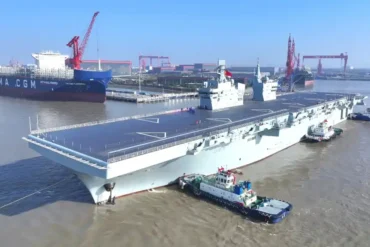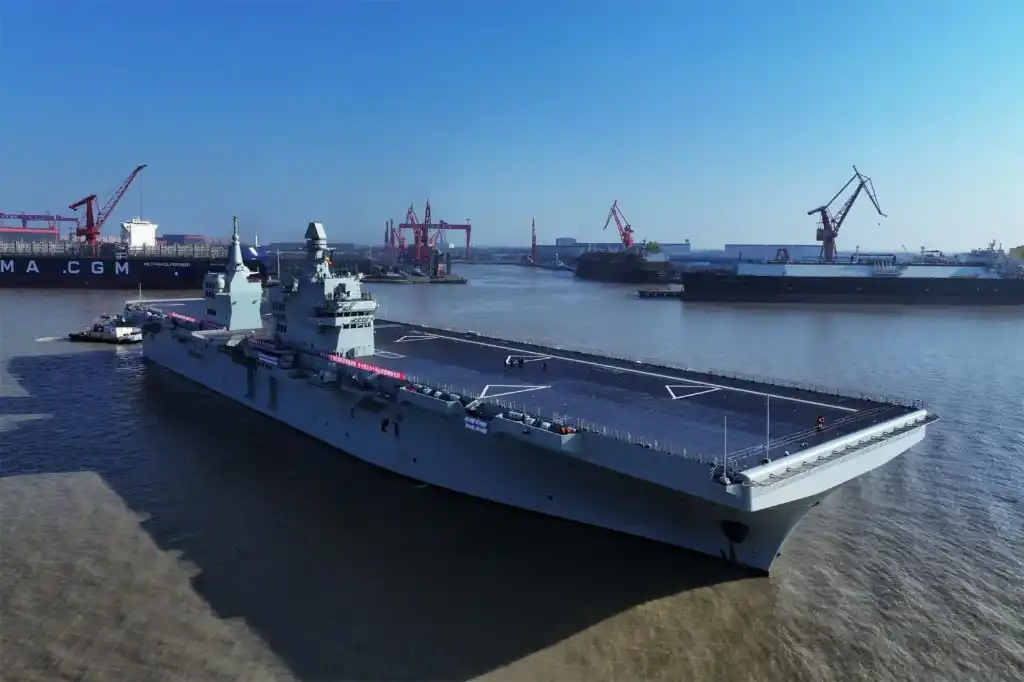
The People’s Liberation Army Navy (PLAN) has embarked on a pivotal chapter in its maritime transformation with the maiden sea trial of the Type 076 amphibious assault ship, Sichuan. Displacing over 40,000 tons and equipped with an Electromagnetic Aircraft Launch System (EMALS), the Type 076 redefines naval hybrid warfare by blending amphibious capabilities, drone-centric aviation, and integrated power systems in a single, formidable platform.
The Sichuan, bearing hull number 51, departed from the Hudong-Zhonghua Shipyard in Shanghai just days after the commissioning of the Fujian aircraft carrier, symbolizing the PLAN’s intensified focus on multi-domain power projection. This early trial phase is devoted to validating propulsion efficiency, power generation stability, and seakeeping within the Yangtze estuary, paving the way for more complex aviation operations in the near term.
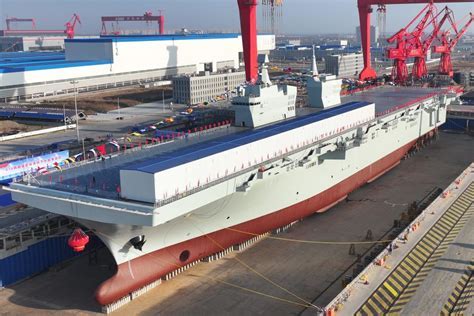
The sheer design philosophy of Type 076 signifies a leap in Chinese naval engineering. Measuring approximately 260 meters in length with a beam of 50 meters, it mirrors the scale of U.S. Wasp- and America-class amphibious assault ships. Yet, its real distinction lies in the twin-island superstructure and an extended straight flight deck, purpose-built for drone launch and recovery cycles in addition to helicopter operations. The dual-island design segregates navigation from aviation command, enhancing redundancy and operational control—an innovation inspired by China’s Fujian-class carriers.
The inclusion of EMALS on an amphibious hull is a global first. Early imagery and analysis suggest a 130-meter catapult trench, possibly supported by a second, shorter launcher. The ship’s integrated power system must sustain both propulsion and the enormous pulse loads required by EMALS. This unique demand explains the trial’s focus on electrical distribution and load stability, crucial for launching fixed-wing UAVs and potentially crew-operated jets like the J-35 carrier-borne fighter.
Below deck, Sichuan preserves its amphibious DNA. It houses a well dock for launching landing craft and armored amphibious vehicles, with internal volumes likely configured to transport a brigade-sized force. Above, a sophisticated aviation complex features twin elevators and cavernous hangars capable of supporting rotary and fixed-wing unmanned aircraft, creating a flexible launch-and-recovery ecosystem for air-dominant operations.
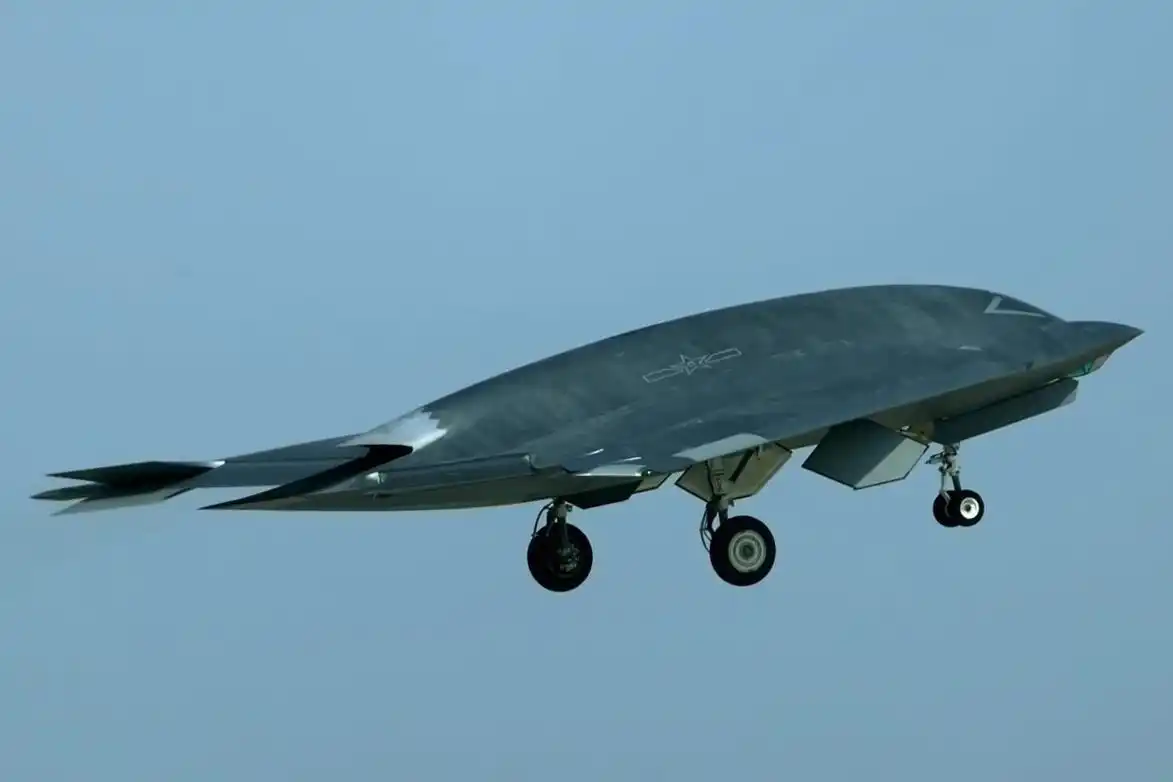
China’s state media has branded the Type 076 as a ‘drone carrier’, tightly linking it to unmanned systems such as the GJ-11 Sharp Sword stealth UCAV, reconnaissance UAVs, and rotary-wing drones for ISR, logistics, and over-the-horizon targeting. While speculative, the ship could accommodate limited numbers of manned fighters—a capability that, if realized, would position Sichuan as a true hybrid between an amphibious assault ship and a light aircraft carrier.
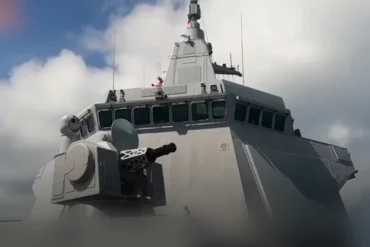
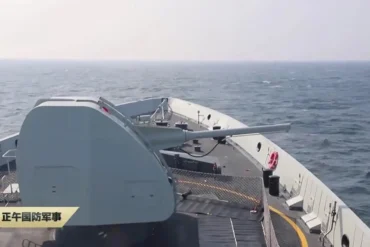
The defensive architecture is equally robust. Visible systems include multiple HHQ-10 short-range SAM launchers and Type 1130 CIWS, providing layered protection against low-flying missiles and UAV threats. These systems are expected to work in concert with off-board sensors and emission-controlled operations (EMCON) to reduce detectability and enhance survivability.
Sichuan’s mission profile stretches far beyond traditional amphibious assault. In a Taiwan conflict or first island chain crisis, it can function as a distributed aviation hub, integrating drone swarms with real-time ISR and precision strike capabilities. Its drone complements can saturate enemy defenses, cripple coastal infrastructure, and support beachhead establishment—all while the ship remains outside high-risk missile envelopes.
In peacetime or grey-zone scenarios, Sichuan represents a new strategic tool for deterrence, presence operations, and HADR (Humanitarian Assistance and Disaster Relief) missions. It allows for the deployment of marines, C2 units, UAVs, and helicopters to contested zones like the South China Sea, supporting either non-combatant evacuation operations (NEO) or coercive diplomacy. As part of larger naval formations, including the Fujian carrier and advanced destroyers, it supports task group experimentation where drone carriers assume ISR and strike roles, freeing traditional carriers for air dominance.
For China’s defense-industrial complex, the ship underscores technical milestones in electric propulsion, modular hull architecture, EMALS deployment, and island superstructure fabrication. These breakthroughs will likely trickle upward into future Type 004 carriers and Type 055 follow-on classes, consolidating China’s ambition to field a globally competitive, drone-augmented blue-water navy.
Strategically, the sea trials of Sichuan indicate that China’s naval modernization is not merely quantitative—it is qualitative, multi-domain, and asymmetric by design. The Type 076 is not just a ship; it is a doctrine afloat. It compels regional actors to rethink maritime defense postures, integrate counter-UAV tactics, and adapt to a future where “drone carriers” are not theoretical, but operational realities. As the PLAN readies the ship for IOC by 2026, Sichuan emerges as a symbol of East Asia’s shifting naval equilibrium and a catalyst for new doctrinal paradigms in littoral and open-sea warfare.