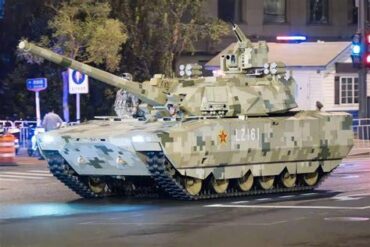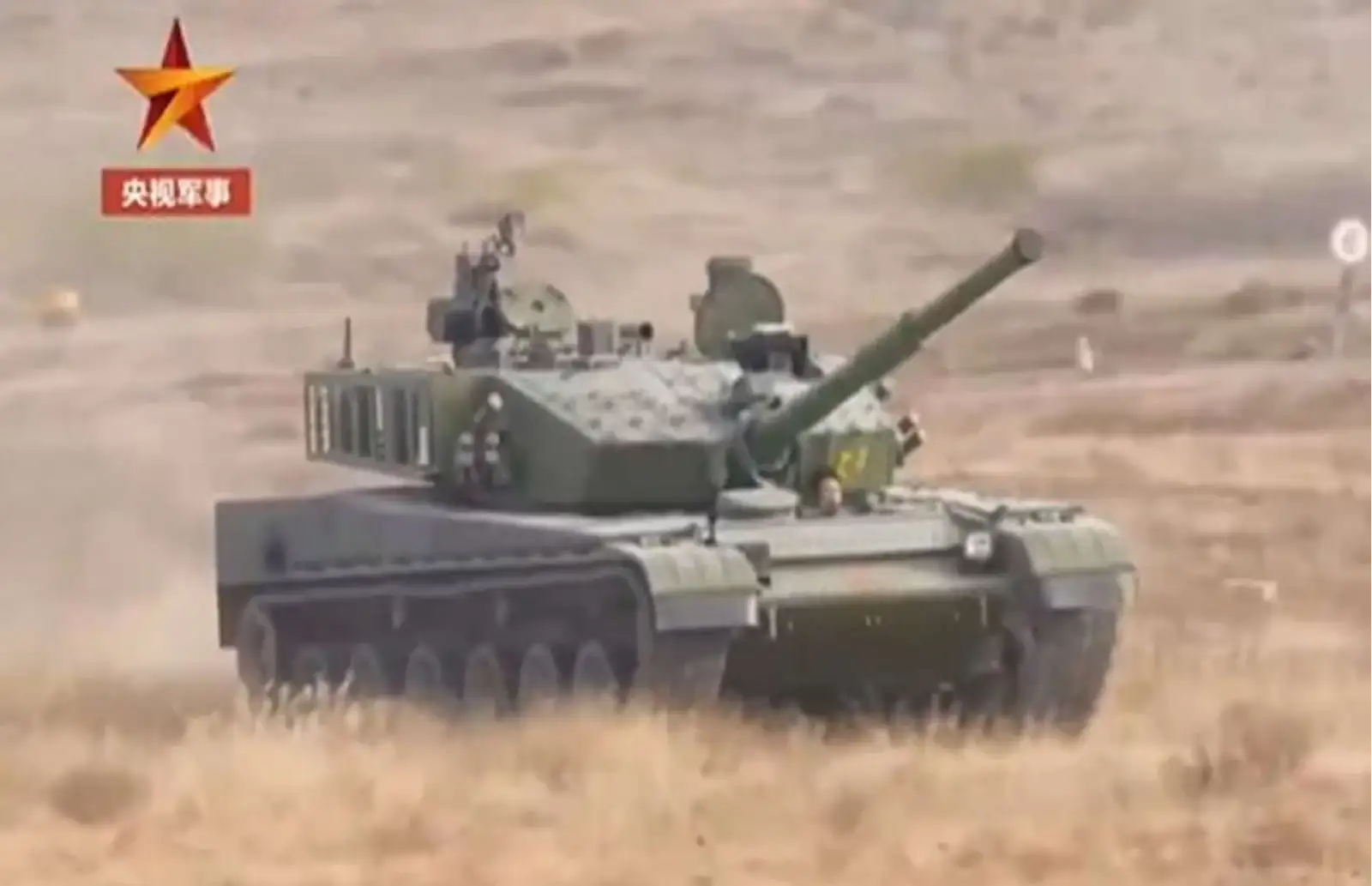
On December 11, 2025, China made a pivotal reveal on the global military stage by showcasing the Type 99B Main Battle Tank during its first public live fire exercise. The event, aired by Chinese state broadcaster CCTV, marked more than just an unveiling of a new armored vehicle — it signaled a doctrinal shift in how the People’s Liberation Army (PLA) envisions ground warfare in the age of digital conflict.
Next-Generation Tank for a Networked Battlefield
Rather than emphasizing traditional metrics like armor thickness or main gun size, the Type 99B introduces a philosophy deeply rooted in network-centric operations. Framed by Chinese media as a standard equipment milestone, the footage carried with it a far more profound implication: the tank is not merely a tool of brute force, but a digital node integrated into a highly coordinated battlefield ecosystem of sensors, command systems, and precision fires.
Strategic Debut: Timing and Symbolism
The timing of the live fire broadcast is carefully orchestrated. The Type 99B had previously made a public appearance during the September 3, 2025, Victory Day parade in Beijing, prominently leading the armored column. These tanks were reportedly deployed from the 112th Combined Arms Brigade of the 82nd Group Army — a formation known for its combat readiness and operational versatility. This parade appearance wasn’t merely ceremonial: it was a calculated reveal, foreshadowing deeper advancements in ground warfare capability.
At that time, Chinese defense media framed the Type 99B as an upgrade over the Type 99A, emphasizing three core improvements:
- All-weather communications
- Enhanced firepower
- Improved maneuverability
These enhancements collectively reflect a platform engineered for rapid targeting cycles, seamless interoperability with infantry fighting vehicles and drones, and a high operational tempo in hostile and geographically demanding environments.
Built for the Mountains: High-Altitude Combat Edge
A critical clue to the tank’s operational intent lies in its adaptation for high-altitude, cold-weather environments. Regional media and state sources suggest the Type 99B has been optimized for performance in thin air, extreme cold, and steep terrain — clear indicators of deployment scenarios along the China-India border, particularly the Himalayas.
In such hostile terrains, where engines struggle, sensors fail, and crews face physiological stress, mechanical endurance and system stability become vital. The PLA’s emphasis on digitized command, integrated firepower, and high mobility gives the 99B a decisive advantage over older generation tanks that rely on brute mechanical resilience alone.
Under the Hood: Advanced Yet Discreet Technical Footprint
While exact technical specifications remain closely guarded, insights drawn from the Type 99 lineage offer a glimpse into the platform’s architecture. The tank retains its signature three-man crew, featuring an autoloader system that supports a 125mm smoothbore cannon. This cannon is presumed capable of firing APFSDS rounds, HEAT shells, and potentially gun-launched anti-tank missiles.
Advanced elements believed to be integrated into the Type 99B include:
- Explosive Reactive Armor (ERA) optimized for layered protection.
- Modern thermal imaging sights for day-night targeting.
- Digital fire control systems with AI-assisted decision making.
- 360-degree situational awareness, possibly via panoramic camera arrays.
- Enhanced battlefield networking, including encrypted data links and long-range communications suites.
- Decoy and soft-kill countermeasures to confuse incoming munitions.
Unofficial sources and social media observations hint at AI-driven targeting and even loitering munition integration, but these claims remain speculative without corroborative imagery or formal release.
Survivability Through Situational Dominance
The Type 99B’s true strength doesn’t lie in how much armor it can carry, but how effectively it can perceive and respond to threats. In an era where top-attack missiles, drone swarms, and loitering munitions dominate the battlefield, survivability depends on reaction speed and information dominance more than on sheer protection.
Better radio systems, real-time positioning data, and multi-source fusion for target acquisition allow the Type 99B to operate with precision even in degraded visual environments, such as fog, snow, or night. This shift toward survivability through awareness places it squarely in line with Western design trajectories.
A Strategic Tool for Regional Dominance
Beijing has made no secret of its ambition: to field a world-class military by 2049, with a fully modernized force by the mid-2030s. The development and deployment of the Type 99B directly supports this timeline, fulfilling two vital roles:
- High-readiness presence along sensitive borders, particularly Himalayan regions where China and India maintain forward-deployed armored units.
- Combat credibility in high-intensity environments, where armored units must fight under constant surveillance, facing precision-guided weapons and autonomous threats.
This approach reflects lessons learned from global conflicts such as the Ukraine-Russia war, where the dominance of drone reconnaissance, electronic warfare, and precision strikes has rewritten armored warfare playbooks. Tanks that survive are those that see first, strike first, and coordinate faster than the enemy.
Global Parallels: Aligning With Western Trends
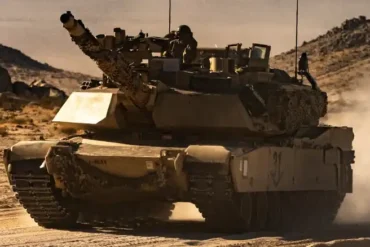
The Type 99B’s conceptual evolution mirrors that of several Western heavy armor programs. The U.S. M1A2 Abrams SEPv3 integrates:
- Digital command architecture
- Increased electrical output for advanced sensors
- Hard-kill active protection systems (APS)
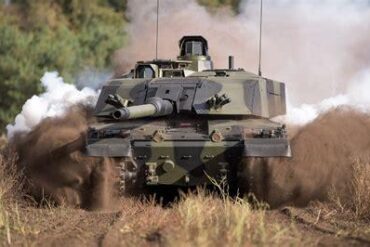
Similarly, Germany’s Leopard 2A8 and Britain’s Challenger 3 programs prioritize situational awareness, crew protection, and all-weather lethality over conventional firepower alone. The convergence in doctrine points to a new consensus: in future wars, data and decision speed are more lethal than armor or caliber.
If Chinese reports about the Type 99B’s systems prove accurate, Beijing is closing the gap in the most critical — and least visible — domain of warfare: digital dominance in armored operations.
What’s Next: Scaling, Export, and Evolution
Looking ahead, several questions remain open. Will the Type 99B enter mass production, and if so, will it replace older Type 96 or Type 99A units across the PLA? Will it serve as a testbed for even more advanced digital systems, perhaps linked with uncrewed ground vehicles (UGVs) or UAV swarms?
China’s historical pattern has been to incrementally scale new technologies, first deploying them with elite brigades before broader distribution. Given its reported linkage to the 82nd Group Army, the Type 99B may follow a similar path, acting as a vanguard for next-gen armor tactics.
Additionally, China’s growing presence in the global defense export market raises the possibility that variants of the Type 99B, or at least its subsystems, may be marketed to allied nations seeking cost-effective alternatives to Western platforms.
Conclusion: A Future-Proof War Machine?
The Type 99B main battle tank represents more than a new armored vehicle — it is the physical embodiment of China’s shift toward integrated, digitally-enhanced land warfare. With its emphasis on sensor fusion, electronic resilience, and information-based lethality, it aligns with the evolving nature of 21st-century conflict.
Whether it becomes a globally recognized benchmark like the Abrams, Leopard, or Merkava remains to be seen. But one fact is clear: the Type 99B is not just a tank — it is a statement.