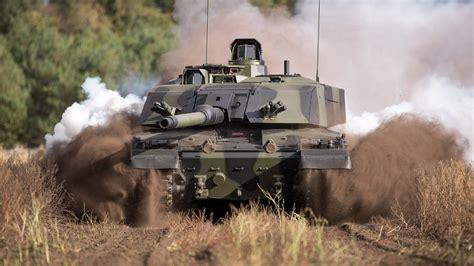
The British Army has reached a defining moment in its armoured modernisation effort as the Challenger 3 main battle tank successfully completed its first crewed live firing on UK soil. Conducted at a Ministry of Defence training facility, the event confirms that the programme has advanced beyond controlled engineering trials and into the demanding phase of operational validation, where real crews operate the vehicle under realistic combat conditions.
Announced on 20 January 2026 by Rheinmetall and UK defence authorities, the milestone represents the first time in more than three decades that a newly developed British main battle tank has fired live ammunition in the United Kingdom with a full crew on board. Managed by Rheinmetall BAE Systems Land (RBSL), the trial underscores the seriousness with which London is pursuing the renewal of its heavy armour at a time when land warfare has returned to the centre of European security planning.
The successful live firing demonstrates that Challenger 3 is no longer simply a modernisation concept or prototype but a functioning combat system entering the final stages of qualification. For the British Army, the event sends a clear signal that its future armoured force is beginning to take tangible shape after years of design, testing and industrial preparation.
Transition from Remote Trials to Crewed Combat Validation
The crewed firing marks the culmination of a carefully phased assurance campaign designed to minimise risk while validating complex new systems. Earlier stages of the programme relied on remotely operated live firing, allowing engineers to examine the behaviour of the new turret, gun and digital fire-control system without exposing soldiers to danger. These firings focused on structural integrity, recoil management, sensor alignment and software reliability, all under tightly controlled conditions.
Only after these objectives were met did RBSL authorise the transition to a crewed configuration. With personnel inside the turret, the tank was operated in a manner much closer to operational employment, enabling engineers and military observers to assess human–machine interaction, ergonomics and crew workload under live-fire stress. The trials included the firing of kinetic energy anti-tank rounds as well as programmable multi-purpose ammunition, validating not only ballistic performance but also the seamless integration of weapon, sensors and digital architecture.
This step is critical because modern main battle tanks are no longer defined solely by armour thickness or gun calibre. They are complex combat systems where software stability, sensor fusion and crew situational awareness are just as decisive as raw firepower. The success of the crewed firing therefore provides confidence that Challenger 3’s design philosophy is translating effectively into practice.
A New Gun and NATO Alignment at the Core of Challenger 3
At the heart of Challenger 3’s leap in capability is the adoption of the Rheinmetall 120 mm L55A1 smoothbore cannon, a weapon already proven across multiple NATO armies. This decision represents a fundamental break from the British Army’s long-standing reliance on a unique rifled gun, which limited ammunition options and complicated interoperability with allies.
The L55A1’s extended barrel length allows for higher muzzle velocity, improving long-range accuracy and armour penetration when firing modern kinetic energy rounds. Equally important is its compatibility with a broad family of standard NATO ammunition, including advanced programmable rounds that can be tailored to different targets moments before firing. This flexibility gives Challenger 3 crews the ability to engage enemy armour, field fortifications and light vehicles without changing ammunition types under pressure.
Coupled with a fully digital fire-control system, the gun is integrated into a networked architecture that supports rapid target acquisition and engagement. The result is a platform designed to dominate in high-intensity, peer-on-peer conflict, where speed of detection and precision fire are decisive.
From Challenger 2 Legacy to a Digitally Networked Successor
Challenger 3 must also be understood in the context of the Challenger 2’s operational legacy. For decades, Challenger 2 symbolised British heavy armour, earning a formidable reputation for protection and battlefield survivability. However, its largely analogue design, bespoke ammunition and ageing electronics increasingly constrained its relevance against modern threats.
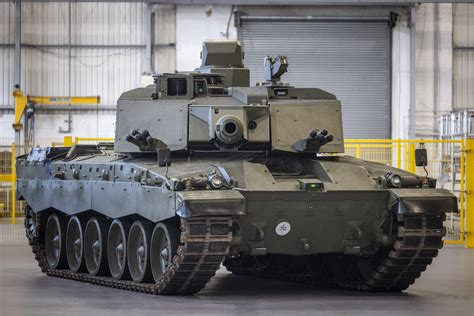
Challenger 3 addresses these limitations through a comprehensive redesign of the turret and systems while retaining the proven hull. Digitalisation is a defining theme, with modern sensors, open electronic architecture and improved crew interfaces replacing older analogue components. These changes are intended to shorten the sensor-to-shooter cycle, allowing crews to detect, identify and destroy targets faster than before.
The integration of advanced sights and thermal imagers supports true hunter-killer capability, enabling the commander and gunner to work in parallel rather than sequentially. This not only increases lethality but also enhances survivability by reducing the time the tank is exposed while engaging threats.
Enhanced Protection and Adaptation to Modern Threats
Beyond firepower, Challenger 3 is designed to survive in an environment saturated with anti-tank guided missiles, loitering munitions and precision artillery. The new turret architecture supports modular protection packages, allowing armour configurations to be adapted to mission requirements and threat levels. This scalability is critical for a platform expected to remain in service until at least 2040.
The design is also intended to be compatible with active protection systems, reflecting a shift in armoured warfare where defeating incoming threats before impact is becoming as important as passive armour. Combined with improved situational awareness from digital sensors, these measures aim to keep Challenger 3 viable on increasingly transparent battlefields where concealment is harder to maintain.
Industrial Significance and National Defence Investment
The Challenger 3 programme is as much an industrial strategy as it is a military one. Under a contract valued at over £800 million, RBSL is upgrading 148 vehicles, securing a domestic capability to design, integrate and support complex armoured systems. Production at the Telford facility has been underpinned by around £40 million in investment, sustaining approximately 300 skilled jobs directly and supporting hundreds more across the UK supply chain.
Small and medium-sized enterprises from regions including the West Midlands, Glasgow, Newcastle upon Tyne and the Isle of Wight play a role in delivering components and subsystems. This distributed industrial footprint strengthens national resilience while reinforcing Britain’s position within a European armoured ecosystem increasingly shaped by common standards and shared technologies.
For the Ministry of Defence, the programme ensures that the British Army retains sovereign expertise in heavy armour while benefiting from close cooperation with European partners, particularly Germany, through Rheinmetall’s involvement.
Strategic Implications for the British Army and NATO
The successful crewed live firing carries strategic weight beyond the technical achievement itself. It demonstrates credible progress at a time when European land forces are rearming in response to renewed state-on-state competition. For NATO, Challenger 3 represents a British contribution that is fully interoperable, logistically compatible and capable of integrating into multinational formations.
As additional crewed firing trials and reliability growth testing continue through 2026, the focus will shift toward proving sustained performance under operational stress. These phases will determine how quickly Challenger 3 can achieve full operational capability, but the programme has already crossed a psychological and technical threshold.
By moving decisively from engineering trials to live, crewed combat validation, the British Army has reaffirmed its commitment to maintaining a credible heavy armour core. Challenger 3 now stands not just as a modernised tank, but as a statement of intent that the United Kingdom remains prepared to field decisive armoured power in an increasingly contested European security environment.