France has taken a bold step in modern battlefield transformation by officially debuting the Leclerc XLR, its most advanced main battle tank (MBT), during the 2025 Bastille Day military parade in Paris. This high-profile public appearance marked not just the introduction of a powerful armored vehicle, but a definitive statement of national defense modernization. The Leclerc XLR now stands as the cornerstone of the French Army’s SCORPION program, which aims to digitize and revitalize France’s land forces for the challenges of 21st-century warfare.
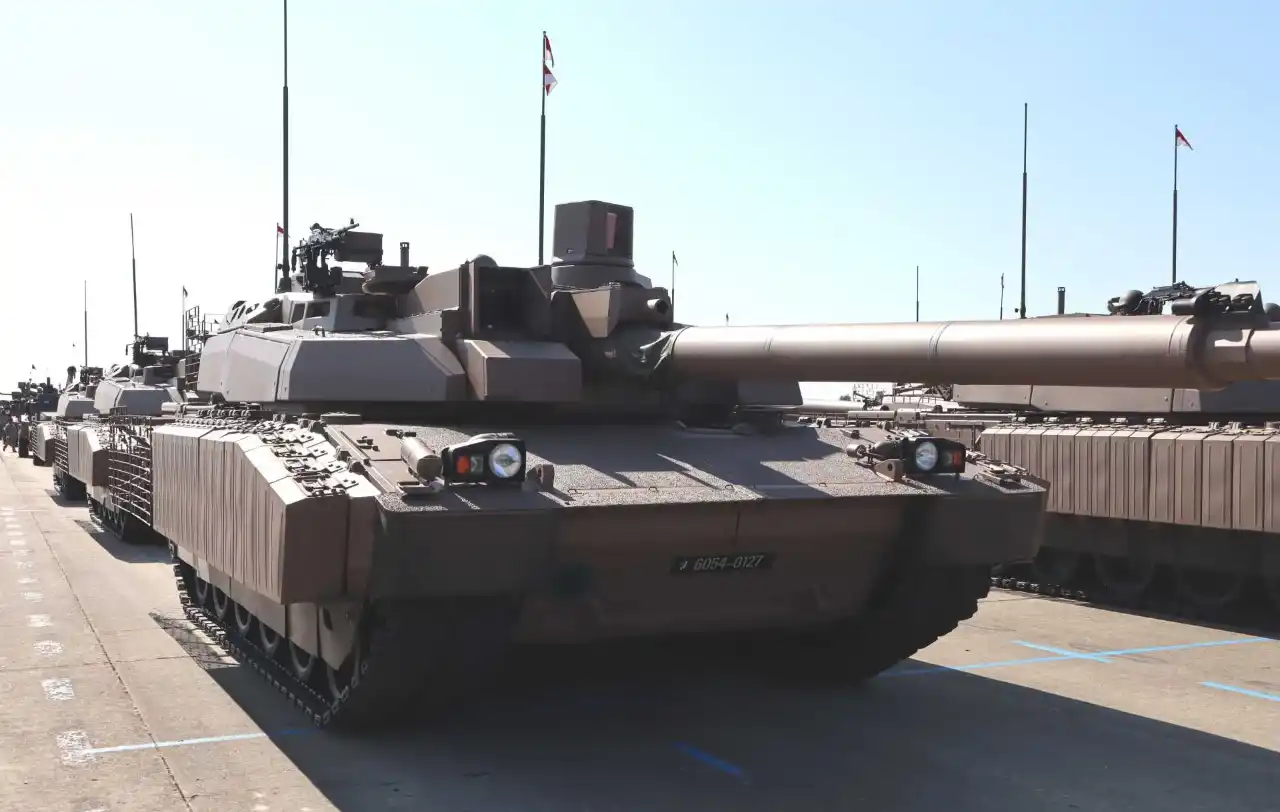
The crowd lining the Champs-Élysées witnessed, for the first time, a combat platform that represents years of technological evolution and tactical foresight. Sleek, imposing, and layered in advanced composite armor, the Leclerc XLR rolled past with its signature T2 remote weapon station, bearing the tricolor flag not just as a symbol of patriotism, but as a testament to French industrial and military prowess.

Leclerc XLR: A Battlefield Revolution, Not Just an Upgrade
The Leclerc XLR is not a mere enhancement of its predecessor—it is a redefinition of France’s armored doctrine. Designed by Nexter Systems, part of the KNDS (KMW+Nexter Defense Systems) group, the XLR version of the Leclerc is fully integrated into the SCORPION ecosystem. At its core lies the Système d’Information du Combat SCORPION (SICS), a digital battle management system that transforms each unit into an intelligent, networked actor on the battlefield.
This digital backbone allows the XLR to interact seamlessly with other SCORPION vehicles such as the Jaguar EBRC and Griffon VBMR, promoting real-time data sharing, coordinated strikes, and collective defense. This interconnected approach marks France’s shift from platform-centric warfare to a fully integrated combat system that thrives on speed, coordination, and situational awareness.
Visual and Tactical Enhancements: Defining the Modern MBT
One of the most striking features of the Leclerc XLR is its upgraded external armor and remotely operated T2 turret, equipped with a 7.62mm machine gun from Arquus, enhancing close-combat survivability without exposing crew members. The overall armor configuration has been reinforced with modular protection packages, enabling 360-degree defense against kinetic threats, mines, and IEDs.
The turret is complemented by a new fire control system, entirely digitized to enhance target acquisition speed, first-hit probability, and seamless multi-target engagement. These features dramatically improve the tank’s kill chain efficiency in both offensive and defensive operations.
Enhanced Survivability in High-Threat Environments
The Leclerc XLR has been specifically reconfigured for asymmetric and hybrid warfare, where threats are dispersed, irregular, and unpredictable. The underbelly now features advanced mine and IED protection, and the tank is equipped with the Barage electronic countermeasure system, capable of disrupting drone surveillance and detonation signals.
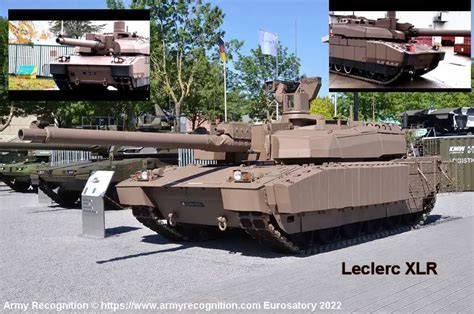
Additional survivability features include an improved powerpack and suspension system, ensuring greater mobility across urban, desert, and forested terrains. The mobility upgrades not only support maneuver warfare but ensure the tank can maintain combat readiness across extended deployments.
Precision Targeting and Sensor Fusion
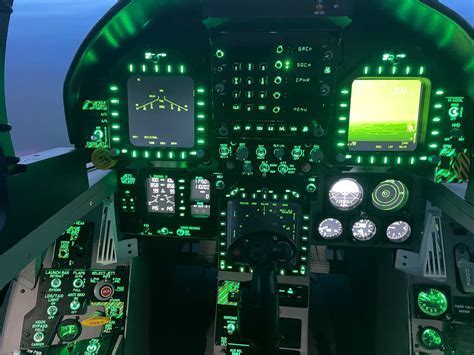
Another crucial advancement is the tank’s optronic suite, offering superior visibility and targeting in all environments. The driver benefits from a rear-view camera and high-resolution thermal imaging, while the gunner and commander have access to multi-spectral sensors capable of long-range, high-fidelity target identification.
This fusion of thermal, optical, and radar inputs supports target prioritization, engagement, and cooperative fire control with other SCORPION units, effectively enabling the Leclerc XLR to act as a command and control node on wheels. In this sense, the tank does not just deliver firepower—it commands and orchestrates it.
Operational Synergy with the SCORPION Force Structure
The Leclerc XLR is built to operate as part of a larger digitally enabled force architecture. Its ability to transmit and receive battlefield intelligence through SICS allows commanders to allocate resources in real-time, adjust maneuvers dynamically, and launch coordinated offensives across multiple domains.
Its integration with the Griffon infantry carrier and Jaguar reconnaissance vehicle forms a triad of capability—each platform sharing information, supporting each other with fire, and enhancing the operational rhythm of mechanized battalions. The result is a force multiplier effect, allowing smaller units to operate with higher precision and survivability.

Strategic Messaging Through Parade Symbolism
The decision to unveil the Leclerc XLR during the July 14 parade, a cornerstone of French national identity, was not coincidental. It sends a calculated message to allies and adversaries alike: France is not just modernizing, it is ready and willing to lead in European defense. The tank’s presence on national soil, witnessed by military leaders, foreign dignitaries, and civilians, demonstrates France’s intent to invest in sovereign defense capabilities.
The on-time delivery and operational readiness of the XLR also reinforce Nexter’s status as a reliable defense contractor, capable of engineering highly sophisticated platforms under tight schedules and within the scope of strategic requirements.
Leclerc XLR in NATO and Global Context
The global resurgence of interest in next-generation main battle tanks has intensified amid growing geopolitical tensions and evolving military doctrines. By fielding the XLR, France repositions itself among NATO members as one of the few nations with a cutting-edge, fully networked armored capability.
While allies like the U.S. are pursuing modernization programs for the Abrams, and Germany advances the Leopard 2A7+, the Leclerc XLR stands out for its integrated digital design from inception, not merely as a retrofit. This future-proof design enables France to offer interoperability across coalition forces and supports joint operational doctrines in European theaters.
Key Technical Specifications of the Leclerc XLR
To understand the tank’s battlefield edge, consider the following essential upgrades:
- Primary Armament: GIAT 120mm smoothbore cannon with advanced digital fire control
- Secondary Armament: Remotely operated Arquus T2 turret with 7.62mm MG
- Battlefield Management: Full integration of SICS for data sharing and target acquisition
- Armor Protection: Modular composite armor and underbelly mine protection
- Countermeasures: Barage electronic IED/drone jamming system
- Crew Systems: Multi-spectral vision for commander/gunner, thermal and optical feeds
- Mobility Enhancements: Upgraded engine, suspension, and cooling systems
These components synergize to form a vehicle that is not only reactive but predictive, capable of sensing, identifying, and eliminating threats before they become lethal.
Conclusion: The Leclerc XLR as France’s Vanguard of Armored Dominance
The Leclerc XLR is more than a main battle tank—it is a symbol of strategic foresight, a vehicle engineered to function as both a spearhead and a sensor node. Its Bastille Day debut was a moment of national pride and a demonstration of strategic clarity. With dozens already delivered to frontline units and more expected in the years ahead, the Leclerc XLR marks the beginning of a new era in European armored warfare.
As France continues to reinforce its SCORPION initiative, the XLR’s role will only deepen, offering combat-tested, network-centric capabilities adaptable to conventional and irregular threats. Its entry into service is not just a milestone for France—it is a warning to adversaries and a promise to allies: France is prepared, connected, and committed to battlefield excellence.