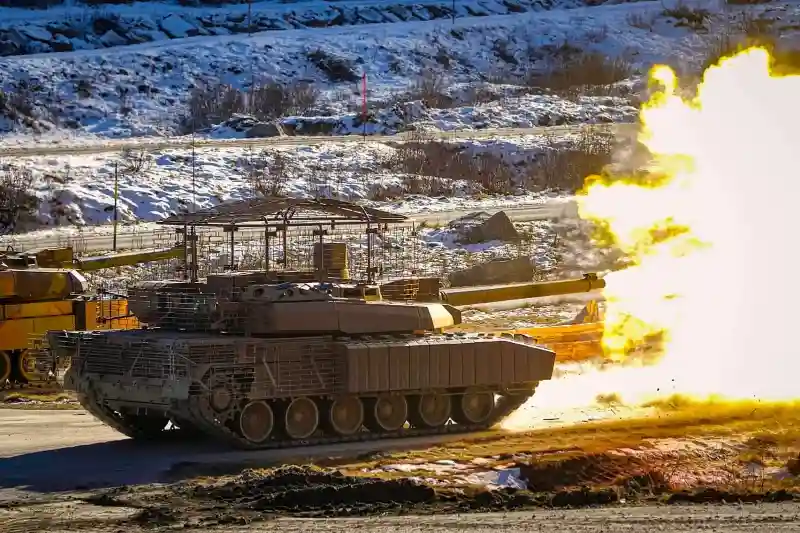
On November 17, 2025, in the alpine reaches of Hinterrhein, a joint Franco-Swiss live-fire drill marked a pivotal step in modern European armored warfare. The French Army’s 5th Dragoon Regiment, equipped with Leclerc XLR tanks, joined forces with Switzerland’s 17th Mechanized Battalion, fielding Leopard 2s, to test cutting-edge armor technologies, modular protective systems, and experimental battlefield survivability enhancements under real-world combat conditions.
Alpine Combat: A Real-World Testing Ground for Modular Protection
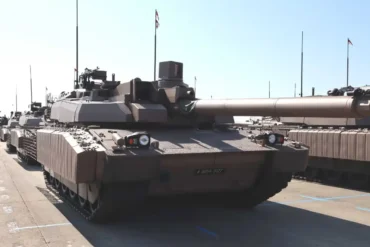
The rugged terrain of Hinterrhein provided a harsh but ideal testbed for the Leclerc XLR’s new defensive suite. In these mountainous zones, the challenges of line-of-sight, ambush exposure, and terrain navigation mirror the very scenarios NATO partners anticipate in potential peer-level conflict. One Leclerc XLR, configured with a cope-cage anti-drone screen, reinforced anti-mine plates, and anti-RPG side modules, became the centerpiece of the drill. Its design reflected the French Army’s iterative adaptation strategy: a flexible and modular approach to modern warfare where kit configurations evolve based on mission requirements and field feedback. The presence of over 300 live kinetic rounds and Swiss Leopard 2 tanks enabled cross-platform benchmarking and cooperative doctrine testing. This not only allowed the French and Swiss units to refine mechanical defenses but also validated how such modular systems performed in tandem with different vehicle families.
Leclerc XLR: A Digitally Enhanced Warfighter
At the heart of the exercise was the Leclerc XLR, the latest iteration of France’s main battle tank lineage. The XLR retains the Leclerc’s hallmark features — a 120mm autoloaded smoothbore gun and high mobility — but now integrates digitally networked battlefield sensors, a modernized fire-control system, and plug-and-play modular armor kits.
Key upgrades include:
- A centralized combat information system allowing real-time data sharing between tanks and command centers.
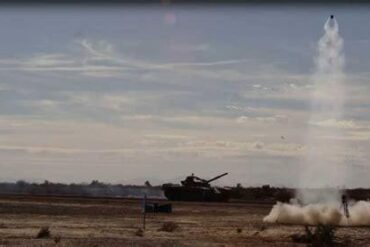
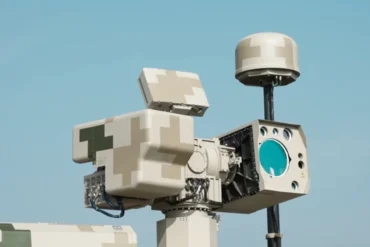
- Integration of automated threat detection and countermeasures.
- A modular belly and flank armor suite, field-installable and removable within mission-specific timelines.
- Passive protection optimized for drone-borne IEDs, RPGs, and buried explosive threats.
This modularity underscores a shift from monolithic passive defenses to mission-tailored survivability packages. Such adaptability enables commanders to balance mobility, logistical footprint, and protection based on terrain and threat profile.
Experimental Armor in Action: Cope-Cage and Anti-Mine Suite
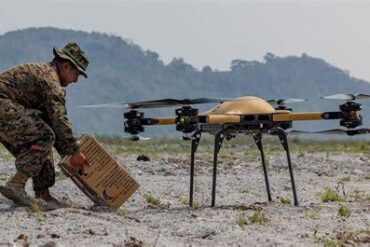
The most visually distinctive feature on the test unit was the cope-cage armor, a skeletal superstructure mounted atop the turret. Designed to disrupt the flight and detonation path of loitering munitions and kamikaze drones, it reflects lessons drawn from contemporary theaters such as Ukraine, where low-cost UAS platforms have become a dominant threat.
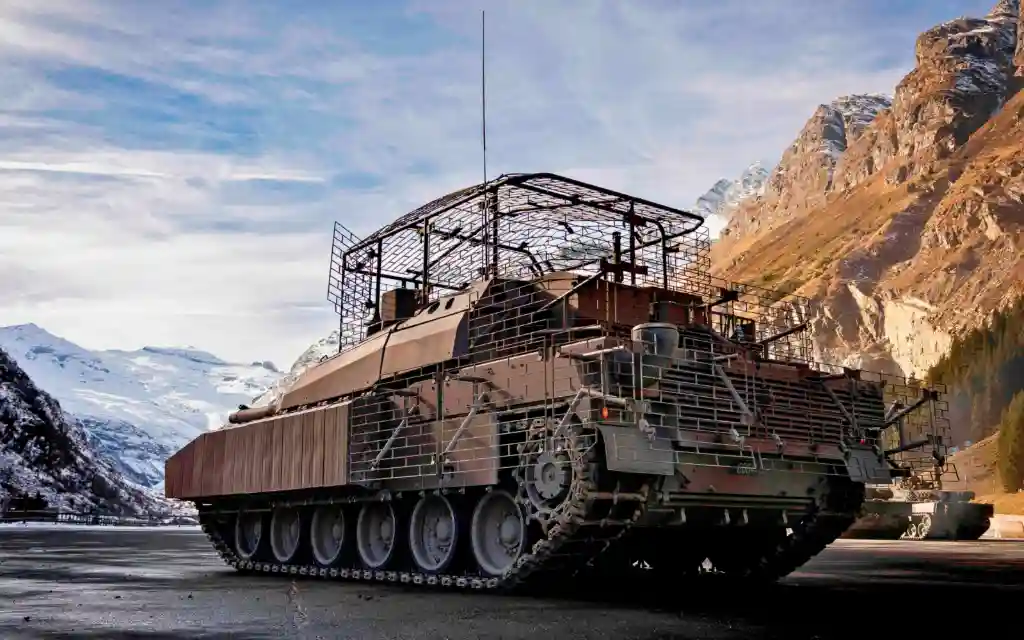
Coupled with revised mine protection, including a reinforced belly plate and additional energy-dispersing layers on the side skirts, the package demonstrated clear focus on threats faced in hybrid warfare — where enemy combatants may combine traditional kinetic force with insurgent-style IEDs and drones.
A Pragmatic Counter to Peer and Asymmetric Threats
Rather than pursuing an all-in, sensor-saturated active defense suite, the French approach favors rapidly deployable mechanical solutions. Compared to Germany’s Leopard 2A7 variants — which lean toward extensive passive armor and complex active protection systems (APS) — the Leclerc XLR’s package preserves mobility and reduces logistical complexity.
This is a pragmatic compromise. While APS offers exceptional real-time threat interception, it requires significant sensor integration, power management, and electronic warfare coordination. The French Army’s preference for modular fit-outs reflects a philosophy of field resilience over technological dependency, particularly in environments where electronic degradation or jamming is likely.
Interoperability and Strategic Messaging in the Alps
Deploying such experimental hardware into neutral Swiss territory sends a clear message to allies and adversaries alike. The Franco-Swiss exercise wasn’t merely about tactics — it was about demonstrating alignment, interoperability, and a shared European doctrine of adaptable armored warfare.
The strategic value was multi-layered:
- Doctrine harmonization: Cross-platform drills enabled direct comparison of Leopard 2 and Leclerc XLR kits under similar conditions.
- NATO alignment without borders: Switzerland, though neutral, has increasingly engaged in collaborative drills that emphasize defense interoperability.
- Proof of concept: By testing mechanical add-ons under kinetic fire, the French validated not just the theory but the practicality of modular survivability kits.
Lessons in Speed and Scalability from the Field
The exercise confirmed a vital tenet of modern military innovation: speed of adaptation is paramount. The ability to iterate designs, field test under stress, and receive real-time user feedback shortens the feedback loop between engineers, soldiers, and doctrine developers.
As the Leclerc XLR continues its rollout, the integration of such modular components will demand:
- Standardized mounting protocols across vehicle fleets.
- Expanded maintenance training to accommodate rapid fitment and removal.
- Integrated electronic calibration to ensure mechanical defenses complement digital countermeasures.
Counter-UAS Tactics Meet Armor Doctrine
This evolution in armor also reflects broader shifts in counter-UAS doctrine. Simply destroying drones is no longer sufficient. Armored units must now employ multi-layered protection, which includes:
- Passive physical deterrents like cope cages.
- Electronic warfare suites to jam or misdirect drone signals.
- Kinetic response capabilities from integrated weapon stations.
- Battlefield awareness, powered by data fusion across air and ground platforms.
In that sense, the Leclerc XLR isn’t just a tank. It’s a platform for adaptation, able to evolve in the face of fast-changing threat paradigms. Its Hinterrhein deployment served as a living laboratory — not merely to test metal and munition, but to stress-test doctrine itself.
Implications for Europe’s Armored Future
The Franco-Swiss exercise does not exist in isolation. It sits within a broader European rearmament trend, as nations re-evaluate legacy MBTs in light of drone proliferation, hybrid war, and urban maneuver complexity. From Poland’s K2 acquisition to Germany’s MGCS collaboration, the continent is moving toward a new era of armored flexibility.
France’s commitment to modular upgrades — rather than wholesale replacement — is notable. It offers:
- Budgetary efficiency: extending operational life of platforms without full reindustrialization.
- Tactical versatility: enabling rapid adaptation per mission theater.
- Multinational operability: easing coalition logistics through standardized fit-outs and complementary design philosophies.
Conclusion: Modular Adaptation as Battlefield Imperative
The Leclerc XLR’s performance during the Hinterrhein live-fire trials marks a defining moment for modular armor philosophy. Confronting an era of drones, roadside bombs, and peer-level anti-tank systems, Western MBTs must do more than survive — they must adapt with speed, interoperability, and doctrinal cohesion.
France’s decision to focus on mechanical, mission-specific protection represents a doctrine of grounded realism. Rather than chase prohibitively expensive next-generation systems, it aims to maximize survivability within practical deployment cycles.
By proving the effectiveness of its anti-drone and anti-mine kit under live conditions — and doing so in partnership with a neutral neighbor — the French Army has shown that European tanks are not standing still. They are evolving rapidly, with doctrine, technology, and allied cooperation forming a united front in the face of emerging threats.