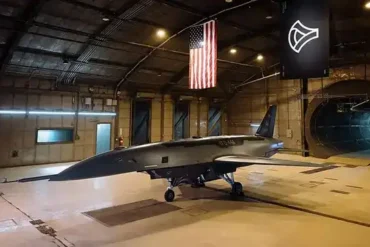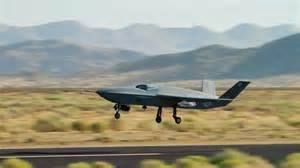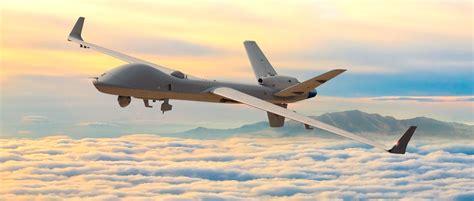
General Atomics Aeronautical Systems Inc. (GA-ASI) has redefined the future of aerial combat by integrating robot wingmen into its formidable MQ-9B drone system. This breakthrough introduces PELE, short for Precision Exportable Launched Effect, a compact, autonomous, and mission-specific support drone designed to complement and extend the reach of the MQ-9B in high-risk and long-range operations. With this technological leap, the United States military is pushing the boundaries of unmanned aerial vehicle (UAV) warfare into a new era of precision, survivability, and battlefield flexibility.
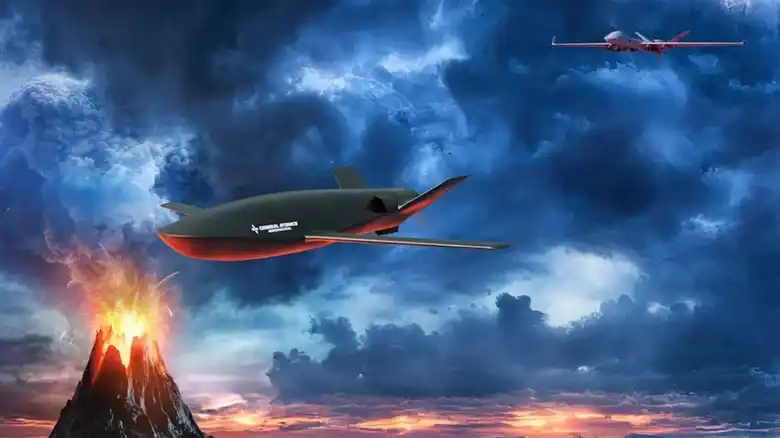
Introducing PELE: The High-Tech Robotic Wingman
The PELE support drone is a 9-foot-long aerial platform powered by a 16-horsepower engine and boasting an 11-foot wingspan. Developed as an air-launched companion to the MQ-9B, PELE is tailored for multi-role missions such as electronic intelligence (ELINT), real-time surveillance, and electronic warfare. Its impressive mission range of 575 miles allows it to engage in deep penetration reconnaissance without jeopardizing the parent aircraft.
What sets PELE apart is not merely its compact form factor or engine efficiency—it’s the seamless integration with the MQ-9B, enabling commanders to deploy one or multiple units simultaneously. This capability dramatically enhances operational flexibility, allowing the MQ-9B to remain at a safe standoff distance while PELE units enter contested or hostile zones.
Survivability and Tactical Superiority in Contested Airspace
One of the most compelling advantages of the MQ-9B-PELE pairing is its contribution to platform survivability. The MQ-9B, often equipped with mission kits that push its value past $100 million per unit, represents a high-value asset that must be protected from direct exposure in volatile zones. With PELE, commanders can now decouple risk by sending the robotic wingman into harm’s way, gathering critical data and engaging enemy defenses while the MQ-9B remains in safer, strategically advantageous airspace.
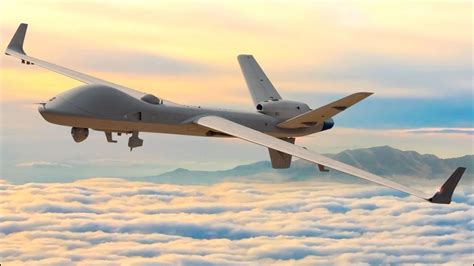
Each PELE unit carries electro-optical/infrared (EO/IR) sensors, full-motion video cameras, and geo-location equipment, enabling it to perform real-time battlefield analysis. This includes the detection of surface-to-air missile systems, enemy troop movements, or electronic signal intercepts. All gathered intelligence is relayed back in real-time, giving U.S. forces a decisive information edge without risking multi-million-dollar drone assets.
MQ-9B: A Combat-Proven Drone Now Reinvented
Before the PELE upgrade, the MQ-9B SkyGuardian and its maritime variant, the SeaGuardian, were already among the most advanced medium-altitude long-endurance (MALE) drones in global military use. Equipped for surveillance, precision strikes, and electronic warfare, the MQ-9B is capable of flying over 40 hours and operating across wide combat theaters without interruption.
The introduction of robotic wingmen like PELE exponentially enhances the MQ-9B’s already dominant capabilities. Instead of stretching a single platform’s limits, it now commands a networked force of autonomous sub-drones. This aligns with a modular warfare philosophy, where mission elements are distributed across various specialized platforms, increasing both flexibility and resilience.
Top Gun Tactics Reimagined Through AI-Enabled Wingmen
While Hollywood immortalized the concept of elite pilots flying in synchronized formation, the Pentagon’s real-world execution now replaces one of those pilots with semi-autonomous AI-controlled drones. These robotic wingmen can operate under pre-set directives or adaptively respond to mission dynamics using machine learning and real-time data feeds.
In essence, the U.S. military is adopting a Collaborative Combat Aircraft (CCA) model—pairing manned or high-value unmanned platforms like the MQ-9B with support drones that extend capability without increasing risk. This is part of a broader shift toward Manned-Unmanned Teaming (MUM-T), where algorithms and human command inputs dynamically delegate roles and responsibilities on the battlefield.
Strategic Implications and Battlefield Doctrine
The operational pairing of MQ-9Bs and PELE drones represents more than a technological upgrade—it introduces a fundamental shift in battlefield doctrine. Commanders can now design multi-vector aerial engagements using combinations of MQ-9Bs and PELE units, forcing adversaries to divide focus and dilute defensive coordination.
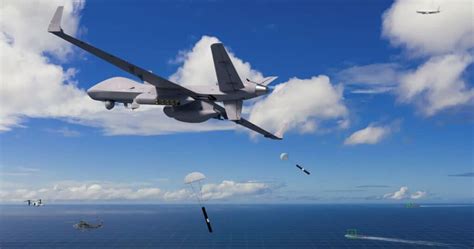
For instance, a single MQ-9B can release multiple PELE units in rapid succession, each assigned with unique tasks such as jamming enemy radar, conducting target validation, or baiting enemy missile systems. This saturation tactic not only tests the limits of enemy detection and response infrastructure but can also result in sensor overload, creating temporary blind spots for follow-up strikes by manned aircraft or other UAVs.
Air-Launched and Ground-Deployed: Dual-Mode Flexibility
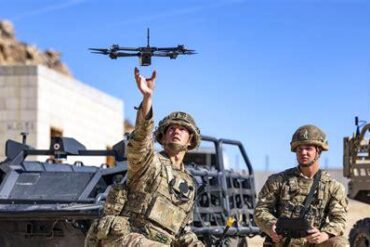
PELE drones are designed for multi-platform deployment. While their primary configuration allows them to be air-launched from MQ-9B drones, they can also be ground-launched using mobile units or fixed installations. This adds a layer of unpredictability to how U.S. forces can field them.
Whether flown in pre-programmed flocks or commanded in real-time, PELEs launched from land can extend the MQ-9B’s surveillance corridor far beyond its initial entry point. In contested zones where air operations might be temporarily suspended, ground-launched PELE drones can be used to probe enemy lines, gather recon, or pre-map strike targets without ever putting a crewed or high-value UAV in jeopardy.
Toward a More Autonomous Combat Future
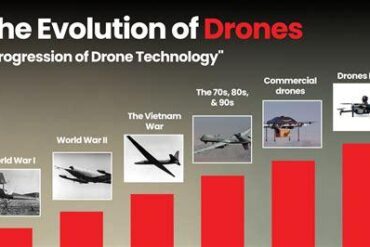
Military drone operations are undergoing a tectonic transformation. What started as platforms for aerial observation are now turning into AI-enhanced mission orchestrators. The addition of PELE demonstrates how autonomy and modularity are becoming the defining principles of U.S. aerial doctrine.
GA-ASI’s roadmap appears to converge with the Pentagon’s vision of fully integrated autonomous swarms, where next-generation UAVs coordinate in real time, sharing data, adapting on the fly, and learning from mission outcomes. Autonomous battlefield systems are no longer experimental—they are now actively reshaping the rules of engagement.
Conclusion: A Pivotal Moment for U.S. Military Air Power
The MQ-9B and PELE pairing signifies a pivotal moment in the evolution of unmanned warfare capability. In enabling an elite platform like the MQ-9B to command and deploy its own robotic wingmen, GA-ASI has transformed how missions are conceived, executed, and evolved in real time.
This new architecture is not merely about adding more drones—it is about building self-sufficient aerial ecosystems capable of strategic adaptability and tactical execution with minimal risk. As great powers race to develop the next generation of UAVs, the MQ-9B-PELE system stands as a landmark achievement—a synthesis of autonomy, lethality, and intelligent coordination that will shape the future of warfare.
The sky is no longer the limit—it is now a layered battlespace where drones fly in formation, not just with humans, but with machines designed to act, think, and fight like them. The Top Gun era has officially gone robotic.