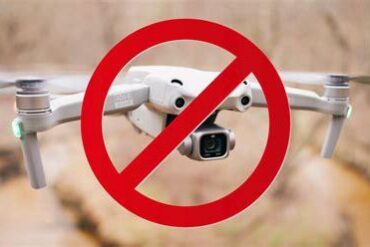
The U.S. Air Force has taken a decisive step into the evolving battlefield of digital security by banning certain smart technology gadgets from use while Airmen are in uniform. The updated dress and personal appearance policy reflects a growing awareness that modern convenience often comes bundled with invisible risks. What once looked like harmless innovation—sleek, AI-powered eyewear and wireless accessories—now sits squarely in the crosshairs of operational security concerns.
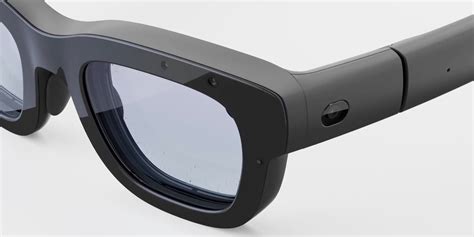
At the center of this policy shift is the prohibition of smart glasses equipped with photo, video, or AI capabilities. Devices like Meta smart glasses, which have surged in popularity for their seamless ability to capture and process real-world data, are no longer permitted when wearing the uniform—regardless of whether the Airman is on duty or off. The rule is blunt, but its logic is anything but arbitrary.
The reason is simple: data leakage. Smart glasses can quietly record sensitive environments, transmit data to cloud servers, and even run AI-driven analysis in real time. In a civilian context, that’s convenience. In a military context, that’s a potential vulnerability.
Why Smart Wearables Trigger Security Alarms
Modern wearable technology has crossed a threshold. These devices are no longer passive tools; they are active sensors embedded in everyday life. A pair of smart glasses can capture geolocation data, identify faces, and store visual records—all without obvious user interaction. For military personnel, this creates a scenario where classified environments could be unintentionally exposed.
The Air Force’s concern isn’t hypothetical. Even a brief recording inside a restricted facility could reveal infrastructure layouts, equipment configurations, or personnel movements. When combined with cloud connectivity, that information might travel far beyond controlled networks.
This policy doesn’t single out one brand. While Meta’s devices are the most recognizable example, the ban applies broadly to any smart eyewear capable of recording or AI processing. The rule targets functionality, not branding—a sign that the Air Force is thinking in systems, not marketing labels.
Expanded Restrictions on Bluetooth and Standard Eyewear
The update goes beyond smart glasses. The Air Force has also tightened rules around Bluetooth devices, headsets, and hands-free technology. These tools are now restricted unless explicitly authorized for official duties. Wireless communication, while convenient, introduces another layer of signal vulnerability and potential interception.
Even standard eyewear is now more regulated. Approved frame colors and lens types have been narrowed, reinforcing uniformity while subtly reducing the risk of non-compliant or modified devices slipping through unnoticed. It’s a reminder that in military environments, even small variations can carry larger implications.

How Other Military Branches Are Responding
Interestingly, the U.S. military is not unified on this issue. Each branch maintains its own policies, leading to a patchwork of approaches. The U.S. Army, for instance, is actively experimenting with smart glasses, using them to train AI systems for vehicle maintenance and repair guidance. Their working theory is that wearable AI could eventually replicate the expertise of a seasoned technician.
Meanwhile, the Navy and Marine Corps have taken a more decentralized stance, allowing individual commanders to assess whether such devices pose a threat in their specific operational contexts. The Navy, however, aligns with the Air Force in restricting unauthorized Bluetooth usage.
This divergence reveals something deeper: the military is still negotiating its relationship with emerging technology. One branch sees opportunity; another sees risk. Both are correct, depending on the lens you choose.
The Bigger Picture: Convenience vs. Control
The Air Force’s decision underscores a broader tension shaping the modern world—the trade-off between technological convenience and information control. Smart devices promise efficiency, but they also blur the boundaries between private and public, secure and exposed.
In highly sensitive environments, that ambiguity is unacceptable. The ban is less about rejecting innovation and more about containing its unintended consequences. Technology evolves faster than policy, and moments like this are where institutions attempt to catch up.
The real story isn’t just about banned gadgets. It’s about a future where every device is a potential sensor, and every convenience carries a shadow.