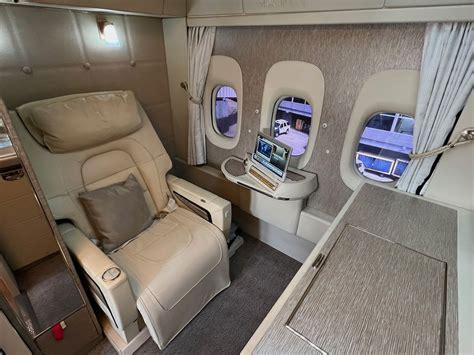
Emirates First Class sits at the very top of commercial aviation luxury. From private suites with floor-to-ceiling doors to Dom Pérignon flowing at 40,000 feet and even an onboard shower spa, it represents an experience that borders on the surreal. Tickets routinely price well above $10,000 one-way, placing them out of reach for most travelers paying cash. Miles, in theory, offer an escape hatch. In practice, redeeming miles for Emirates First Class has become a costly, restricted, and elite-gated pursuit that demands strategy, patience, and insider knowledge.
What follows is a deep, practical guide to understanding exactly how Emirates First Class awards work today, why elite status now matters, how many miles and surcharges you should realistically expect to pay, and how experienced travelers actually secure these seats despite the obstacles.
Emirates First Class: A Product That Redefined Luxury in the Sky
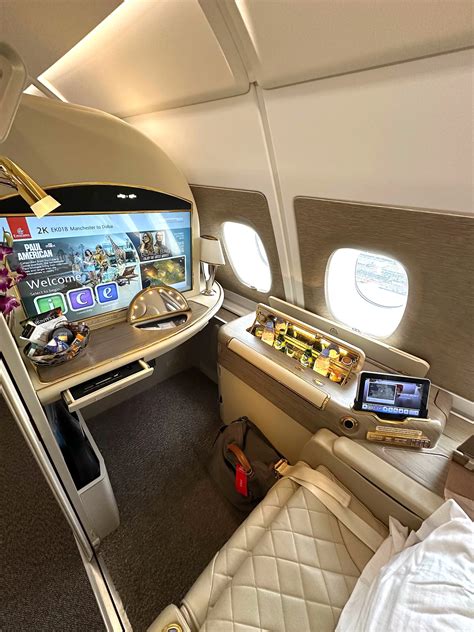
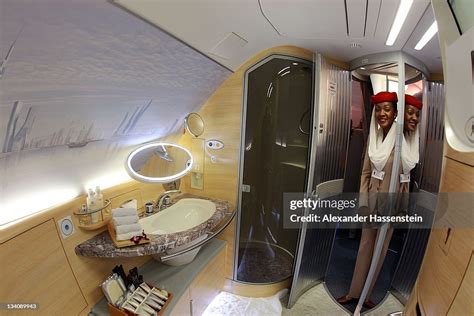
Emirates operates the largest international First Class network in the world, and the airline treats the cabin not as an afterthought, but as a brand-defining statement. On the Airbus A380, First Class passengers enjoy fully enclosed suites, a dedicated onboard bar shared with Business Class, and the iconic shower spa, a feature unique to Emirates. On select Boeing 777 aircraft, Emirates introduced an even more exclusive product inspired by Mercedes-Benz design, featuring six ultra-private suites arranged in a 1-1-1 layout.
The appeal is not just physical luxury. Emirates invests heavily in soft product: vintage champagne, rare wines, unlimited caviar service, premium dining on demand, and attentive service. It is this combination that makes travelers obsess over finding award space, even when the redemption math is far from ideal.
Why Redeeming Miles for Emirates First Class Is Harder Than It Used to Be
A decade ago, Emirates First Class was a favorite among points enthusiasts because of wide partner availability and reasonable mileage pricing. That era is over. Today, Emirates has tightened control over its premium cabins as part of a broader industry trend toward monetizing loyalty programs more aggressively.
The most significant change is simple but powerful: you now need Emirates Skywards elite status to redeem Skywards miles for First Class awards. Without it, the airline blocks outright First Class redemptions through its own program, regardless of how many miles you have.
This single rule fundamentally reshaped the landscape of Emirates redemptions and eliminated many casual aspirational bookings.
Skywards Elite Status: The Gatekeeper to First Class Awards
Any level of Skywards elite status — Silver, Gold, or Platinum — unlocks access to First Class award redemptions. Importantly, the elite member does not have to be the traveler. As long as the miles are redeemed from an elite account, tickets can be issued for anyone.
For travelers based in the United States, this barrier is less intimidating than it sounds. Emirates partners with Barclays on co-branded credit cards that grant elite status upon approval, often posting instantly. This makes status acquisition more of a financial decision than a flying challenge.
One lesser-known restriction remains: Emirates does not allow First Class award redemptions for children eight years old or younger, even though cash tickets are permitted. Families traveling with young children need to factor this into their planning.
How Many Miles Emirates First Class Actually Costs
Emirates does not publish a traditional award chart. Instead, it uses a dynamic distance-based mileage calculator, which means prices vary significantly by route but remain consistent within a given market.
One-way awards price at exactly half of a roundtrip, eliminating any incentive to book return journeys together. This flexibility is useful for complex itineraries or mixed-cabin travel.
To understand the real cost, consider these representative one-way First Class prices:
- Miami to Bogotá: 60,500 Skywards miles
- New York to Milan or Newark to Athens: 102,000 Skywards miles
- Washington, D.C. to Dubai: 163,500 Skywards miles
- Los Angeles to Dubai to Malé: 186,000 Skywards miles
The standout value lies in fifth-freedom routes between the U.S. and Europe, where Emirates operates wide-body aircraft with full First Class service on relatively short flights. These redemptions deliver exceptional value per mile compared to ultra-long-haul routes.
Fuel Surcharges: The Price You Can’t Avoid
Miles alone do not buy your way into Emirates First Class. The airline passes along carrier-imposed surcharges, often referred to as fuel surcharges, in full. These fees fluctuate but have trended sharply upward.
On First Class awards:
- U.S. to Dubai: Expect $800 or more one-way
- U.S. to Europe: Expect $400 or more one-way
These surcharges sting, especially when paired with non-1:1 point transfer ratios. Yet many travelers rationalize the expense by considering the retail value of the onboard experience. With Emirates’ wine cellar featuring bottles worth hundreds of dollars each, it is not difficult to feel like you are reclaiming some of that cash value inflight.
Stopovers: One of Skywards’ Most Underrated Strengths
Emirates Skywards allows free stopovers on one-way First Class awards, a rare and valuable feature. The only requirement is that stopover itineraries must be booked by phone, though agents are generally competent with these requests.
Even more powerful is the ability to add a stopover after ticketing. A traveler could book New York to Dubai, then later add Dubai to Malé by paying the mileage and fee difference. This flexibility turns Dubai into a strategic break point rather than a forced connection.

Change and Cancellation Rules That Favor the Traveler
All Emirates First Class awards are ticketed under the Flex Plus fare bundle, which provides exceptional flexibility. Changes and cancellations are free, with full refunds of miles and all taxes and surcharges.
This policy dramatically reduces risk when booking speculative awards close to departure, a tactic that often yields the best availability.
Earning Emirates Skywards Miles in a Devalued Era
Skywards partners with major transferable currencies including American Express Membership Rewards, Capital One, Citi ThankYou, and Bilt Rewards. The challenge lies in transfer ratios, which have shifted from 1:1 to 5:4 or 4:3 in most cases.
This effectively raises the true cost of First Class redemptions and forces travelers to think in terms of opportunity cost, not just mileage price.
A technical quirk worth knowing: Emirates’ website sometimes requires slightly more miles than the ticket price to proceed with booking. If this happens, switching to the Emirates mobile app usually resolves the issue.
Searching for Emirates First Class Award Space
Award searches are conducted directly on emirates.com using the “Classic Rewards” option. The site allows flexible date searches, but only within a seven-day window, making wide-range planning cumbersome.
Third-party tools like Seats.aero previously helped surface availability, but the introduction of elite-only restrictions largely removed First Class data from public scans.
Understanding How Emirates Releases First Class Awards
Award availability is the most unpredictable element of the process. Emirates does not release a fixed number of First Class award seats per flight. Instead, availability varies by route, aircraft type, season, and cabin load.
Aircraft choice matters enormously. The A380, with 14 First Class seats, is far more generous than the 777, which offers six or eight seats depending on configuration. Empty cabins close to departure are the strongest signal that award space may appear.
Patterns consistently show that the weeks leading up to departure offer the best odds. Midweek flights, lower-demand routes, and seasonal lulls are fertile ground for last-minute bookings.
The Upgrade Strategy: The Most Reliable Path to First Class
For many experienced travelers, the smartest approach is not redeeming directly for First Class at all. Instead, they book Business Class and upgrade using miles on the day of departure.
This method does not require Skywards elite status and offers last-seat availability, bypassing traditional award inventory limits. Even Business Class award tickets qualify for upgrades, making this strategy exceptionally powerful.
Execution matters. Not all airport agents are familiar with the policy, and catering constraints can block upgrades if First Class meals are limited. Still, when it works, this approach unlocks First Class seats that are otherwise completely unavailable.
Partner Programs: Technically Possible, Practically Painful
Only two partner programs — Air Canada Aeroplan and Qantas Frequent Flyer — have access to Emirates First Class awards. Neither option is attractive for most travelers.
Aeroplan pricing is extreme, with routes like Newark to Athens costing over 300,000 points one-way, and Washington to Dubai approaching 700,000 points, even without fuel surcharges. Qantas offers marginally better pricing but virtually nonexistent availability.
These routes exist more as theoretical options than realistic strategies.
The Reality of Redeeming Emirates First Class Today
Emirates First Class remains one of the most aspirational experiences in commercial aviation, but it now comes wrapped in complexity. Elite status requirements, high surcharges, weakened transfer ratios, and inconsistent availability have transformed what was once an easy win into a calculated pursuit.
Yet for travelers willing to play the long game — monitoring flights, leveraging upgrades, and booking close to departure — the reward remains extraordinary. When the suite door slides shut, the cabin quiets, and caviar service begins, the effort fades into irrelevance. Emirates has made its First Class harder to reach, but not impossible — and certainly not any less unforgettable.