Iceland has evolved from a niche adventure destination into one of the most aspirational travel experiences in the North Atlantic. From volcanic landscapes and glacier lagoons to northern lights and geothermal spas, demand for travel to Iceland remains consistently high across seasons. At the center of this demand stands Icelandair, the country’s flag carrier and by far the most influential airline serving Keflavík International Airport as a transatlantic gateway.
While Icelandair is rarely associated with ultra-luxury cabins or aspirational award redemptions, it plays a unique role in transatlantic travel. Its geographic positioning, extensive North American network, and famous stopover program create opportunities that are not always obvious when viewed through a traditional miles-and-points lens. Understanding how to redeem miles on Icelandair requires abandoning assumptions shaped by legacy carriers and instead focusing on strategic value extraction rather than theoretical sweet spots.
For travelers determined to use miles rather than cash, the options exist—but they demand nuance, flexibility, and a realistic assessment of what constitutes a “deal” in today’s loyalty ecosystem.
Icelandair’s appeal is not rooted in aspirational luxury but in access, connectivity, and pricing efficiency. This distinction fundamentally shapes how savvy travelers should approach mileage redemptions on the airline.

Understanding Icelandair’s Unique Role in Transatlantic Travel
Icelandair occupies a space that few airlines can replicate. Sitting roughly midway between North America and Europe, Iceland allows the airline to operate narrowbody aircraft efficiently across the Atlantic while offering passengers a built-in opportunity to explore the country without additional airfare. This operational model underpins Icelandair’s entire pricing and loyalty strategy.
Unlike traditional hub-and-spoke carriers, Icelandair does not rely on alliances such as Star Alliance or oneworld. Instead, it has cultivated selective bilateral partnerships and designed its network around short-to-medium transatlantic sectors. The result is often lower cash fares, especially from secondary U.S. cities and Northern Europe, but far fewer outsized opportunities for mileage arbitrage.
This reality matters because mileage redemptions are only compelling when they outperform cash pricing. With Icelandair frequently undercutting competitors on revenue fares, mileage redemptions must be evaluated against a very competitive baseline.
Why Icelandair Saga Club Rarely Delivers Real Value
Icelandair’s in-house loyalty program, Saga Club, exists primarily to reward frequent, paid travelers rather than mileage optimizers. From an editorial perspective, Saga Club suffers from two structural weaknesses that significantly limit its usefulness.
First, earning Saga Points is restrictive. The program lacks partnerships with major transferable credit card currencies, making it difficult for most travelers outside Iceland to accumulate meaningful balances. Without access to flexible points ecosystems, Saga Club becomes a closed loop that favors local or corporate flyers.
Second, redemptions are dynamically priced and revenue-based, typically yielding around 0.5 cents per point in value. This effectively turns Saga Points into a rebate currency rather than a strategic asset. In a world where transferable points can regularly exceed two cents per point in value, Saga Club redemptions struggle to justify their opportunity cost.
For most travelers, engaging deeply with Saga Club introduces friction without delivering proportional upside. Even loyal Icelandair flyers often find greater long-term value by crediting flights elsewhere.
Partner Programs That Unlock Icelandair Awards
The true opportunities for redeeming miles on Icelandair emerge not from its own program, but from partner loyalty schemes that provide indirect access to award seats. Among these, two programs stand out for their relevance and reach: Alaska Airlines Mileage Plan (now branded as Atmos Rewards) and JetBlue TrueBlue.
Each program reflects a different redemption philosophy, and each carries its own trade-offs that must be understood before committing valuable points.
Redeeming Alaska Atmos Rewards on Icelandair: Promise Versus Reality
Alaska’s loyalty program has long been celebrated for its non-alliance partnerships and creative routing rules. Icelandair fits neatly into this tradition, and on paper, the award chart suggests compelling possibilities.
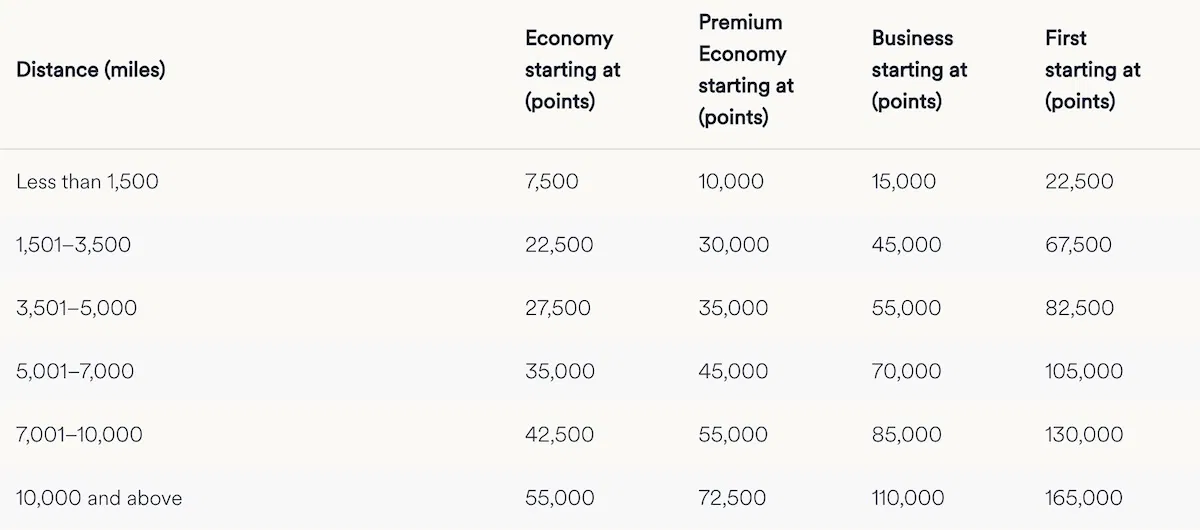
Awards are priced based on cumulative distance, with one-way economy awards theoretically starting as low as 22,500 points between North America and Iceland. The inclusion of free stopovers on one-way awards further enhances the perceived value, allowing travelers to combine Europe and Iceland in a single itinerary.
However, execution is where enthusiasm fades. Alaska adds carrier-imposed surcharges to Icelandair awards, typically ranging from $100 to $150 one-way. While not egregious, these fees erode value when comparable cash fares are often modest.
More critically, premium cabin access is currently unavailable. Alaska does not have access to Icelandair’s Saga Class award inventory, limiting redemptions to economy only. Even within economy, pricing frequently exceeds the advertised “starting at” levels, with transatlantic awards often pricing closer to 40,000 points one-way.
The result is a redemption option that works best for travelers who value routing flexibility over raw cents-per-point optimization.
JetBlue TrueBlue: The Only Path to Saga Class Awards
JetBlue’s partnership with Icelandair represents the most comprehensive redemption pathway currently available. TrueBlue members can redeem points for both economy and Saga Class, Icelandair’s premium cabin, making this program uniquely attractive for travelers seeking additional comfort.
TrueBlue does not publish a traditional award chart for Icelandair redemptions. Instead, pricing appears to follow a hybrid zone-and-distance model, with cumulative pricing applied to multi-segment itineraries. A nonstop flight from New York to Keflavík can price around 17,000 points in economy or approximately 70,000 points in Saga Class, while longer itineraries increase accordingly.
While this pricing allows for stopovers without dramatic penalties, it rarely delivers exceptional value. Saga Class, which resembles premium economy more than long-haul business class, commands a high points premium that often mirrors or exceeds the cash price when translated into cents per point.
JetBlue TrueBlue excels in availability and simplicity, not in arbitrage. For travelers sitting on large TrueBlue balances with limited alternative uses, Icelandair redemptions can still make sense—especially when cash fares spike during peak seasons.

The Overlooked Strategy: Using Points to Offset Cash Fares
In many scenarios, the most rational way to “redeem” points on Icelandair is not through airline award charts at all. Instead, credit card points redeemed as cash equivalents often deliver superior value, particularly given Icelandair’s aggressive fare pricing.
Icelandair routinely offers competitive fares on three core itinerary types: nonstop U.S.–Iceland roundtrips, Europe–U.S. itineraries with Iceland stopovers, and one-way transatlantic flights that still permit extended stays in Iceland. These fares are often low enough that redeeming points at a fixed value of 1.25 to 1.5 cents per point through premium credit cards can outperform traditional mileage redemptions.
This approach offers additional benefits. Cash tickets earn redeemable miles and elite credit, provide broader fare flexibility, and eliminate the availability constraints that plague award travel.
Why One-Way Icelandair Fares Deserve Special Attention
One of Icelandair’s most underappreciated strengths lies in its one-way pricing structure. Unlike many legacy carriers that heavily penalize one-way international tickets, Icelandair frequently prices them at roughly half the roundtrip cost—sometimes less.
This creates an elegant strategy for comfort-focused travelers. Flying from North America to Europe on a carrier offering lie-flat business class, then returning on Icelandair with a stopover in Iceland, balances comfort, cost, and experience. Saga Class, while not luxurious, is far more palatable on daytime westbound flights where sleep is less critical.
This hybrid approach often delivers the best overall value, combining aspirational travel where it matters with pragmatic efficiency where it does not.

The Stopover Advantage That Changes the Equation
Icelandair’s stopover policy remains one of the most generous in the industry. Regardless of whether a ticket is booked as a one-way or roundtrip, and regardless of cabin, travelers can include a stopover in Iceland for several days at no additional airfare cost.
From a value perspective, this effectively transforms a single ticket into two distinct trips. When evaluated holistically, even modest redemption values can become compelling once the added destination is factored in. This is particularly true when pairing Iceland with Northern European cities where fares are traditionally higher.
Evaluating Value Beyond Cents Per Point
Strict cents-per-point calculations often fail to capture the full picture with Icelandair. The airline’s strengths lie in network efficiency, schedule density, and fare consistency, not aspirational cabins. Travelers who insist on extracting theoretical maximum value may overlook practical wins.
A “good” redemption on Icelandair is one that minimizes cash outlay, preserves flexibility, and integrates seamlessly into a broader travel strategy. In that context, using points to offset a well-priced fare, rather than forcing an award redemption, frequently emerges as the smartest move.
Final Perspective: The Best Way to Redeem Miles on Icelandair
Redeeming miles on Icelandair is less about exploiting loopholes and more about aligning expectations with reality. The airline’s own loyalty program offers little incentive for most travelers. Partner programs provide access, but rarely deliver standout value, particularly in premium cabins.
The strongest strategy combines selective mileage redemptions, cash fare optimization, and intelligent use of stopovers. Travelers willing to think beyond traditional award charts will find that Icelandair rewards flexibility, timing, and creativity far more than blind loyalty.
In a loyalty landscape increasingly defined by dynamic pricing and reduced sweet spots, Icelandair stands as a reminder that the best deal is often the one that gets you where you want to go, when you want to go, without overpaying—whether in cash or in points.