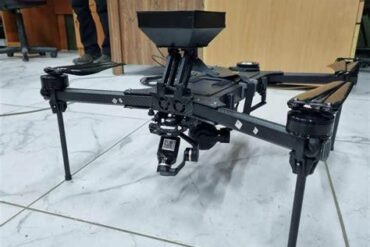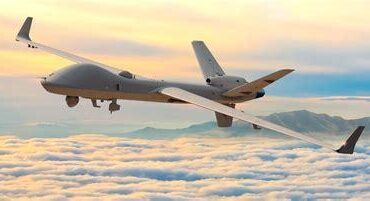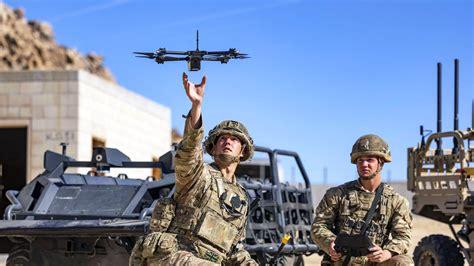
In the frigid expanse of Fairbanks, Alaska, a recent drone test meant to showcase the cutting edge of U.S. military unmanned aerial warfare instead revealed something far more alarming: a fragmented and faltering defense technology strategy that is struggling to adapt in real time. The Defense Innovation Unit (DIU)’s long-range drone test, part of its high-profile Artemis initiative, ended in fiery failures and missed targets, exposing cracks in America’s military drone ambitions.

Drone Trials Collide with Reality in the Alaskan Tundra
Set against the roar of fighter jets from the Red Flag exercises at Eielson Air Force Base, the quieter experiment at Fort Wainwright involved small, long-range strike drones being tested in an electronic warfare environment. These UAVs were designed to penetrate enemy jamming signals and reach designated targets—on paper, a bold leap forward in autonomous warfare. In practice, it was closer to a cautionary tale.
One Dragoon Sender drone veered off course and crashed into a hill. Another simply caught fire after a failed attempt to strike its target. The common factor? Electronic warfare interference. Enemy-like jamming conditions distorted navigation and rendered high-tech UAVs into little more than flammable wreckage. As Trent Emeneker of the DIU admitted, the results were “not what I would have hoped for.”
This isn’t just a glitch—it’s a systemic failure in how the Pentagon develops and fields its unmanned capabilities.
The Pentagon’s Drone Dreams Clash With Ground Truths
Drones have become emblematic of modern warfare, especially after the Ukraine conflict proved how inexpensive UAVs could neutralize armored threats and reshape battlefield tactics. The U.S. military took note, launching the Artemis program with $16 million in rapid funding, aiming to fast-track the development of small, long-range, anti-jamming drones. But despite selecting four companies within just seven months—lightning speed for defense procurement—the initiative quickly ran into the Pentagon’s oldest enemy: inter-service rivalry and indecision.
Each branch—the Army, Navy, and Air Force—wants tailor-made systems. None are eager to adopt a common drone solution. Instead of buying into Artemis, they’re dragging their boots. Emeneker has spent over a year pitching the program across the services, only to find it stuck in the notorious “valley of death”—where promising technologies die from lack of adoption, funding, or urgency.
Blue UAS: From Solution to Snarl
In 2020, the Pentagon launched Blue UAS, a supposedly simplified procurement system allowing the armed forces to rapidly acquire pre-vetted, non-Chinese drones. The idea was to empower frontline units to buy drones as easily as picking up gear off a shelf. But the reality has been a swamp of compliance checks, audits, and red tape.
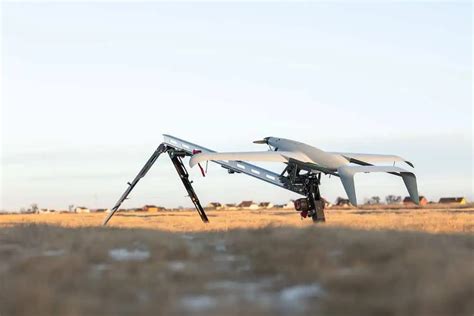
Every firmware update must pass through an exhaustive cybersecurity review, turning agile drone development into a bureaucratic slog. According to Chris Bonzagni, a former DIU official, the concept was to make a drone as accessible to a sergeant as a GoPro. Instead, it’s now more like buying a classified missile system.
China’s Acceleration vs. U.S. Paralysis
The failures in Alaska weren’t just technical—they reflect a global strategic misstep. While the U.S. was troubleshooting firmware and compliance checklists, China was deploying drone swarms and integrating UAVs into their Y-20 cargo aircraft for mass deployments. Beijing’s centralized command structure, industrial scale, and fewer regulatory barriers have allowed it to outpace the U.S. in both commercial and military drone development.
The Pentagon’s obsession with removing every trace of Chinese hardware—even when it delays deployment—has further complicated matters. While this ban is justified on national security grounds, it inadvertently hinders the rapid fielding of effective UAVs. Companies like Neros, which currently produces 1,500 Archer drones per month, are ready to scale to 10,000 monthly—but without defense contracts, they’re idling.
Alaska’s Message: Backyard Drones Are Smarter
Ironically, the consumer drone world is miles ahead of what failed in Alaska. A DJI Mavic 3 Pro, operated by a hobbyist in suburban America, boasts obstacle avoidance, real-time navigation, and advanced flight autonomy that outperformed the military systems tested in the snow-covered wilds of Alaska. That’s not hyperbole; it’s a startling indictment.
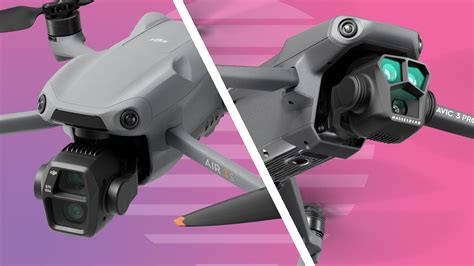
Even with off-the-shelf hardware, civilian UAVs have proven they can operate under difficult conditions. The U.S. military has yet to develop a domestic alternative that matches that reliability, thanks in part to procurement delays, security paranoia, and the absence of a unified vision.
Defense Secretary Hegseth Pushes for Urgency
In response to the drone setbacks, Defense Secretary Pete Hegseth issued a blunt directive on July 10, ordering active-duty drone units to be established by September and demanding reduced bureaucratic delays. His memo didn’t mince words: the U.S. must become the global drone leader by 2027. It’s an ambitious goal—and one currently unsupported by the Pentagon’s own processes.
He signaled that the Defense Contract Management Agency (DCMA) may step in to fast-track Blue UAS procurement and end the bottlenecks strangling deployment. But even with that pressure, the technical issues exposed in Alaska—especially around electronic warfare vulnerability—require more than memos. They require innovation, urgency, and ruthless prioritization.
The Clock Is Ticking: Tactical Implications
If the Artemis drones had been deployed in an actual combat environment, their failure would’ve cost lives. The implications extend beyond bad press—they threaten the U.S.’s ability to maintain tactical superiority in future conflicts. In theaters where GPS jamming is common, drones must function autonomously, adapt mid-flight, and communicate through resilient, encrypted networks.
What’s alarming is that adversaries are already fielding such systems. U.S. warfighters may soon face enemy drones that can swarm, jam, and strike with pinpoint precision, while their own tools are either grounded or unusable due to outdated firmware or procurement delays.
Can the U.S. Turn This Around?
Yes—but only if it reimagines its approach to drone warfare entirely. That means:
- Rapid field testing and iterative design, borrowing from Silicon Valley’s “fail fast, fix fast” mindset.
- Unified procurement strategies across services, avoiding turf wars and redundant requests.
- Investment in anti-jamming capabilities, like onboard AI-based navigation and optical terrain recognition.
- A true public-private partnership that removes bureaucracy for vetted American UAV manufacturers.
Above all, the Pentagon must realize that drones are not futuristic toys—they are the frontline of 21st-century warfare. Every delay is a strategic loss. Every failed test like the one in Alaska is a signal to adversaries that America is behind. The Alaska drone debacle should serve as the final wake-up call.
Conclusion: Backyard Flyers, Bureaucracy, and Battlefield Futures
There’s a painful irony that DIY drone enthusiasts in American garages are often closer to mastering advanced UAV operation than the defense behemoth that is the Pentagon. But it’s also a spark of hope. The talent, the hardware, and the innovation already exist inside the country—what’s missing is the political and institutional will to unleash them.
The Alaska tests, though riddled with failure, should be seen as an inflection point. Not the end of Artemis, but its necessary reckoning. If the Pentagon can course-correct—cut red tape, embrace agility, and learn from its own tech communities—then “drone dominance by 2027” might still be within reach.
Until then, the skies over Fort Wainwright tell a sobering story: America’s drones are stumbling, and the clock is ticking.