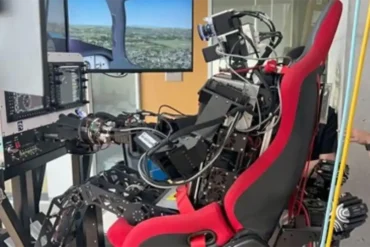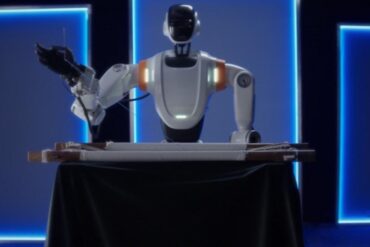
A breakthrough that blurs the line between science fiction and battlefield reality has emerged from China, where the People’s Liberation Army (PLA) has unveiled a motion-controlled military robot designed for remote combat applications. This cutting-edge technology mimics a human soldier’s real-time combat maneuvers using a lightweight motion-sensing device, signaling a potential paradigm shift in autonomous warfare.
Strategic Innovation at the 12th International Army Cadets Week
The reveal occurred behind closed doors at the prestigious 12th International Army Cadets Week, hosted at the Army Engineering University of the PLA in Nanjing, Jiangsu province. The event brought together cadets from eight Chinese military academies, joined by over 30 international military students representing 13 countries. Though the PLA has not released public combat footage of the robot, its presence at the event spoke volumes about the nation’s ambitions in next-generation military robotics.
The demonstration highlighted the robot’s ability to mirror precise attack maneuvers of a human operator with minimal latency, showcasing advances in kinetic tracking, AI-driven response calibration, and motor fluidity. According to reports from attendees, the robot was capable of fluid movement patterns and simulated battlefield engagement, albeit in a controlled indoor environment. Notably, a Moroccan cadet who had firsthand experience interacting with the robot stated that while improvements are necessary, the integration of AI for reconnaissance and assault would substantially boost its battlefield effectiveness.
A Broader Push Towards Autonomous Combat Systems
This project is part of a broader campaign by the Chinese government to invest heavily in AI-powered combat systems. The PLA’s vision is moving steadily toward the deployment of semi-autonomous or fully autonomous combatants capable of executing high-risk missions with minimal human exposure. Although the concept evokes images reminiscent of the film Real Steel (2011), China’s goal diverges significantly, focusing on tactical replication rather than cinematic dramatics.
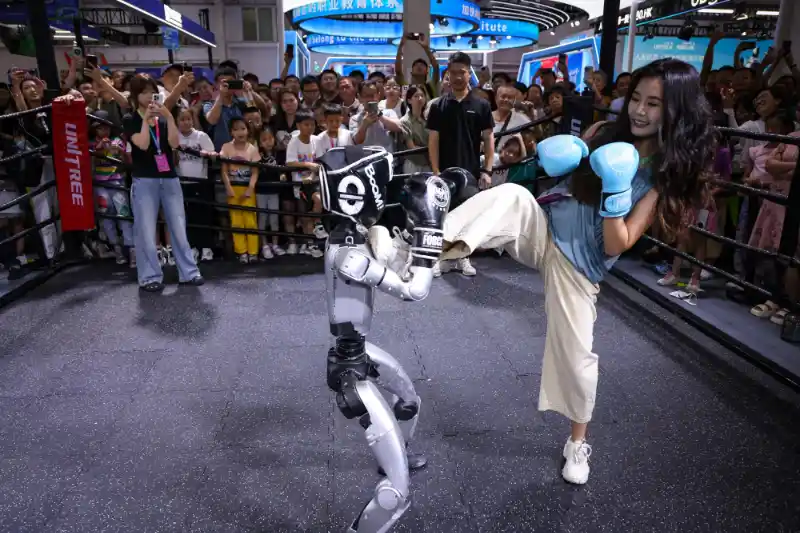
In earlier instances, humanoid robots created by Chinese tech firms demonstrated impressive martial arts capabilities, including one robot that allegedly kicked its company’s CEO during a promotional demo. However, the military-grade robots, while not yet publicly tested in combat, represent a fusion of machine learning, robotics engineering, and national defense strategy.
The Dual Edge of Technological Supremacy
While companies like XPENG and Neura pursue humanoid robotics for civilian and commercial applications, the PLA is clearly drawing the contours of a future where automated soldiers may play pivotal roles in reconnaissance, mine clearance, and frontline engagement. For example, the same exhibition also introduced a mine-clearing robot equipped with AI-based visual recognition, capable of detecting and neutralizing hidden explosives without human intervention.
This rising intersection of AI and warfare introduces critical questions about the ethical deployment of combat robots, accountability in decision-making, and the shifting role of soldiers in tech-driven conflicts. What is clear, however, is that China is advancing its military AI infrastructure with a sense of urgency and purpose that may redefine global defense dynamics.
Whether the world is on the brink of a robotic arms race remains uncertain. But with each reveal, the PLA’s strategic trajectory is becoming increasingly bold and transparent—signaling not just a technological feat, but a declaration of military intent in the AI age.