In a world increasingly reliant on advanced technology, military reach and readiness still depend on one timeless principle: geography. Across vast oceans, frozen tundras, and desolate islands, some of the world’s most powerful nations have carved out remote air bases to safeguard national interests, conduct surveillance, and ensure strategic dominance. These isolated outposts may seem forgotten on a map, but they are critical chess pieces in today’s geopolitical game.
Situated in unforgiving environments, these bases face logistical challenges ranging from extreme weather and limited sunlight to being thousands of miles away from the nearest urban infrastructure. Yet their endurance and evolving roles prove just how indispensable they are. Below is a deep dive into the five most remote military air bases and the vital roles they serve in the global military landscape.
RAF Ascension Island – Power Projection in the South Atlantic
Located roughly 4,000 miles from the UK mainland, RAF Ascension Island is a lonely outpost sitting atop a volcanic rock in the South Atlantic Ocean. Though isolated, the base remains a pivotal component of UK and US strategic operations, particularly in relation to the South Atlantic Overseas Territories.
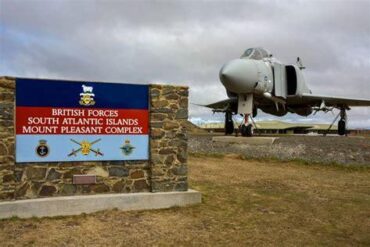
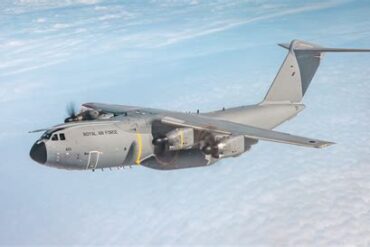
RAF Ascension is home to Wideawake Airfield, humorously named after the shrieking wideawake birds that populate the area. This airfield acts primarily as a refuelling and transit point for military aircraft traveling between the UK and the Falkland Islands, a role that became especially prominent during the 1982 Falklands War. British Avro Vulcan bombers conducted long-range missions from Ascension, highlighting the island’s significance in crisis scenarios.
Today, RAF Ascension is jointly operated by the Royal Air Force and the United States Space Force (USSF). The base hosts a key space-tracking facility operated by Space Launch Delta 45, serving as part of America’s broader missile defense and space monitoring efforts. Its strategic location ensures the UK can continue to project power across the South Atlantic, defend territorial claims, and support space operations.
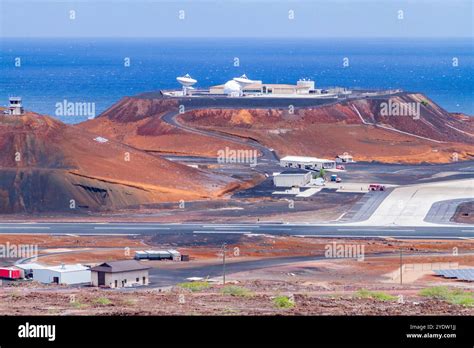
Despite limited infrastructure and no significant commercial air traffic, Wideawake is designated as a diversion airport for transatlantic flights. While rarely used for civilian emergencies, this designation underscores the base’s operational value.
Teniente Rodolfo Marsh Martin Airport – Antarctic Air Access
At the edge of civilization, in one of the world’s coldest and most desolate landscapes, lies Teniente Rodolfo Marsh Martin Airport. Situated on King George Island in the South Shetland Islands, this Antarctic airstrip is operated by the Chilean Air Force. With a gravel runway and an elevation of just 30 feet above sea level, the base functions under some of the harshest weather conditions imaginable.
Although it appears on a list of military airfields, it operates under the Antarctic Treaty System, which prohibits the use of Antarctica for military purposes. Hence, the airport primarily supports scientific research, especially at Base Presidente Eduardo Frei Montalva, one of Chile’s largest research installations.
Temperatures here rarely exceed freezing, and daylight is practically nonexistent between May and August. The lack of commercial flights does not diminish its activity: hundreds of military, scientific, and chartered flights operate annually, ferrying personnel, equipment, and data across the icy expanse.
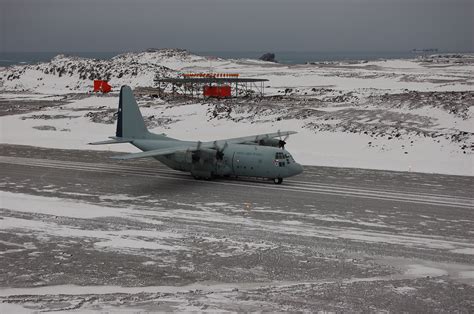
Though the airfield is technically a military facility, its main contribution is not combat-related but logistical and scientific, playing a crucial role in enabling year-round access to the Antarctic frontier.
Eareckson Air Station – Eyes on Russia from Alaska
Tucked into the far western edge of the Aleutian Islands, Eareckson Air Station sits just 200 miles from Russian territory, making it an ideal vantage point for monitoring one of the world’s most scrutinized borders. Formerly known as Shemya Air Force Base, the station was built during World War II, deactivated briefly, and then revived during the Korean War due to its proximity to the Soviet Union.
Today, it is most renowned for housing the COBRA DANE radar system, a towering AN/FPS-108 phased array radar capable of tracking ballistic missile launches and space activities over a 2,000-mile radius. Operated by Raytheon under USSF direction, COBRA DANE supports missile defense, treaty monitoring, and early-warning systems.
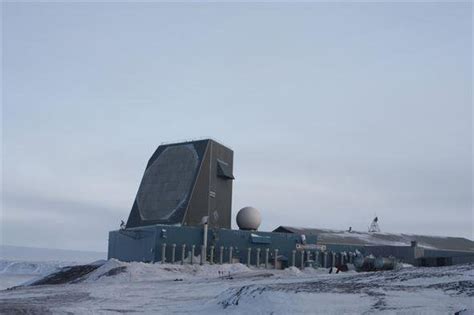
Eareckson’s 10,000-foot runway, often cloaked in pervasive fog and high winds, still serves as an emergency diversion strip and military training ground. The station’s extreme weather is paradoxically a tactical asset, offering troops a chance to train in near-impossible flying conditions that mimic war zone unpredictability.
While the base’s routine operations have been scaled back in recent years, its strategic significance endures as tensions simmer in the Pacific and Arctic theaters.
Pituffik Space Base – Arctic Stronghold of the Space Force
Formerly Thule Air Base, Pituffik Space Base is the northernmost military installation under U.S. control, situated deep in Greenland, around 750 miles north of the Arctic Circle. Locked in by ice for nine months and covered in darkness for three, Pituffik epitomizes the concept of an inhospitable outpost—yet it is among the most strategically vital.
Now under the management of the United States Space Force, Pituffik serves as both a missile defense radar base and a space operations hub. The installation is home to the 821st Space Base Group, which supports missile tracking, satellite communication, and polar surveillance operations. The base features a 10,000-foot runway, constantly maintained to ensure functionality regardless of seasonal extremes.
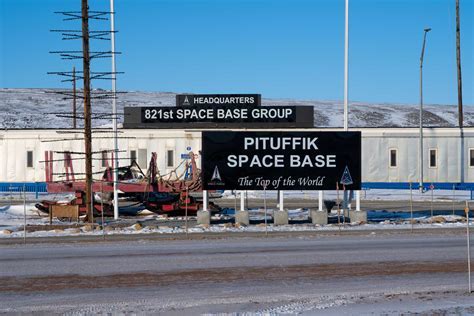
The site’s unique geographic location provides uninterrupted coverage of high-latitude orbits, making it indispensable for satellite and missile detection. Ongoing upgrades include runway modernization and advanced fighter jet infrastructure to expand operational capabilities.
Despite a permanent population of around 150 personnel, numbers surge to 700 during peak mission cycles, showing its growing importance in an age of rising Arctic competition and space-based defense needs.
Diego Garcia – Strategic Launchpad in the Indian Ocean
Far from any populated landmass, Diego Garcia is located over 1,000 miles from the nearest continent, nestled in the British-controlled Chagos Archipelago. While technically under UK sovereignty, the island is leased to the United States, which maintains a massive military infrastructure.
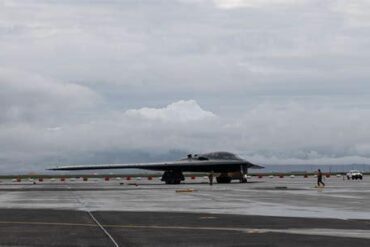
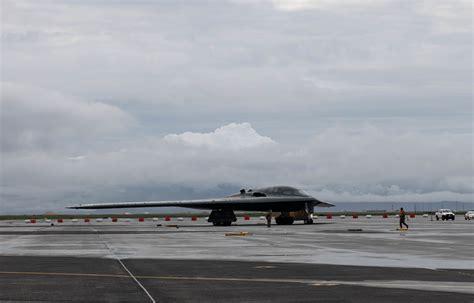
Diego Garcia is a joint UK-US facility, with both the Royal Air Force and United States Air Force operating from its 12,000-foot runway. The island has been used as a launch pad for strategic bombing campaigns, notably during the Gulf War, Afghanistan, and more recent operations in Yemen. Aircraft like the B-2 Spirit, B-1 Lancer, and KC-135 tankers are often rotated through the base, underscoring its ability to project long-range air power.
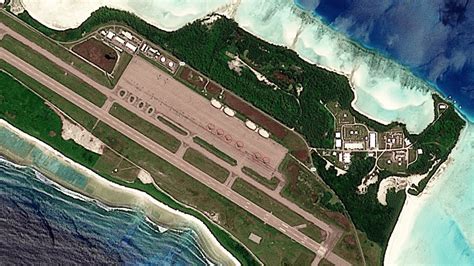
Civilian access is strictly prohibited, and the island’s military activities are highly classified. Despite a recent UK agreement to transfer sovereignty of the Chagos Islands to Mauritius, Diego Garcia will remain under US-UK control for at least another 99 years via a new leasing framework.
Supporting over 4,000 military personnel and contractors, Diego Garcia represents a geopolitical anchor in the Indian Ocean. Its presence allows rapid deployment across the Middle East, East Africa, and South Asia, making it one of the most strategically valuable bases in the world.
Conclusion: Outposts of Dominance in a Global Theater
These five remote air bases—Ascension Island, Marsh Martin Airport, Eareckson, Pituffik, and Diego Garcia—may seem forgotten on a map, but they are anything but irrelevant. Each offers unique tactical advantages, enabling global powers to project military strength, track threats, and safeguard geopolitical interests far beyond their borders.
From the frozen ends of the Earth to the depths of the Indian Ocean, their presence affirms a stark truth: in an era of satellites and cyber warfare, territory still matters. These bases stand not only as sentinels of power but also as enduring testaments to military resilience in the world’s harshest environments.