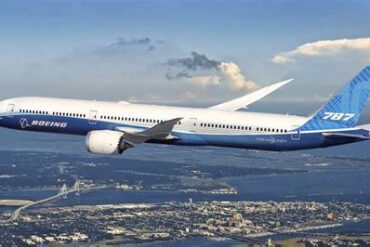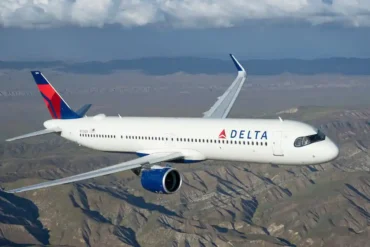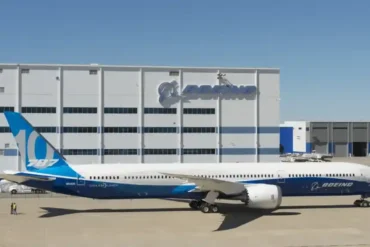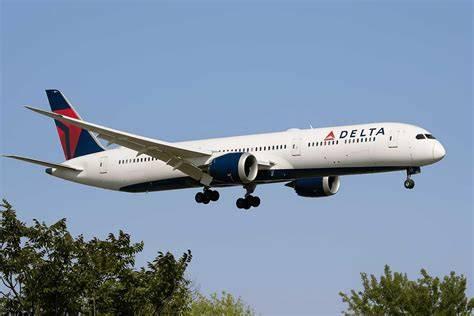
Delta Air Lines is preparing to enter a new chapter in its widebody fleet strategy, but passengers will have to wait several years before seeing the airline’s newest long-haul aircraft in regular service. The carrier has selected the Boeing 787-10, the largest member of the Dreamliner family, as a major part of its next-generation fleet renewal program. Delta announced the order in January 2026, and the timeline is already clear: deliveries are scheduled to begin in 2031.
That date makes the Boeing 787-10 a particularly interesting addition to Delta’s fleet. This is not an aircraft being introduced to solve an immediate capacity shortage or replace a single aging model overnight. Instead, Delta is making a long-term commitment to a new widebody type that should reshape how it approaches some of its busiest international markets. The airline ordered 30 firm Boeing 787-10 aircraft, with options for approximately 30 additional jets.
The significance goes beyond the number of aircraft involved. The Boeing 787-10 will become Delta’s first directly purchased 787 variant, creating a new fleet type alongside the airline’s existing Airbus and Boeing widebody aircraft. Its introduction will require new pilot and maintenance training, new operational procedures, and additional infrastructure. Delta therefore has to believe the aircraft can deliver substantial value over many years.
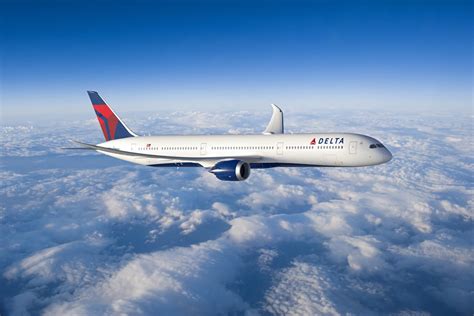
Delta Boeing 787-10 Deliveries Begin in 2031
The most important date surrounding Delta’s Boeing 787-10 program is 2031, when the first deliveries are expected to begin. That means the aircraft’s debut remains several years away, despite the intense interest surrounding the order today.
For Delta, the extended timeline makes sense because the 787-10 forms part of a broader fleet modernization strategy. Widebody aircraft remain some of the most expensive assets for an airline to operate, and replacing older jets requires careful planning years before an aircraft actually arrives. Delta can therefore use the period between the order announcement and first delivery to determine where the new aircraft will generate the strongest returns.
The 787-10 is expected to replace older widebody aircraft on selected international routes while providing greater capacity and improved economics. Delta has indicated that transatlantic and South American flying will be central to the aircraft’s role. Those markets are particularly attractive because they combine substantial passenger demand with opportunities to sell premium seats and generate belly-cargo revenue.
The timing also gives Delta considerable flexibility. International markets can change dramatically over a five-year period. Routes that are exceptionally strong in 2026 may evolve by 2031, while emerging business and leisure markets could become much more important. Rather than locking the aircraft into today’s network, Delta can use the intervening years to build a route strategy around future demand.
Why Delta Chose the Boeing 787-10
The Boeing 787-10 is the largest Dreamliner, but its appeal is not simply its size. The aircraft has been designed around a combination of capacity, efficiency, passenger comfort, and long-haul economics. In a typical two-class configuration, Boeing lists capacity at around 336 passengers, while the aircraft measures approximately 224 feet, or 68 meters, in length.
Its published range is approximately 6,330 nautical miles, or 11,730 kilometers. That figure is lower than the range of the smaller 787-9, but this is not necessarily a disadvantage for Delta. The airline does not need every widebody aircraft to fly the longest possible routes. It needs aircraft that are appropriately sized for the missions they perform.
The 787-10 is especially attractive on dense international routes where demand is strong enough to fill a large aircraft but does not require extreme ultra-long-haul range. Its stretched fuselage provides additional cabin capacity, allowing airlines to distribute operating costs across more passengers while retaining a modern widebody platform.
Delta has also highlighted an expected 25% improvement in fuel efficiency per seat compared with the older widebody aircraft the 787-10 is expected to replace. That improvement could become increasingly valuable as fuel costs, environmental requirements, and competition for premium passengers continue to influence airline fleet decisions.
The aircraft also incorporates extensive carbon-fiber composite construction, modern aerodynamics, advanced systems, and efficient engines. Delta has selected General Electric Aerospace GEnx engines for its 787-10 fleet, giving the airline another highly capable propulsion system for its long-haul network.
A Larger Premium Cabin Fits Delta’s Strategy
One of the most important reasons the Boeing 787-10 fits Delta’s strategy is its potential to support a larger premium cabin. Delta has increasingly focused on premium travelers, and the economics of its international network depend heavily on selling higher-value seats rather than simply maximizing the number of passengers onboard.
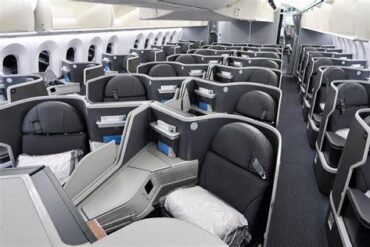
The 787-10 provides enough cabin volume for Delta to install substantial premium products while still maintaining a high overall seat count. The airline has indicated that passengers will have access to products including Delta One Suites, Delta Premium Select, and Delta Comfort.
That configuration matters because Delta is competing for corporate travelers and affluent leisure passengers on some of the world’s most valuable international routes. A larger premium cabin can allow the airline to generate significantly more revenue without relying entirely on additional aircraft frequency.
The aircraft’s passenger experience should also complement this strategy. Boeing’s 787 family is known for features including larger windows, a quieter cabin environment, modern lighting, and a lower cabin altitude compared with many older widebody aircraft. For Delta, those characteristics provide another opportunity to differentiate the aircraft on long international flights.
Which South American Routes Could See the 787-10?
South America could become one of the most important theaters for Delta’s new Boeing 787-10 fleet. The aircraft’s combination of capacity and range is particularly suitable for major markets where Delta can fill a large aircraft with a mixture of corporate, connecting, leisure, and premium demand.
Atlanta to São Paulo stands out as one of the most logical candidates. Hartsfield-Jackson Atlanta International Airport is Delta’s largest hub, while São Paulo is one of the most important business and financial centers in Latin America. The route also benefits from Delta’s relationship with LATAM, creating opportunities for connecting traffic across South America.
New York JFK to São Paulo could also be a strong candidate. JFK is one of Delta’s most important premium gateways, and São Paulo generates substantial corporate and high-value international demand. A 787-10 could provide more capacity while maintaining an emphasis on premium revenue.
Another possibility is Atlanta to Buenos Aires. Delta has already demonstrated its commitment to the Argentine capital, and the route has received additional capacity and upgraded aircraft. The 787-10 could eventually provide an attractive combination of capacity and efficiency for the market.
Atlanta to Santiago is another plausible assignment. Delta already operates the route with the Airbus A350-900, demonstrating that it considers Santiago an important long-haul market. The 787-10 could eventually provide a different capacity profile depending on how demand develops.
Rio de Janeiro and Lima could also receive consideration, although they appear less obvious as initial deployment candidates. Delta will likely prioritize markets where the aircraft can immediately generate strong load factors and premium yields.
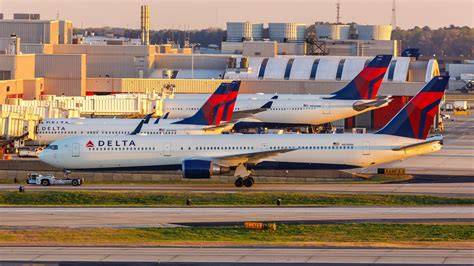
Transatlantic Routes Could Define the Aircraft
The transatlantic network may ultimately become the most important home for Delta’s Boeing 787-10. Delta operates an extensive European network from major hubs including Atlanta, New York JFK, Boston, and other U.S. gateways. The airline also benefits from powerful partnerships with Virgin Atlantic, Air France, and KLM.
Atlanta to London Heathrow would be an obvious candidate. London is one of the world’s largest premium international markets, and Delta has extensive connecting opportunities through Atlanta. The same logic applies to Atlanta-Paris, Atlanta-Amsterdam, and Atlanta-Rome.
These routes combine high passenger demand with strong premium traffic and substantial connecting flows. A large Dreamliner could therefore replace an older widebody while simultaneously improving seat economics.
New York JFK is another natural platform. JFK-London, JFK-Paris, and JFK-Rome all have the characteristics that could justify a high-capacity 787-10. Delta has increasingly emphasized premium international service from New York, making the aircraft a potentially valuable tool for maintaining competitiveness in these markets.
The airline’s European network is already enormous. For summer 2026, Delta has more than 650 weekly flights to nearly 30 European destinations, giving the carrier a deep pool of potential routes for future 787-10 deployment.
However, the aircraft is unlikely to be used primarily for thinner leisure markets when it first arrives. Routes such as Boston-Nice or JFK-Porto could have value, but the 787-10’s economics are better aligned with markets where passenger volume and premium demand are consistently strong.
Why Delta Did Not Choose the 787-8 or 787-9
Delta’s decision to order the 787-10 rather than another Dreamliner variant reveals a great deal about the role it wants the aircraft to play. The 787-8 and 787-9 offer greater range, but Delta appears to have determined that capacity and seat economics are more important for the specific mission it has in mind.
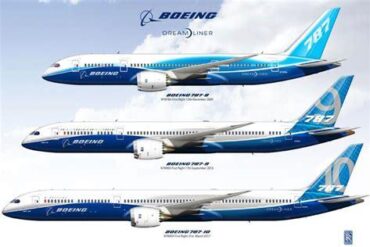
A typical two-class 787-9 configuration can accommodate around 296 passengers, while the 787-8 carries roughly 247. The 787-10 can reach approximately 336 seats in a typical two-class configuration. That additional capacity can make a major difference on high-demand routes.
The range trade-off is acceptable because Delta already operates other aircraft capable of handling longer missions. The airline’s existing Airbus A330-900neo fleet, for example, occupies an important position within its widebody strategy.
Delta therefore does not need the 787-10 to be the aircraft for every international mission. It needs it to excel at a specific category of routes. Dense transatlantic markets and major South American services fit that requirement particularly well.
The 787-10 Will Join a Complex Delta Widebody Fleet
Introducing the Boeing 787-10 will make Delta’s widebody fleet even more diverse. That creates advantages, but it also creates costs. Every new aircraft family requires investment in pilot qualification, maintenance training, spare parts, engineering expertise, ground equipment, and operational planning.
This is particularly significant because Delta has historically maintained a diverse fleet structure, with aircraft from both Boeing and Airbus. Adding the 787-10 is therefore not a decision made simply because the aircraft is efficient. The expected benefits must outweigh the complexity of operating another type.
Delta’s willingness to make that investment indicates that the airline sees a strategic gap that the 787-10 can fill. The aircraft offers a combination of large capacity, premium cabin potential, fuel efficiency, and long-haul flexibility that fits a particular part of Delta’s network.
The order also demonstrates that Delta is planning well beyond the current fleet cycle. By targeting deliveries beginning in 2031, the airline is effectively making decisions about its international network for the next decade rather than reacting only to immediate market conditions.
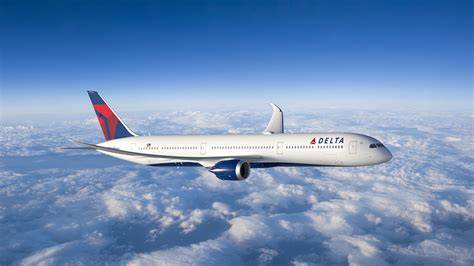
What the 2031 Debut Could Mean for Delta
When the first Boeing 787-10 eventually enters Delta service, its debut will represent more than the arrival of another new aircraft. It will mark the beginning of a new fleet strategy centered on replacing older widebodies with more efficient, higher-capacity aircraft on carefully selected international routes.
The aircraft could allow Delta to increase capacity without always adding frequencies. That is especially useful at airports where additional takeoff and landing slots are difficult to obtain. Instead of operating multiple smaller aircraft, Delta could use the 787-10 to carry more passengers on strategically important services.
At the same time, the aircraft’s premium cabin potential could help Delta continue shifting its revenue mix toward higher-value customers. That strategy has become increasingly important as airlines seek to generate stronger returns from business-class and premium leisure demand.
There is also a broader significance to Delta’s first direct 787 purchase. The airline is not simply adding an aircraft; it is betting on the Dreamliner’s economics for the long term. If the 787-10 performs as expected, the options for up to approximately 30 additional aircraft could give Delta considerable room to expand the fleet beyond the initial 30 jets.
Delta’s Boeing 787-10 Debut Is a Long-Term Bet
The answer to when Delta Air Lines plans to debut the largest Boeing 787 Dreamliner is straightforward: the first deliveries are scheduled for 2031, meaning regular passenger service remains several years away.
What is more interesting is why Delta is willing to wait. The Boeing 787-10 is being positioned as a strategic tool for the airline’s next generation of international flying, particularly across the Atlantic and in South America. Its large cabin, premium capacity, cargo capability, and expected fuel savings make it well suited to dense long-haul markets.
Atlanta, New York JFK, and other major Delta gateways could eventually see the aircraft on some of their most important international routes. São Paulo, London, Paris, Amsterdam, Rome, Buenos Aires, and Santiago all have characteristics that make them credible candidates, although the final assignments will depend on market conditions closer to the aircraft’s arrival.
For Delta, the 787-10 is therefore not about making a splash in the immediate future. It is about preparing the airline’s widebody fleet for the 2030s. When the first aircraft finally takes off in Delta colors, its arrival will be the culmination of a strategy that began years earlier—and a signal that the airline expects efficient, premium-focused long-haul flying to remain central to its future.