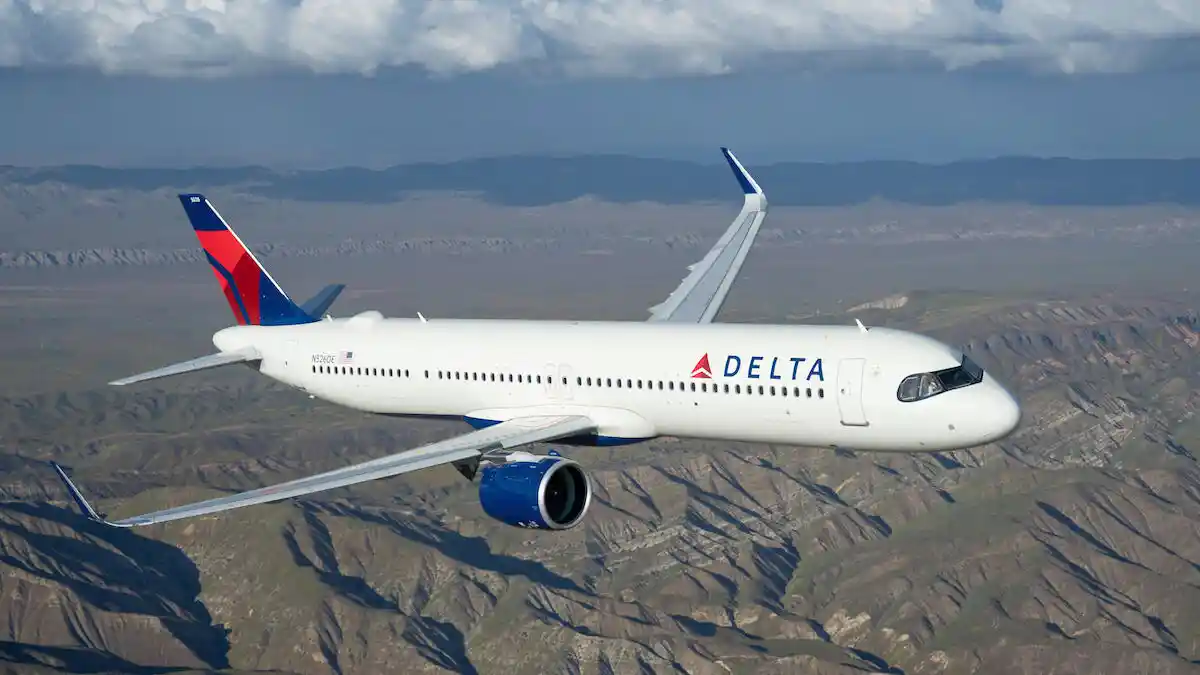
Delta Air Lines’ fleet strategy has become one of the most closely watched case studies in modern commercial aviation, not because it is simple or uniform, but because it is deliberately complex. At first glance, the airline’s aircraft lineup appears fragmented, even contradictory, mixing Airbus and Boeing models, new-generation jets and aircraft approaching three decades of service, and multiple cabin standards that defy industry-wide simplification trends. Yet beneath this apparent disorder lies a carefully engineered system designed to support international expansion, premium revenue dominance, and risk-managed growth in an era defined by supply-chain volatility and regulatory uncertainty.
We view Delta’s fleet not as a static collection of aircraft types, but as a living framework that evolves alongside network strategy, customer behavior, and macroeconomic realities. Every aircraft decision reflects a balance between capacity discipline, operational resilience, sustainability targets, and financial prudence. Rather than committing to a single manufacturer or betting its future on one aircraft program, Delta has intentionally built optionality into its fleet plan, preserving leverage while retaining the ability to adapt quickly when market conditions shift.
This approach becomes clearer when we examine how the airline aligns aircraft size and range with route economics, particularly as premium cabins increasingly drive profitability. Delta’s strategy is not centered on flying the newest airplanes for their own sake, but on deploying the right aircraft for the right mission, even if that means operating older jets longer when the economics remain favorable. This philosophy underpins every major fleet decision currently shaping the airline’s trajectory through the late 2020s.
Understanding the Scale and Structure of Delta’s Current Fleet
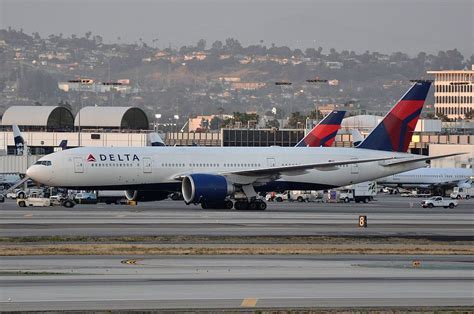
Delta Air Lines today operates one of the largest and most diverse mainline fleets in the world, with nearly one thousand aircraft serving domestic, regional, and intercontinental markets. The average fleet age of roughly 15 years masks a wide internal spread, ranging from brand-new Airbus A321neo and A220 deliveries to aircraft that entered service in the late 1990s. This age dispersion is not accidental; it is the result of a long-standing philosophy that values lifecycle economics over cosmetic uniformity.
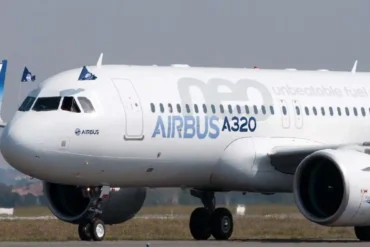
On the narrowbody side, Delta relies heavily on the Airbus A220 family and the A320 series, including both ceo and neo variants. These aircraft anchor short- and medium-haul flying while offering strong fuel efficiency and competitive unit costs. At the same time, the airline continues to operate a sizeable fleet of Boeing 717s, a type that has largely disappeared elsewhere but remains well suited to high-frequency, short-stage routes within Delta’s fortress hubs. The presence of Boeing 737-800s, 737-900ERs, and a notably large Boeing 757 fleet further reinforces Delta’s willingness to extract value from proven platforms.
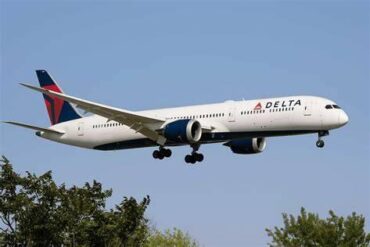
Widebody operations are equally diversified. Delta splits long-haul flying across Airbus A330-200s, A330-300s, A330-900neos, and Airbus A350-900s, while also maintaining Boeing 767-300ER and 767-400ER fleets. This layered structure allows the airline to fine-tune capacity across markets with varying demand profiles, cargo opportunities, and premium seat yields. With nearly 300 aircraft on firm order, including the Airbus A350-1000 and Boeing 737 MAX 10, Delta is not shrinking this diversity; it is refining it.
Why Delta’s Growth Strategy Favors Premium and Partnerships
Delta’s fleet decisions cannot be separated from its broader network strategy, which prioritizes defended hubs, joint ventures, and premium-heavy long-haul routes. We see this most clearly in the airline’s transatlantic, Latin American, and transpacific partnerships, where revenue-sharing agreements with Air France-KLM, Virgin Atlantic, Aeromexico, LATAM, and Korean Air allow Delta to monetize global demand without overextending its own balance sheet.
This partnership-driven model thrives on aircraft that can deliver consistent premium experiences while offering sufficient cargo capacity to enhance route economics. Delta has steadily increased the proportion of premium seating across its fleet, recognizing that corporate travelers and affluent leisure passengers are far less price-sensitive than the broader market. The airline’s close relationship with American Express, which dominates the premium credit card ecosystem, further reinforces this positioning by feeding high-value customers directly into Delta’s network.
Fleet renewal also serves as a sustainability lever. Aircraft delivered since 2019 have demonstrated double-digit improvements in fuel efficiency on a per-seat-mile basis compared with retired jets, contributing to Delta’s long-term commitment to net-zero operational emissions by 2050. Retrofits such as split winglets on Boeing 737-900ERs illustrate how the airline extracts incremental efficiency gains even from legacy aircraft, extending their economic viability while reducing environmental impact.
The Strategic Importance of the Airbus A350-1000
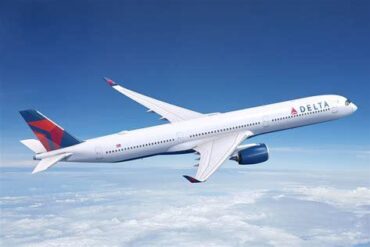
The decision to introduce the Airbus A350-1000 marks a pivotal moment in Delta’s long-haul fleet evolution. We interpret this move as a clear signal that the airline is doubling down on high-capacity, premium-intensive international markets where demand density and yield justify larger aircraft. With an initial order of 20 aircraft and options for additional frames, the A350-1000 is positioned as a natural extension of Delta’s existing A350-900 fleet rather than a disruptive replacement.
Compared with the A350-900, the -1000 variant offers increased seating capacity and significantly higher belly cargo volume, enabling Delta to generate more revenue per departure on constrained routes. This is particularly valuable at slot-limited airports such as London Heathrow, Paris Charles de Gaulle, and Tokyo Haneda, where frequency growth is often impractical. By upgauging instead of adding flights, Delta maximizes revenue while containing operating complexity.
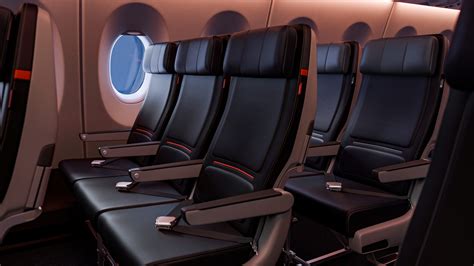
From a product standpoint, the A350-1000 provides a platform for Delta’s most refined premium cabins, reinforcing the airline’s brand promise on its longest routes. Deliveries beginning in 2026 align with a broader wave of widebody renewals, ensuring that capacity growth remains evolutionary rather than abrupt. Importantly, Delta is not phasing out the A350-900; it is supplementing it, preserving flexibility while expanding top-end capability.
Managing Domestic Capacity with the Boeing 737 MAX 10
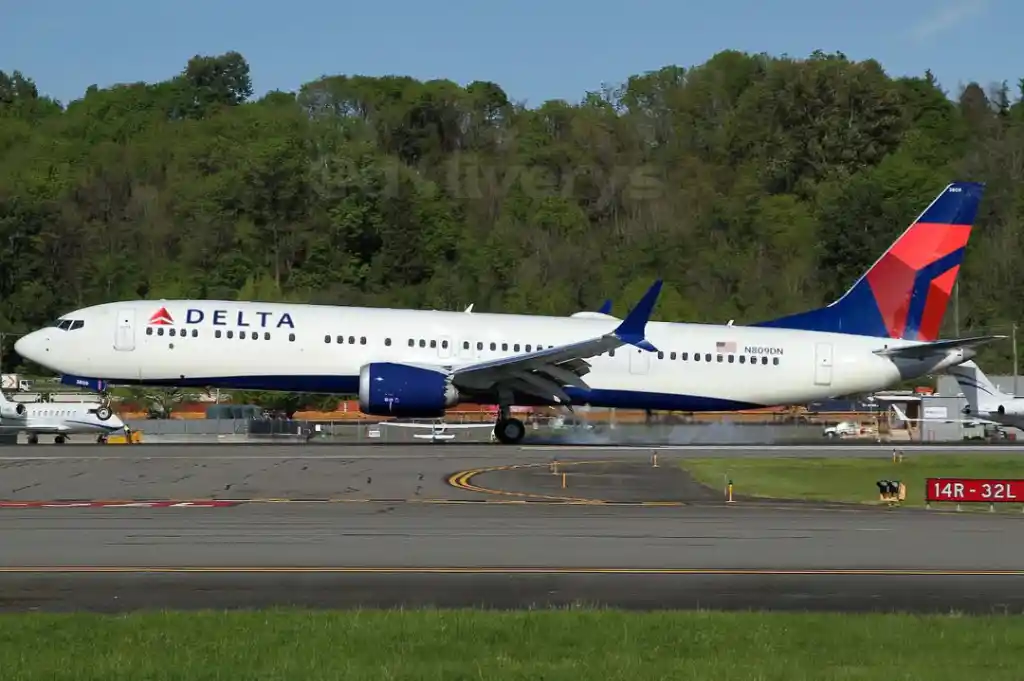
On the domestic front, Delta’s commitment to the Boeing 737 MAX 10 reflects a parallel strategy focused on high-density hub-to-hub flying. The MAX 10 is intended to replace older Boeing 737-800s and, over time, portions of the Boeing 757 fleet, offering materially better fuel efficiency and lower maintenance costs. With over 100 firm orders and options for additional aircraft, the MAX 10 is central to Delta’s narrowbody modernization plans.
Yet this strategy is tempered by realism. Certification delays have forced Delta to manage an aging fleet longer than originally planned, highlighting the value of its in-house maintenance capabilities. Rather than grounding aircraft prematurely or rushing into suboptimal leases, Delta leverages its TechOps division to sustain reliability while awaiting deliveries. This patience preserves capital and avoids operational disruptions, even if it temporarily dampens efficiency gains.
Crucially, Delta’s planned MAX 10 configuration allocates a substantial portion of seats to premium cabins, reinforcing the airline’s belief that domestic premium demand is structural, not cyclical. By deploying larger narrowbodies on trunk routes through Atlanta, Detroit, Minneapolis/St. Paul, Salt Lake City, Seattle, and New York, Delta increases per-departure revenue while feeding long-haul banks more efficiently.
Risk Management Through Fleet Diversity and Timing
What truly distinguishes Delta’s fleet strategy is its emphasis on risk dispersion. We see this in the airline’s refusal to rely exclusively on one manufacturer, one aircraft family, or one delivery timeline. By staggering deliveries across multiple years and maintaining a mix of old and new aircraft, Delta insulates itself from shocks such as production delays, regulatory changes, and demand fluctuations.
This approach also preserves negotiating leverage. Delta can adjust delivery schedules, defer retirements, or redeploy aircraft across networks without destabilizing its operation. Older Boeing 757s and 767s, while less efficient on paper, remain profitable on select routes where capital costs are fully amortized and demand patterns remain stable. In these cases, replacement is driven not by age alone, but by economic tipping points.
Fleet diversity further supports Delta’s cargo ambitions. Widebody aircraft with generous belly capacity provide a steady revenue stream that cushions passenger volatility, particularly on long-haul routes. By selecting aircraft that excel in both passenger comfort and cargo performance, Delta strengthens route profitability across cycles.
The Long-Term Implications for Delta’s Competitive Position
Looking ahead, we believe Delta’s fleet strategy positions the airline to maintain a structural advantage over peers that pursue more rigid or uniform approaches. The combination of premium-focused cabins, flexible capacity deployment, and internal maintenance expertise creates a system that is difficult to replicate quickly. While competitors may achieve short-term cost savings through simplification, Delta prioritizes durable profitability and brand differentiation.
This philosophy explains why Delta often commands higher fares even in competitive markets. Customers are not simply buying a seat; they are buying consistency, reliability, and a premium experience delivered by aircraft optimized for the mission. As global travel demand continues to polarize between value-driven and premium segments, Delta’s fleet investments align squarely with the latter.
Our Bottom Line on Delta’s Fleet Strategy
We see Delta Air Lines’ fleet strategy as a calculated, disciplined response to an industry in flux. By blending new-generation aircraft with carefully maintained legacy fleets, the airline preserves flexibility while steadily improving efficiency and sustainability. Investments in the Airbus A350-1000 and Boeing 737 MAX 10 underscore a commitment to premium growth without overexposing the company to execution risk.
Ultimately, Delta’s approach is neither conservative nor aggressive in isolation; it is strategically adaptive. The airline understands that fleet decisions shape network possibilities, brand perception, and financial outcomes for decades. By refusing to chase simplicity for its own sake, Delta has built a fleet that supports its ambition to dominate high-value global markets while remaining resilient in the face of uncertainty.