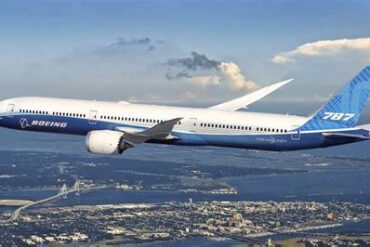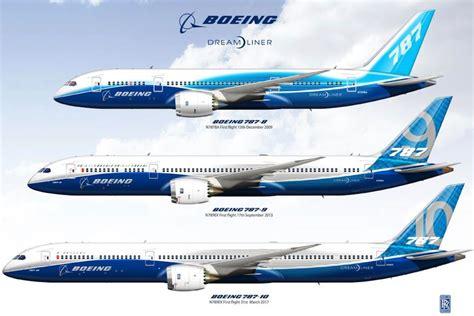
The Boeing 787 Dreamliner program was never meant to produce a single aircraft that did everything. Instead, it was engineered as a carefully balanced family of aircraft designed to serve different segments of the long-haul market while sharing the same technological backbone. At the center of this strategy sit two closely related variants that often invite direct comparison: the 787-9 and the 787-10. At first glance, they appear nearly identical, sharing the same sleek composite wings, advanced avionics, and ultra-efficient engines. Yet beneath that similarity lies a crucial performance difference that shapes airline network planning worldwide: range.
Airline planners obsess over range because it determines which cities can be connected nonstop and how much flexibility exists when winds, weather, and payload requirements begin complicating operations. While the longer Boeing 787-10 carries more passengers and can generate higher revenue on busy routes, the 787-9 quietly holds the crown for long-distance capability within the Dreamliner lineup. The difference is far from trivial. The 787-9 can fly roughly 1,200 nautical miles farther than the 787-10, a gap large enough to decide whether certain intercontinental routes are viable without payload restrictions.
Understanding this difference requires digging beneath simple size comparisons. Aircraft range is the product of a delicate equation involving fuel capacity, aerodynamic efficiency, structural weight, and operational trade-offs. Boeing’s engineers intentionally tuned each Dreamliner variant toward a specific mission profile. The result is a pair of aircraft that share DNA but excel in very different roles across global airline networks.
The Dreamliner Family: A Platform Built for Flexibility
When the Dreamliner entered commercial service, it represented one of the most significant technological leaps in modern aviation. Unlike previous widebody programs that relied heavily on aluminum construction, the aircraft introduced extensive carbon-fiber composite structures, reducing weight while increasing strength and corrosion resistance. This shift allowed engineers to rethink everything from cabin pressurization to fuel efficiency.
Passengers notice these changes immediately. Higher humidity levels, lower cabin altitude, and larger windows create a noticeably more comfortable environment during long flights. Airlines, however, see something even more important: dramatically lower fuel consumption compared with earlier generation widebody aircraft.
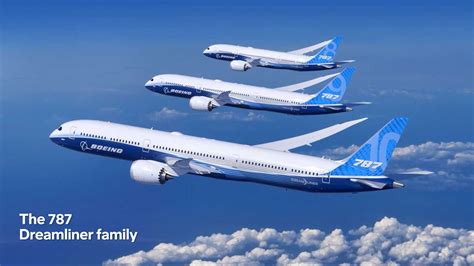
From the beginning, the aircraft was envisioned not as a single airplane but as a family platform. Three main variants emerged:
- The 787-8, optimized for smaller long-haul routes
- The 787-9, designed as the most balanced and versatile version
- The 787-10, stretched to maximize passenger capacity
Among these, the 787-9 quickly became the workhorse of the program. Airlines discovered that its combination of seating capacity, cargo capability, and range allowed it to operate a remarkable variety of missions. The aircraft could connect secondary cities across oceans, replace older widebodies on transatlantic flights, or perform ultra-long sectors across the Pacific.
The 787-10, by contrast, pushed the design toward higher passenger volume. By stretching the fuselage significantly, Boeing allowed airlines to add dozens of additional seats without redesigning the cockpit or fundamentally altering the aircraft’s systems. For airlines already operating Dreamliners, that meant minimal additional training or infrastructure.
But engineering rarely gives gifts without asking for something in return. The extra length introduced weight and aerodynamic consequences that ultimately reduced the aircraft’s maximum range.
Official Range Numbers: 787-9 vs 787-10
The raw numbers reveal just how significant the difference is between the two aircraft.
The Boeing 787-9 is certified for a maximum range of approximately 7,565 nautical miles (14,010 kilometers). The larger Boeing 787-10, despite its increased capacity, is rated for about 6,345 nautical miles (11,750 kilometers).
That difference of roughly 1,200 nautical miles translates into several hours of additional flying time and dramatically expands the number of potential city pairs the aircraft can serve.
Range figures, however, are not simply theoretical maximums achieved under perfect conditions. Real-world airline operations must account for factors that eat into those numbers quickly. Headwinds, alternate airport requirements, passenger weight, cargo loads, and seasonal weather patterns all influence how far an aircraft can actually travel on a given flight.
This is where the 787-9’s advantage becomes particularly valuable. The extra range provides operational margin, allowing airlines to maintain full passenger and cargo loads even when environmental conditions are unfavorable. Without that margin, aircraft may be forced to limit cargo or leave seats empty to conserve fuel.
Capacity highlights the trade-off Boeing deliberately engineered. In typical airline configurations:
- The 787-9 carries roughly 280 to 300 passengers in mixed-class layouts.
- The 787-10 can accommodate approximately 320 to 340 passengers.
Those additional seats can significantly increase revenue on routes where demand is strong. The trade-off, of course, is reduced reach.
Why the 787-9 Flies Farther
Aircraft range is governed by a principle called the fuel fraction, which describes the relationship between the amount of fuel an aircraft can carry and its total weight during takeoff. The higher the proportion of fuel relative to overall mass, the farther an aircraft can travel.
Here is where the design differences between the 787-9 and 787-10 begin to matter.
Although the 787-10 is longer, it does not carry significantly more fuel. Boeing retained the same fundamental wing architecture and fuel tank configuration used on earlier Dreamliner variants. As a result, the stretched aircraft must rely on nearly the same fuel volume despite its increased structural weight and passenger load.
Lengthening a fuselage adds more than just cabin space. Structural reinforcement becomes necessary to maintain rigidity across the longer airframe. Additional passenger seats, galleys, lavatories, and cargo also increase mass. Even small increases in weight compound over long flights because engines must burn more fuel simply to sustain cruise speed.
The outcome is straightforward: the heavier aircraft consumes fuel at a higher rate relative to the amount it carries. This lowers the fuel fraction and reduces overall range.
There were also geometric considerations related to landing gear and takeoff performance. The longer fuselage required careful adjustments to maintain safe rotation angles during departure and landing. Extending the aircraft further without redesigning major structural components would have created operational limitations at airports.
Boeing could have pursued deeper modifications, such as designing a larger wing or increasing fuel capacity. However, doing so would have significantly increased development cost and complexity. Instead, engineers optimized the aircraft for a different mission profile rather than chasing maximum range.
The Engineering Trade-Off: Capacity Versus Distance
Stretching an aircraft is a classic aviation engineering puzzle. Every additional meter of fuselage promises higher passenger capacity and potentially better economics, but it also introduces penalties in weight, aerodynamic balance, and structural loads.
The 787-10 embodies this compromise beautifully.
By increasing seating capacity while retaining much of the original Dreamliner architecture, Boeing created an aircraft capable of achieving exceptionally low fuel burn per passenger. This metric—often measured as cost per seat mile—is one of the most important financial indicators for airlines.
On busy routes where demand consistently fills aircraft cabins, the economics become compelling. A flight carrying 330 passengers instead of 290 spreads operating costs across more travelers, lowering the average cost per seat.
However, the reduced range forces airlines to deploy the aircraft carefully. Certain routes—especially those crossing vast oceanic distances—push the limits of the 787-10’s endurance. In these cases, the 787-9 becomes the more practical choice.
How Airlines Use the Two Aircraft Differently
The range gap between the two Dreamliner variants translates directly into distinct operational roles within airline fleets.
The 787-9 is often deployed on routes that require flexibility or extended reach. Airlines use it to connect cities separated by enormous distances or to open new long-haul routes where passenger demand may not yet justify a larger aircraft. Its balance of range and capacity makes it ideal for pioneering connections between secondary cities that previously required connections through major hubs.
Transpacific flights, deep South American routes, and certain ultra-long European connections frequently fall within this aircraft’s comfort zone. The additional range margin also allows airlines to carry substantial cargo loads, which can represent a significant portion of long-haul flight revenue.
The 787-10, on the other hand, shines on dense routes between major global hubs. Flights linking financial centers, tourism hotspots, or major connecting airports benefit from its higher passenger capacity.
These sectors typically fall well within the aircraft’s maximum range while allowing airlines to maximize revenue per departure. Airports with limited runway slots particularly reward aircraft capable of carrying more passengers per movement.
The strategic pairing of the two aircraft allows airlines to fine-tune their networks. One variant prioritizes reach and flexibility; the other emphasizes efficiency and volume.
Dreamliner Strategy Versus the Airbus A350 Philosophy
Comparing the Dreamliner family with its primary competitor reveals a fascinating contrast in design philosophy.
Airbus approached the long-haul market differently when developing its widebody competitor. Rather than emphasizing a family built around moderate size and efficiency, the European manufacturer prioritized extreme range capability from the outset.
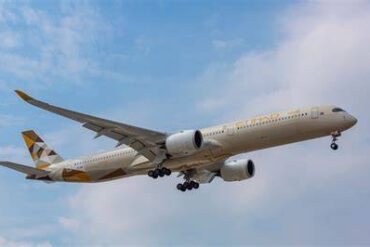
The Airbus A350 platform features a larger wing, higher maximum takeoff weight, and greater fuel capacity than the Dreamliner series. These characteristics enable remarkable long-distance performance.
The standard A350-900 can fly roughly 8,500 nautical miles, exceeding the reach of both the 787-9 and 787-10. Specialized ultra-long-range variants extend that capability even further, enabling flights approaching or exceeding 20 hours in duration.
Those capabilities allow airlines to operate some of the longest nonstop routes ever attempted in commercial aviation, linking cities separated by nearly half the circumference of the planet.
However, aircraft selection rarely revolves around range alone. Ultra-long-range capability is valuable only for a small number of routes worldwide. Many airlines prefer aircraft with lower trip costs and greater efficiency on medium to long-haul flights where such extreme endurance is unnecessary.
This is precisely where the Dreamliner excels. The 787 family offers lower operating costs on many routes while maintaining excellent range for the majority of long-haul missions.
The Quiet Advantage of the 787-9
Despite the attention often given to larger aircraft, the 787-9 has emerged as one of the most influential widebody designs of the modern aviation era. Its combination of reach, efficiency, and passenger capacity aligns almost perfectly with the evolving structure of global airline networks.
Airlines increasingly favor point-to-point connectivity rather than funneling passengers exclusively through giant hubs. Aircraft capable of economically connecting smaller cities across continents have become powerful tools in reshaping international travel.
The 787-9 fits this strategy almost perfectly. Its extended range enables airlines to experiment with new city pairs while maintaining profitability even when demand is still developing. If a route grows significantly, the airline can later deploy larger aircraft such as the 787-10 or other widebodies.
In this way, the range advantage of the 787-9 becomes more than just a technical statistic. It becomes a strategic asset that allows airlines to explore new markets and expand global connectivity.
Two Dreamliners, Two Distinct Missions
At first glance, the Boeing 787-9 and 787-10 appear nearly indistinguishable. Their shared design, engines, and technology make them look like simple variations of the same aircraft.
Yet their capabilities tell a different story.
The 787-9 stretches farther across the globe, unlocking routes that demand endurance and flexibility. The 787-10 prioritizes passenger capacity and per-seat efficiency, thriving on busy long-haul corridors where demand is strong.
The 1,200-nautical-mile range advantage held by the 787-9 may sound like a technical detail, but in the intricate world of airline planning it represents the difference between possibility and limitation. It determines whether certain city pairs can be connected nonstop, whether cargo can travel alongside passengers, and whether airlines can maintain full payloads even when conditions turn challenging.
Instead of building one aircraft to dominate every mission, Boeing created a pair of Dreamliners that complement each other. One reaches farther across oceans. The other carries more people along the world’s busiest long-haul highways.
Together, they form a carefully balanced system that continues to shape how airlines connect the planet.