The rivalry between Boeing and Airbus has always been defined by ambition, but nowhere is that ambition more visible than in the battle for long-haul supremacy. As airlines stretch their networks across continents and oceans, range becomes more than a technical specification—it becomes a strategic weapon. The ability to fly farther nonstop reshapes route maps, unlocks thinner city pairs, and determines whether ultra-long-haul services can be operated profitably year-round.
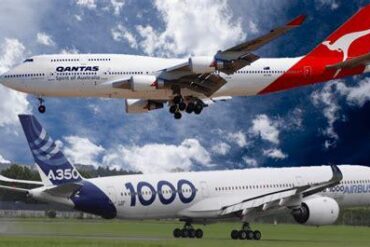
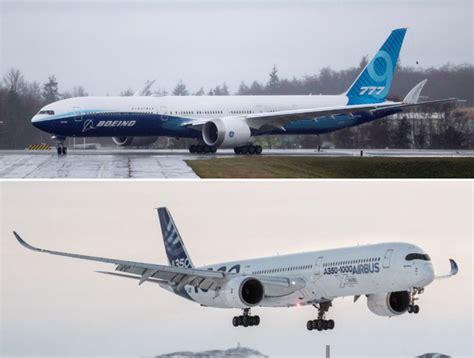
In this context, the Boeing 777X family and the Airbus A350-1000 stand as the most advanced large twin-engine widebody aircraft ever conceived. Both are designed to replace aging four-engine flagships like the Boeing 747-400 and Airbus A380, while offering dramatically lower fuel burn, emissions, and operating costs. Yet despite targeting similar market segments, their philosophies diverge in ways that directly influence range.
Understanding which aircraft truly flies farther requires looking beyond marketing figures and into design intent, payload assumptions, and how airlines actually deploy these jets across global networks. The question of range is not a simple numbers game—it is a reflection of how each manufacturer envisions the future of long-haul aviation.
The Strategic Importance of Range in Modern Aviation
For airlines, range is freedom. It determines whether a carrier can connect distant city pairs without intermediate stops, avoid congested hubs, and offer passengers faster, more convenient journeys. Ultra-long-range aircraft also allow airlines to bypass traditional hubs altogether, supporting point-to-point strategies that were once economically impossible.
At the same time, range is inseparable from payload. An aircraft that can technically fly farther but must leave seats empty or cargo behind may not deliver real-world value. This is why manufacturers publish range figures based on specific assumptions, and why airlines scrutinize those numbers so carefully before committing billions of dollars to fleet decisions.
By the time the Boeing 777X and Airbus A350-1000 entered the conversation, expectations had changed. Airlines no longer wanted brute force alone; they wanted efficient endurance, the ability to fly long distances while maintaining strong payload capability and acceptable unit costs.
Headline Numbers: Boeing 777X vs Airbus A350-1000 Range
On paper, the range comparison between these aircraft appears straightforward—but the details matter. Boeing’s 777X family consists of two distinct variants: the 777-8, optimized for range, and the 777-9, optimized for capacity. Airbus, by contrast, positions the A350-1000 as a balanced long-haul flagship, with an additional ultra-long-range derivative on the horizon.
The Boeing 777-8 is advertised with a maximum range of approximately 8,745 nautical miles (16,196 kilometers). This figure places it among the longest-range commercial aircraft ever designed, capable of connecting virtually any two cities on Earth with the right payload configuration.
The Airbus A350-1000, meanwhile, is listed with a range of about 9,000 nautical miles (16,668 kilometers). The difference between the two is remarkably small, amounting to just a few hundred nautical miles under ideal conditions. In practical terms, both aircraft sit at the very top of the long-haul performance spectrum.
The picture changes when the Boeing 777-9 enters the equation. With its emphasis on passenger capacity, Boeing quotes a range of roughly 7,285 nautical miles (13,492 kilometers). This places it well below both the 777-8 and the A350-1000, underscoring that not all members of the 777X family are designed with the same mission priorities.
Airbus A350-1000ULR: Pushing the Limits of Endurance
Where Airbus truly alters the range conversation is with the A350-1000ULR (Ultra Long Range). Developed specifically for Qantas’s ambitious Project Sunrise, this variant pushes endurance to unprecedented levels, with a range of approximately 9,700 nautical miles (17,964 kilometers) and the ability to sustain nonstop flights lasting up to 22 hours.
This capability is achieved through a combination of additional fuel capacity, optimized systems, and a reduced seating layout that prioritizes passenger comfort and operational feasibility over maximum density. In this configuration, the A350-1000ULR not only surpasses the 777-9 but also challenges the 777-8 on the most extreme long-haul missions imaginable.
Design Philosophy: Why These Aircraft Fly Differently
The divergence in range performance between the Boeing 777X and Airbus A350-1000 begins with size and intent. The 777-9, in particular, is a giant among twinjets, stretching nearly 252 feet (76.7 meters) in length. This massive fuselage allows for a typical two-class layout of more than 420 passengers, but it also increases structural weight and fuel consumption, inevitably limiting range.
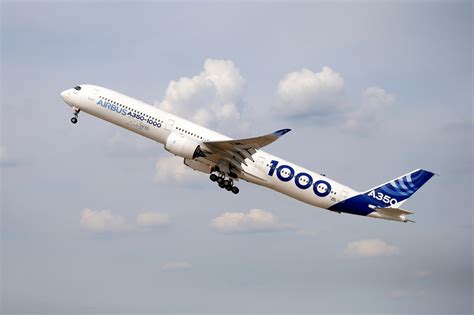
The A350-1000, at around 241 feet (73.8 meters) long, is smaller but more structurally efficient. Airbus’s extensive use of carbon-fiber-reinforced plastic results in a lighter airframe that requires less fuel to cover the same distance. This structural efficiency is a cornerstone of the A350 program and directly supports its long-range credentials.
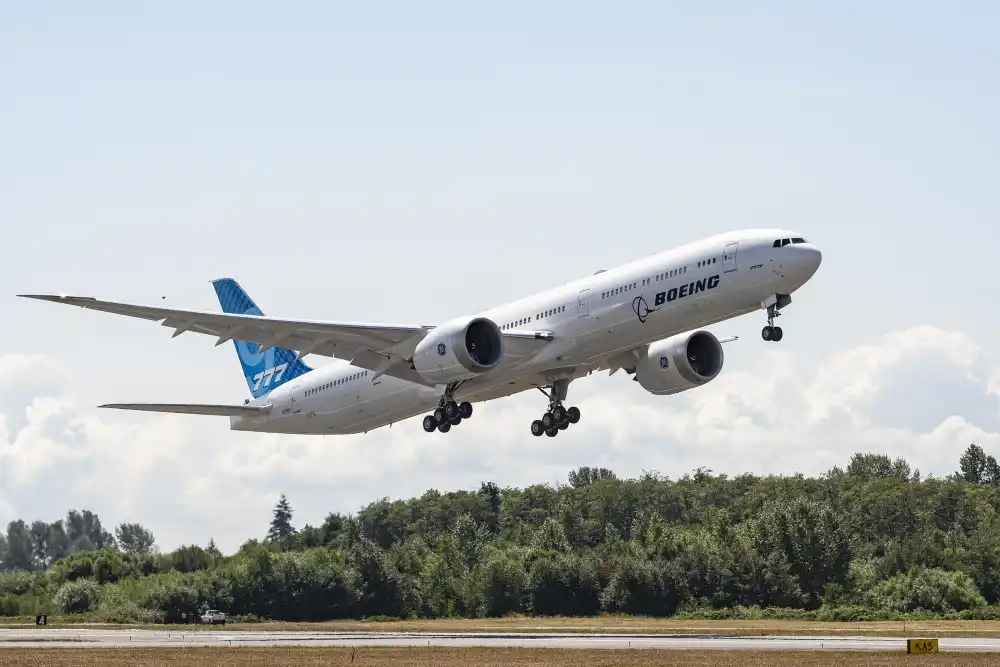
Wing design also plays a decisive role. The 777X features the largest composite wing ever fitted to a commercial aircraft, with folding wingtips that extend its span to over 235 feet (71.8 meters) in flight. This enormous wing delivers exceptional aerodynamic efficiency at cruise, helping offset the aircraft’s size and enabling the 777-8 to achieve its impressive range figures.

Engines and Efficiency: Powering Long-Haul Performance
Range is ultimately a function of how efficiently an aircraft converts fuel into thrust. The GE9X engines powering the 777X are the largest and most powerful commercial turbofans ever built, designed to deliver high thrust with improved fuel efficiency compared to previous generations.
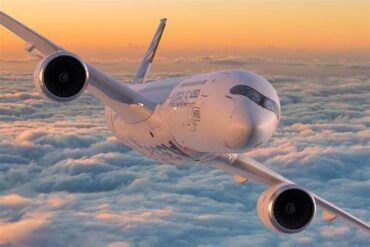
The A350-1000 relies on the Rolls-Royce Trent XWB-97, an engine widely regarded as one of the most efficient large turbofans in service today. Its combination of high bypass ratio, advanced materials, and optimized aerodynamics contributes significantly to the A350-1000’s ability to sustain long missions with lower fuel burn per seat.
While both engines represent the pinnacle of modern aerospace engineering, the A350-1000’s lighter overall airframe allows it to extract more range from each kilogram of fuel, particularly on ultra-long sectors where efficiency compounds over time.
Real-World Deployment: How Airlines Use Range
The way airlines deploy these aircraft reveals as much about range as the specifications themselves. Emirates, the largest customer for the 777X, has focused heavily on the 777-9, aligning with its hub-and-spoke model centered on Dubai. For Emirates, capacity matters more than extreme range, as most of its routes connect major global hubs within the aircraft’s operational envelope.
By contrast, Qatar Airways has embraced the A350-1000 as a long-haul workhorse, deploying it on some of the world’s longest commercial routes, including sectors exceeding 15 hours. The aircraft’s ability to carry meaningful payloads over vast distances makes it ideal for a geographically dispersed network.
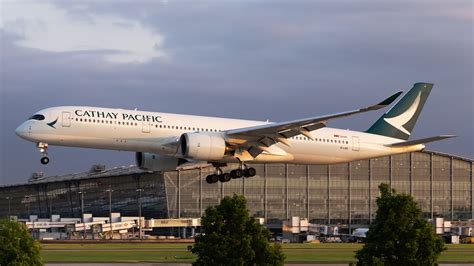
Cathay Pacific offers another example. Operating from Hong Kong, the airline uses the A350-1000 to serve long, thin routes where filling a much larger aircraft would be risky. In these markets, the balance of range, efficiency, and right-sized capacity proves more valuable than sheer seat count.
Market Positioning in the Long-Haul Ecosystem
Within the broader widebody landscape, the A350-1000 occupies a unique middle ground. It offers significantly more capacity than smaller long-range aircraft like the A350-900, while retaining a reach that rivals the longest-flying jets in service. This positioning has made it a natural successor to aircraft such as the Boeing 777-300ER on many routes.
The 777X family, however, spans a wider mission range. The 777-8 targets ultra-long-haul routes where distance is paramount, while the 777-9 aims to replace high-capacity aircraft like the A380 on dense trunk routes. This dual strategy gives airlines flexibility—but also complicates direct comparisons.
Risks, Delays, and Operational Realities
One crucial caveat in any range discussion is that the Boeing 777X has yet to enter commercial service. Certification delays have pushed first deliveries into the latter half of the decade, meaning that real-world performance data remains unavailable. Until the aircraft accumulates thousands of flight hours across diverse conditions, its advertised range figures remain theoretical.
The A350-1000, by contrast, has been flying revenue missions for years, providing airlines with proven data on performance, reliability, and fuel burn. This operational maturity carries weight in fleet planning decisions, particularly for airlines contemplating ultra-long-haul services with little margin for error.
So, Which Aircraft Truly Has More Range?
In pure technical terms, the answer depends on the variant. The Boeing 777-8 narrowly competes with the standard Airbus A350-1000, while the 777-9 clearly does not match its reach. When the A350-1000ULR enters service, Airbus will hold the advantage on the longest nonstop routes ever flown.
For airlines, however, the decision is less about winning a numerical contest and more about mission suitability. Carriers focused on extreme endurance with moderate capacity will gravitate toward the A350-1000 and its ULR variant. Those prioritizing passenger volume and unit cost efficiency on slightly shorter routes may find the 777-9 more compelling.
Ultimately, range is not an isolated metric—it is a reflection of how each aircraft integrates efficiency, capacity, and operational flexibility. In that broader context, both the Boeing 777X and Airbus A350-1000 redefine what long-haul aviation can achieve, each in its own distinct and strategic way.