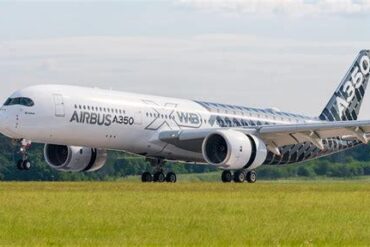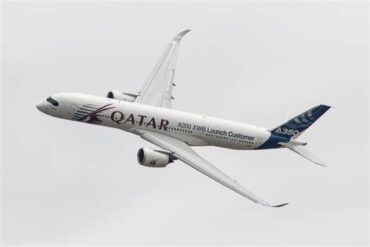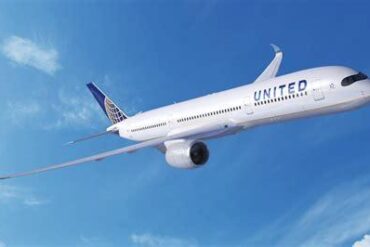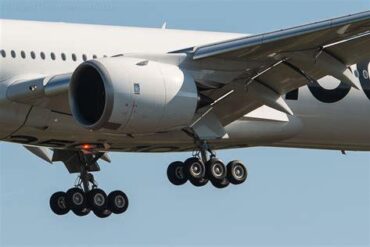
The Airbus A350-1000 stands among the most advanced long-haul airliners in the world today. With its long range, large passenger capacity, and highly efficient composite design, it has quickly become a flagship aircraft for many global airlines. Major carriers across Europe, Asia, and the Middle East rely on the aircraft for their busiest intercontinental routes. Yet one aviation market has remained notably absent from the list of operators: the United States.
Despite the enormous size and influence of the US aviation industry, no American airline currently flies the A350-1000. While airlines like Qatar Airways, British Airways, Cathay Pacific, and Virgin Atlantic have embraced the jet for high-demand long-haul routes, US carriers have taken a different approach to fleet planning.
This absence is not due to a flaw in the aircraft itself. Instead, it reflects decades of strategic decisions, airline mergers, fleet simplification policies, and strong relationships between American carriers and Boeing widebody aircraft.
Understanding why the Airbus A350-1000 has not yet appeared in American fleets requires exploring how the aircraft was developed, how US airlines structure their fleets, and how long-haul strategy differs between North America and other global aviation markets.
The Origins Of The Airbus A350 Family
The story of the Airbus A350 program began in the mid-2000s during a critical turning point in the aviation industry. At the time, Boeing had just launched the 787 Dreamliner, a revolutionary aircraft built largely from composite materials and designed for unprecedented fuel efficiency.
The Dreamliner quickly captured the imagination of airlines worldwide. Before the aircraft even entered service, the program had already secured hundreds of orders, signaling a massive shift toward new-generation long-haul aircraft.
Airbus initially attempted to respond with an upgraded version of the A330, sometimes referred to as the “A330 Lite.” However, airlines and leasing companies quickly realized that incremental upgrades would not be enough to compete with Boeing’s all-new design.
By 2006, Airbus made a decisive move. Instead of modifying an existing aircraft, the manufacturer committed billions of dollars to develop an entirely new widebody platform known as the A350 XWB (Extra Wide Body).
The resulting aircraft incorporated several groundbreaking technologies:
- A carbon-fiber reinforced fuselage and wings
- Highly efficient Rolls-Royce Trent XWB engines
- Advanced aerodynamics and winglets
- A wider cabin designed for improved passenger comfort
The program gained strong support from major airlines, with Singapore Airlines becoming the launch customer. Over time, the A350 family evolved into two main variants: the A350-900 and the larger A350-1000.
A350-900 vs A350-1000: Two Variants For Different Missions
Although the two aircraft share the same platform, the A350-900 and A350-1000 serve slightly different operational roles.
The A350-900 entered service first in 2014 and quickly became one of the most versatile long-haul aircraft in the world. Airlines value its balance of range, efficiency, and passenger capacity.
The A350-1000, which entered service in 2018, is essentially a stretched version of the aircraft designed for routes with stronger passenger demand.
Key differences between the two include:
- Length: The A350-1000 is about 7 meters (23 feet) longer
- Capacity: Roughly 375–400 passengers in typical layouts
- Range: Approximately 9,000 nautical miles
- Engines: Rolls-Royce Trent XWB-97 engines producing 97,000 pounds of thrust
The aircraft is capable of handling some of the longest and busiest international routes in the world, which explains why it has become a popular flagship aircraft for global airlines.
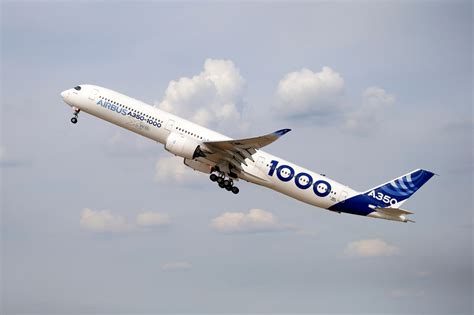
For airlines operating heavily traveled international corridors—such as London to New York or Doha to Los Angeles—the A350-1000 allows them to carry more passengers and cargo without increasing flight frequency.
Given these advantages, it might seem surprising that no US airline adopted the aircraft earlier.
Why US Airlines Built Their Fleets Around Boeing
The primary explanation for the absence of the A350-1000 in the United States lies in long-standing fleet strategies.
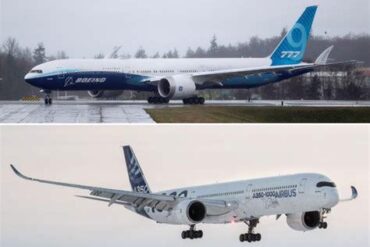
For decades, the largest American airlines have centered their long-haul operations around Boeing widebody aircraft. The Boeing 777 and 787 families already provide a wide range of capabilities that cover nearly every long-distance mission.
This means that for airlines such as American Airlines and United Airlines, introducing the A350-1000 would add complexity without offering a dramatically different capability.
Fleet commonality is extremely valuable in airline operations. Maintaining aircraft from the same manufacturer allows airlines to share:
- Pilot training programs
- Maintenance infrastructure
- Spare parts inventories
- Operational procedures
By focusing on a limited number of aircraft families, airlines can reduce costs and increase flexibility across their network.
For example, a pilot trained on one variant of the Boeing 787 Dreamliner can often transition to another variant more easily than switching between completely different aircraft types.
Because American carriers already operate large fleets of Boeing widebodies, the incentive to introduce a new aircraft type from Airbus has historically been limited.
Why American Airlines Walked Away From The A350
Interestingly, American Airlines once planned to operate the Airbus A350.
The order originated with US Airways, which had committed to purchasing the aircraft years before the two airlines merged in 2013. At the time, US Airways had a fleet heavily oriented around Airbus aircraft, including large numbers of A320 family jets and A330 widebodies.
Initially, the order included both A350-800 and A350-900 variants, totaling more than 20 aircraft.
However, after the merger, American Airlines reassessed its fleet strategy. The newly combined airline already operated a complex mix of aircraft types, and executives decided that adding the A350 would create unnecessary operational complexity.
Former American Airlines Chief Financial Officer Derek Kerr emphasized the importance of simplifying the fleet. Reducing the number of aircraft types would streamline maintenance, training, and scheduling.
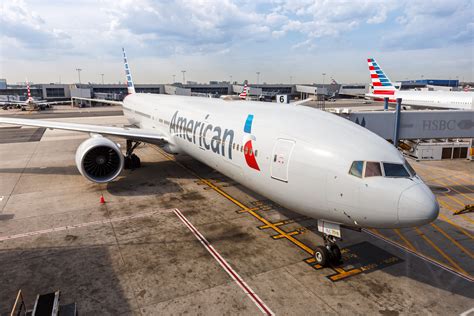
Ultimately, the airline concluded that its existing Boeing fleet—including the 777-200, 777-300ER, and 787 Dreamliner—already met its long-haul requirements.
By 2018, the A350 order was officially canceled.
United Airlines Considered The A350-1000
While American Airlines canceled its A350 plans outright, United Airlines initially showed strong interest in the aircraft, including the larger A350-1000.
United first placed an order for 25 A350-900 aircraft in 2009. Later, the airline converted the order to the larger A350-1000 and expanded the commitment to 35 aircraft.
The goal was to replace United’s aging fleet of Boeing 747-400 jumbo jets, which had long served as the airline’s flagship aircraft on international routes.
However, several developments changed the airline’s plans.
Regulatory requirements and rising operating costs forced United to retire its 747 fleet earlier than originally expected. Around the same time, Boeing offered the 777-300ER at highly competitive pricing, making it an attractive replacement.
United ultimately chose the 777-300ER for its flagship aircraft instead.
The airline later modified its Airbus order again, converting it back to the A350-900. Even that plan eventually faded as the airline focused on expanding its Boeing 787 Dreamliner fleet, inherited from its merger with Continental Airlines.
In the end, United removed the A350 from its near-term fleet plans entirely.
The A350-1000’s Growing Global Presence
While US airlines remained cautious, airlines in other parts of the world embraced the A350-1000 as a central component of their long-haul strategies.
Today, more than 100 A350-1000 aircraft are in active service, with hundreds more on order.
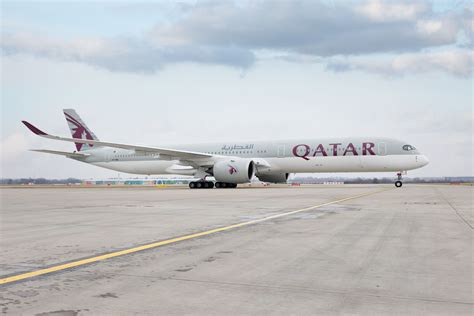
The largest operator is Qatar Airways, which uses the aircraft extensively on long-haul routes connecting Doha to destinations across North America, Europe, and Asia.
Other major operators include:
- British Airways
- Cathay Pacific
- Virgin Atlantic
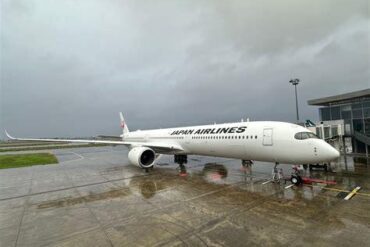
- Japan Airlines
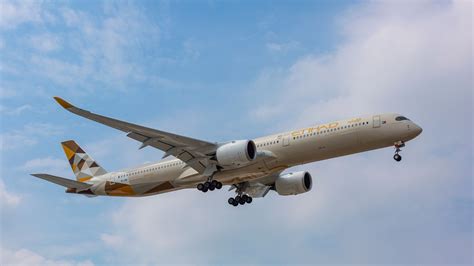
- Etihad Airways
- Ethiopian Airlines
These airlines deploy the aircraft on routes where both passenger demand and cargo capacity are high. For example, Virgin Atlantic frequently operates the A350-1000 on flights between London Heathrow and New York JFK, one of the busiest transatlantic routes in the world.
The aircraft’s ability to combine long range with large seating capacity makes it particularly valuable on such high-traffic international corridors.
Delta Air Lines Will Change The Situation
The absence of the A350-1000 in the United States will soon come to an end.
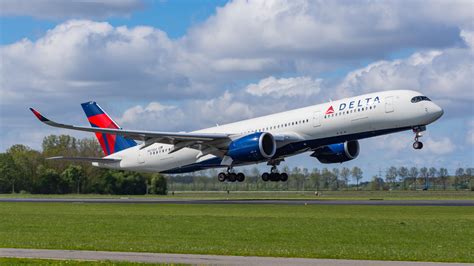
Delta Air Lines has ordered 20 Airbus A350-1000 aircraft, with options for an additional 20. Deliveries are expected to begin soon, making Delta the first US airline to operate the type.
The aircraft will become the largest and most capable aircraft in Delta’s fleet, complementing its existing fleet of A350-900s.
Delta already operates dozens of the smaller variant and plans to expand its total A350 fleet significantly during the coming decade.
According to Delta CEO Ed Bastian, the A350-1000 will play a key role in the airline’s international expansion strategy. The aircraft offers several advantages:
- More premium seating for high-yield travelers
- Greater cargo capacity for long-haul routes
- Improved fuel efficiency compared with older widebodies
The jet will likely operate from Delta’s major international hubs, including Atlanta, Detroit, Los Angeles, and New York JFK.
A Long-Term Shift Toward Airbus Widebodies
Delta’s decision to introduce the A350-1000 reflects a broader shift in the airline’s fleet strategy.
Unlike American and United, Delta has gradually moved toward an Airbus-focused widebody fleet. The airline already operates large numbers of A330 and A350 aircraft, which share several operational advantages.
Using a smaller number of aircraft families allows Delta to simplify:
- Pilot training programs
- Maintenance procedures
- Spare parts logistics
This approach mirrors the same fleet commonality strategy used by American and United—but with Airbus aircraft instead of Boeing jets.
Delta still operates Boeing 767-300ER and 767-400ER aircraft, though the older 767-300ER models are expected to retire by the end of the decade.
Once the A350-1000 enters service, Delta’s combined A350 fleet could exceed 60 aircraft, making it one of the largest A350 operators in the world.
The Future Of The Airbus A350-1000
The Airbus A350-1000 has firmly established itself as one of the most capable long-haul aircraft ever built. Its combination of long range, large capacity, and advanced aerodynamics allows airlines to operate ultra-long flights with greater efficiency than previous generations of aircraft.
Airbus is even developing a new variant, the A350-1000ULR, designed for ultra-long-range operations exceeding 19 hours of flight time.
This version is being developed for Qantas’ ambitious Project Sunrise, which aims to connect Sydney and Melbourne directly with London and New York without stopping.
These flights would rank among the longest commercial routes ever operated.
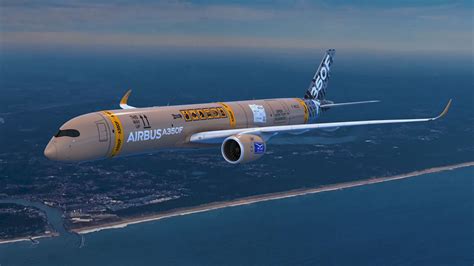
As global travel demand continues to grow, aircraft like the A350-1000 will likely play an increasingly important role in connecting distant cities.
For years, the aircraft’s absence in the United States reflected airline strategy rather than aircraft capability. But with Delta Air Lines preparing to introduce the type, the A350-1000 is finally set to become part of the American aviation landscape.
When those first aircraft arrive, the United States will join the growing list of countries whose airlines rely on one of the most advanced widebody aircraft in modern aviation.