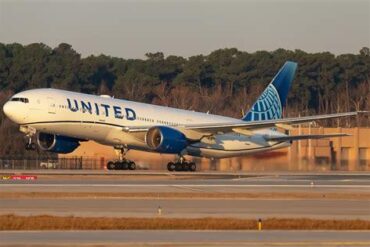
For most global airlines, the Boeing 777 became the backbone of long-haul fleets during the late 1990s and early 2000s. Carriers from Emirates to Air France, British Airways, and United Airlines embraced the aircraft for its remarkable blend of long-range capability, twin-engine efficiency, and high passenger capacity. Yet one major global airline stood apart from this trend for decades: Lufthansa.
Despite being one of the world’s largest and most influential international carriers, Lufthansa never operated a passenger version of the Boeing 777. This absence was not due to technological limitations or lack of interest in Boeing aircraft. Instead, it was the result of a carefully engineered fleet strategy, deeply tied to the airline’s hub-centric network model, long-standing investment in four-engine widebodies, and a unique view of how to move passengers efficiently across continents.
Only now, with the upcoming Boeing 777-9, is Lufthansa finally preparing to introduce the 777 family into its passenger fleet. The shift represents one of the most significant transformations in the airline’s long-haul strategy in decades.
Understanding why the airline resisted the 777 for so long reveals how network economics, aircraft evolution, and changing fuel efficiency standards have reshaped the global aviation landscape.
Lufthansa’s Hub-Focused Long-Haul Strategy
Lufthansa’s operational philosophy has always revolved around a hub-and-spoke network, a system designed to funnel passengers from many smaller markets into large intercontinental flights departing from major hubs.
The airline’s two primary hubs — Frankfurt Airport (FRA) and Munich Airport (MUC) — function as enormous passenger distribution centers connecting Europe with North America, Asia, the Middle East, and beyond. Short-haul flights across Europe feed into carefully timed long-haul departure banks, maximizing aircraft utilization and seat occupancy.
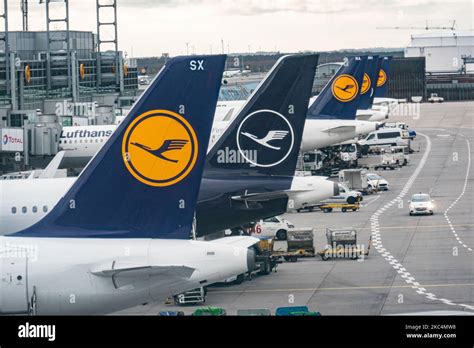
In such a system, the key objective is not simply flying between two cities but consolidating traffic flows. Passengers from cities like Prague, Oslo, Milan, and Lisbon might all connect through Frankfurt before boarding a single transatlantic flight to New York or Chicago.
This strategy prioritizes aircraft capable of carrying large volumes of passengers at specific departure waves. Lufthansa therefore favored aircraft with very high capacity that could absorb the surge of connecting passengers arriving from multiple feeder flights.
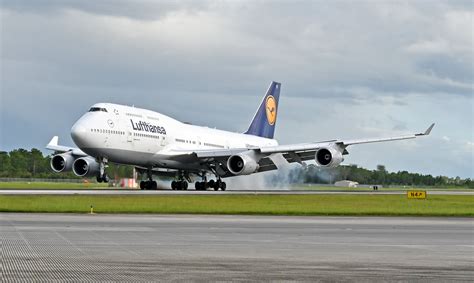
For decades, the airline relied heavily on the Boeing 747, the iconic “Queen of the Skies,” to fulfill that role. With its enormous capacity and long range, the 747 allowed Lufthansa to move large numbers of passengers efficiently across major global routes without needing a different aircraft class in between.
Because of this, the Boeing 777 — particularly earlier versions — simply did not fill a necessary gap in Lufthansa’s fleet.
The Boeing 747: Lufthansa’s Long-Haul Backbone
While many airlines phased out the 747 during the 2010s, Lufthansa continued operating the aircraft longer than most of its global competitors. The airline became one of the last major carriers still flying both the Boeing 747-400 and the newer Boeing 747-8 Intercontinental.
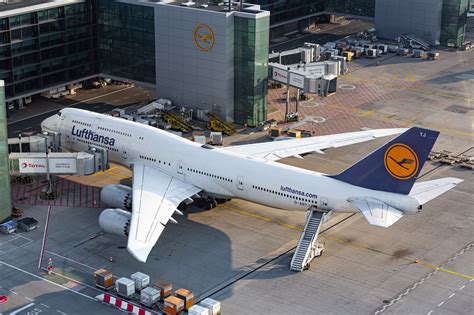
This decision was not sentimental; it was strategic. The 747 provided several advantages that aligned perfectly with Lufthansa’s network design.
First, the aircraft offered very high passenger capacity, which allowed Lufthansa to concentrate demand into fewer flights while maintaining strong seat availability during peak travel periods.
Second, the aircraft’s size made it ideal for slot-constrained airports. Major hubs such as Frankfurt, London Heathrow, and Tokyo Narita operate with limited departure slots. When airlines cannot add more flights, the solution becomes flying bigger aircraft.
Third, the 747 carried significant belly cargo capacity, an essential revenue stream for Lufthansa’s intercontinental operations.
Because the airline already had this high-capacity flagship aircraft, the Boeing 777 — particularly the 777-300ER, which many airlines used as their primary long-haul aircraft — would have duplicated much of the capability Lufthansa already possessed.
Instead of replacing the 747 with a slightly smaller aircraft, Lufthansa chose to operate both jumbo jets and large Airbus widebodies.
Airbus Widebodies Filled the 777’s Role
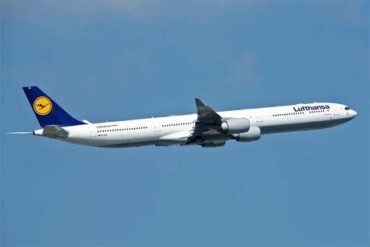
While other airlines adopted the 777 to bridge the gap between mid-size and jumbo widebodies, Lufthansa filled that niche with Airbus aircraft, particularly the Airbus A340-600.
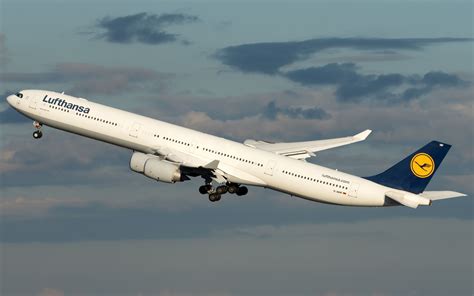
The A340-600 offered similar mission capabilities to the Boeing 777-300ER in terms of passenger capacity and range. Although it relied on four engines instead of two, fuel efficiency was acceptable during the era when oil prices were lower and environmental regulations were less stringent.
For Lufthansa, the aircraft offered several advantages:
- High passenger capacity suitable for long-haul routes
- Excellent range for intercontinental markets
- Compatibility with the airline’s existing Airbus fleet
The A340-600 became a crucial workhorse for routes that required substantial capacity but did not quite justify a full Boeing 747.
By operating a combination of 747s for the highest-density routes and A340s for slightly smaller markets, Lufthansa effectively covered the entire range of demand levels without needing the Boeing 777.
A Surprisingly Diverse Widebody Fleet
Today, Lufthansa’s long-haul fleet is one of the most diverse among major global carriers. This variety reflects both the airline’s complex network needs and the long transition period between older and newer aircraft generations.
The airline currently operates a mix of widebody aircraft including:
- Airbus A380-800
- Boeing 747-8
- Boeing 747-400
- Airbus A340-600
- Airbus A340-300
- Airbus A350-900
- Boeing 787-9
- Airbus A330-300
Each aircraft fills a specific role within the network.
The Airbus A350-900 and Boeing 787-9 represent the new generation of efficient long-range aircraft capable of serving thinner routes economically. These jets allow Lufthansa to maintain intercontinental service even when demand does not justify extremely large aircraft.
At the opposite end of the spectrum sit the Airbus A380 and Boeing 747, aircraft designed to carry the highest number of passengers on the busiest routes.
This combination allowed Lufthansa to scale capacity according to demand while maintaining high service levels on global trunk routes.
Why the Boeing 777 Once Seemed Redundant
During the peak production years of the Boeing 777 family, Lufthansa already possessed aircraft capable of covering nearly every segment of its long-haul network.
The airline had:
- 747 jumbo jets for extremely high-demand routes
- A340-600 aircraft for large but slightly smaller markets
- A330 and A340-300 jets for medium-capacity long-haul flights
In such a lineup, the Boeing 777 would have overlapped with aircraft already performing similar missions.
From a fleet management perspective, introducing a new aircraft type carries significant costs. Airlines must train pilots, build maintenance infrastructure, and stock spare parts. Unless the aircraft delivers clear operational advantages, the added complexity rarely makes sense.
For Lufthansa, the 777 did not offer enough unique benefits compared with the aircraft already in service.
Meanwhile, the airline’s broader corporate group was not completely unfamiliar with the aircraft.
The Lufthansa Group Already Operated the 777
Although Lufthansa itself never flew passenger 777s, another airline within the group embraced the aircraft.
SWISS International Air Lines, which joined the Lufthansa Group in 2005, operates the Boeing 777-300ER as its flagship long-haul aircraft.
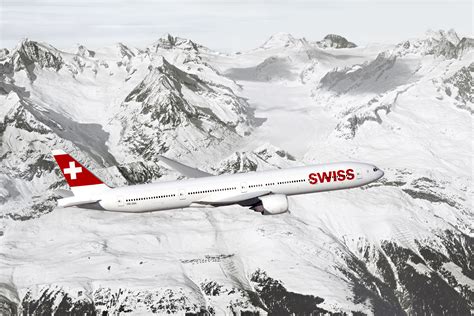
SWISS uses the aircraft primarily for routes from Zurich to North America and Asia, where its efficiency and capacity provide an ideal balance for the airline’s network size.
Because of this, the Lufthansa Group already possessed experience with the aircraft’s operational characteristics, maintenance requirements, and performance capabilities.
In other words, the group knew the 777 well. Lufthansa simply never had a strategic reason to operate it within its own fleet structure.
That equation began to change in the late 2010s.
The Industry Shift Toward Twin-Engine Efficiency
A profound transformation has taken place across long-haul aviation over the past decade. Airlines around the world have gradually shifted away from four-engine aircraft in favor of modern twin-engine designs.
This trend emerged due to several factors:
- Fuel efficiency improvements in new engine technology
- Lower maintenance costs for twin-engine aircraft
- Stricter environmental regulations
- Rising fuel prices
Aircraft like the Airbus A350 and Boeing 787 Dreamliner demonstrated that twin-engine jets could achieve ranges once reserved for four-engine aircraft.
As a result, many classic aircraft types began disappearing from fleets worldwide, including the Airbus A340 and even the legendary Airbus A380 in some cases.
Lufthansa resisted this transition longer than most airlines. Yet even for the German flag carrier, the economics of modern aircraft eventually became impossible to ignore.
The Retirement of Lufthansa’s Four-Engine Aircraft
The biggest turning point in Lufthansa’s fleet strategy is the gradual retirement of older four-engine aircraft.
Among the aircraft scheduled for long-term retirement are:
- Boeing 747-400
- Airbus A340-600
- Airbus A340-300
These aircraft have served the airline reliably for decades, but their operating costs are increasingly difficult to justify compared with modern twin-engine alternatives.
Removing them from the fleet creates an important challenge.
Once the largest aircraft disappear, Lufthansa must still operate routes that require extremely high passenger capacity. Busy intercontinental markets — particularly between Europe and North America — continue to demand large aircraft capable of carrying hundreds of passengers per flight.
This is precisely where the Boeing 777-9 enters the picture.
The Boeing 777X: Lufthansa’s Future Flagship
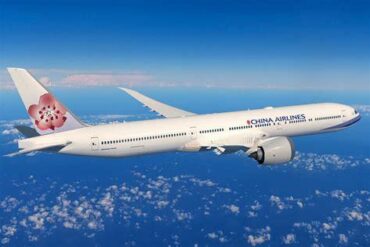
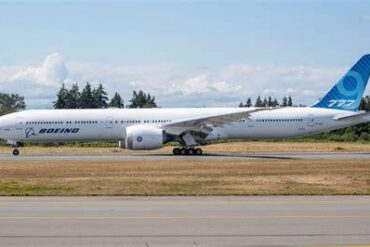
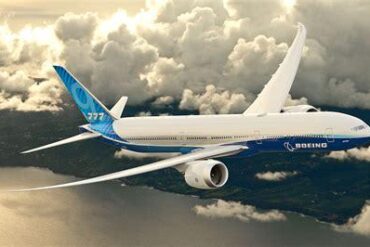
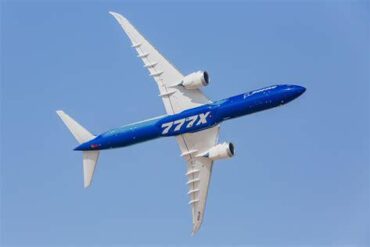
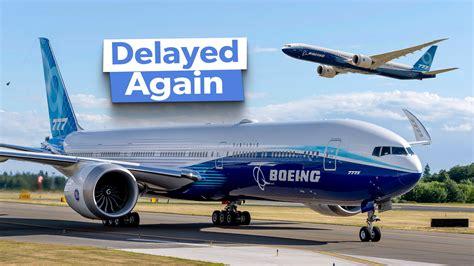
The next generation of Boeing’s long-haul aircraft family, known as the 777X, represents the largest twin-engine passenger jet ever developed.
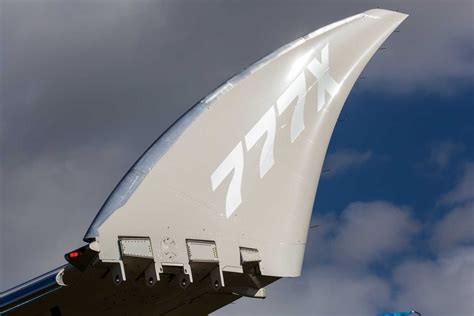
The aircraft introduces several advanced technologies, including:
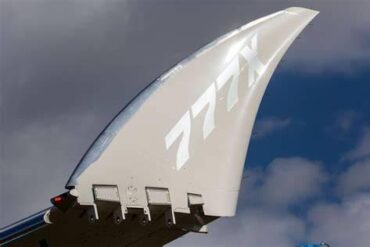
- Composite folding wingtips for improved aerodynamics
- New GE9X engines, the most powerful commercial jet engines ever built
- Enhanced fuel efficiency compared with previous widebody aircraft
The largest variant, the Boeing 777-9, is designed to carry more than 400 passengers in typical configurations, placing it close to the capacity of older jumbo jets while maintaining far lower operating costs.
For Lufthansa, the aircraft provides something critically important: a modern replacement for the Boeing 747 without sacrificing passenger capacity.
The airline has committed to 20 Boeing 777-9 aircraft, positioning itself as the launch operator for the passenger version of the 777X family.
A Parallel Investment in Cargo Aircraft
The Lufthansa Group’s investment in the 777X family extends beyond passenger aircraft.
The company also ordered seven Boeing 777-8 freighters, a cargo variant designed to replace aging long-haul cargo aircraft.
Cargo has long been a central component of Lufthansa’s business model. Frankfurt serves as one of the largest air cargo hubs in Europe, connecting global supply chains with markets across Asia, North America, and the Middle East.
By adopting both passenger and cargo variants of the 777X, Lufthansa ensures commonality in maintenance and training while modernizing two critical parts of its operation simultaneously.
Where the Boeing 777-9 Will Likely Fly
Although Lufthansa has not officially announced the first routes for the 777-9, its historical network patterns offer strong clues.
The airline typically assigns its largest aircraft to high-demand trunk routes linking its hubs to major global cities.
These destinations frequently include:
- New York
- San Francisco
- Los Angeles
- Beijing
- Tokyo
- Delhi
Such routes combine high passenger demand with significant cargo traffic, making them ideal candidates for a large aircraft like the 777-9.
Additionally, airports with limited departure slots benefit from larger aircraft because they allow airlines to transport more passengers without increasing flight frequency.
Given Lufthansa’s strong focus on premium travelers, the aircraft will also feature the airline’s new Allegris cabin concept, a redesigned premium interior aimed at enhancing long-haul passenger experience.
A Long-Delayed but Perfectly Timed Aircraft
For decades, Lufthansa’s fleet strategy made the Boeing 777 unnecessary. The airline already had aircraft capable of covering every segment of its network.
The combination of Boeing 747 jumbo jets, Airbus A340 long-range aircraft, and later Airbus A350 and Boeing 787 jets allowed the airline to maintain capacity flexibility without introducing the 777.
But aviation economics evolve.
As older four-engine aircraft retire and environmental standards tighten, airlines increasingly rely on high-capacity twin-engine aircraft to maintain efficiency while preserving seat availability on busy routes.
The Boeing 777-9 arrives at precisely the moment Lufthansa needs such an aircraft.
Rather than filling an existing gap, the aircraft represents the next chapter in the airline’s long-haul evolution — replacing iconic aircraft like the 747 while preserving Lufthansa’s ability to move massive numbers of passengers through its global hub network.
In many ways, the story is not about why Lufthansa avoided the 777 for so long. It is about how the airline’s strategy finally aligned with the largest and most advanced twin-engine aircraft ever built, transforming the Boeing 777 from a redundant option into the future flagship of Lufthansa’s long-haul fleet.