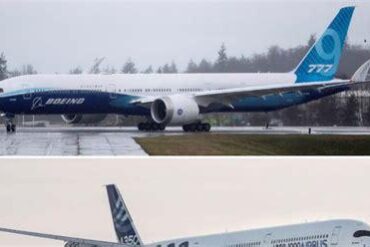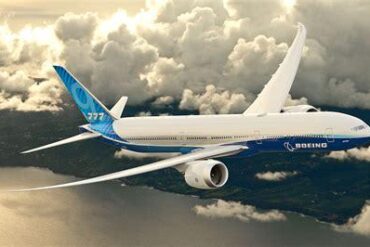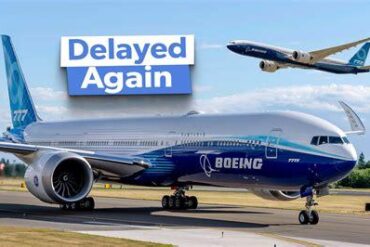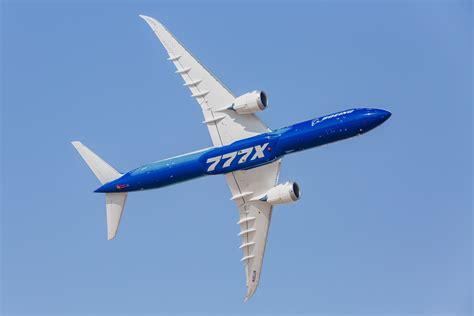
The Boeing 777X stands as one of the most ambitious and scrutinized aircraft programs in modern aviation—a jet designed not merely to replace its predecessor, but to redefine long-haul travel economics, passenger comfort, and operational efficiency. Yet, ambition has come with a cost. Originally slated for entry into service in 2020, the aircraft has been pushed back repeatedly, with first deliveries now expected no earlier than 2027. Despite this prolonged timeline, a select group of global airlines has doubled down rather than walked away.
What makes this commitment remarkable is not just the scale of investment, but the strategic patience behind it. These airlines are not passively waiting; they are actively reshaping fleets, delaying retirements, and rethinking route strategies—all in anticipation of a jet that promises transformative capabilities.
This deep dive explores the six airlines with the largest Boeing 777X orders, revealing how each carrier is positioning itself for a future that, while delayed, still appears undeniably compelling.
Lufthansa: The Reluctant Pioneer Holding the Line
Lufthansa’s relationship with the Boeing 777X is defined by endurance. As the launch customer, the German flag carrier committed early in 2013, placing its trust in what was then a next-generation flagship. More than a decade later, that trust has been tested repeatedly.
The airline currently holds 27 aircraft on order, including 20 Boeing 777-9 passenger jets and 7 Boeing 777-8 freighters. These aircraft are central to Lufthansa’s long-term plan to phase out aging four-engine aircraft such as the Boeing 747-400 and Airbus A340—jets that, while iconic, no longer align with modern efficiency standards.
What complicates Lufthansa’s situation is the operational gap created by the delay. Instead of a clean transition, the airline has had to reactivate Airbus A380s, extend the life of older jets, and even sell relatively modern aircraft like the 747-8. This is not strategic elegance—it’s tactical survival.
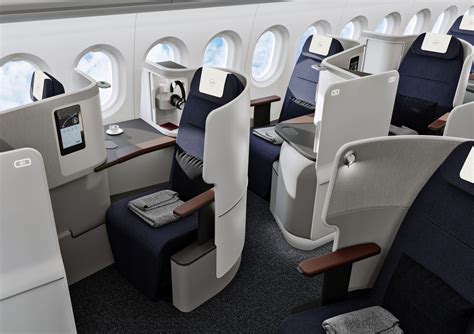
Yet Lufthansa remains committed. The 777-9 will debut its Allegris cabin, a premium product designed specifically for this aircraft. Ironically, delays forced Lufthansa to roll out this product on other aircraft first, diluting what was supposed to be a flagship experience.
Still, Lufthansa’s persistence signals something important: despite frustration, the airline believes the 777X is worth the wait.
Singapore Airlines: Strategic Patience Done Right
Singapore Airlines approaches the 777X with a markedly different tone—less frustration, more calculated flexibility. With 31 Boeing 777-9 aircraft on order, the carrier has quietly built one of the most future-ready widebody fleets in the world.
Rather than relying on the 777X timeline, Singapore Airlines has leveraged its Airbus A350 and Boeing 787-10 fleets to maintain operational agility. This has allowed the airline to absorb delays without disrupting its network or brand positioning.
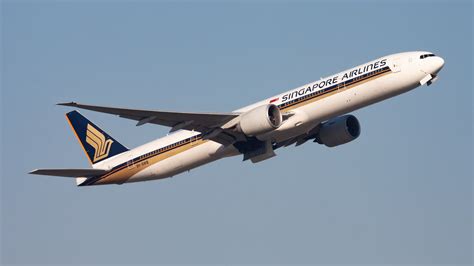
The 777-9 will eventually replace both the Boeing 777-300ER and portions of the Airbus A380 fleet, particularly as those aircraft approach two decades of service. This dual-replacement strategy highlights the versatility of the 777X—it is not just a successor, but a consolidator.
Singapore Airlines’ fleet remains one of the youngest globally, with an average age of around eight years. That statistic alone explains its calm approach: when your current fleet is already efficient, delays become inconvenient rather than existential.
The airline’s strategy offers a subtle lesson—flexibility is often more valuable than speed.
Cathay Pacific: Betting on Premium Reinvention
Cathay Pacific’s commitment to the 777X is as much about branding as it is about fleet modernization. With 35 Boeing 777-9 aircraft on order, the Hong Kong-based carrier is positioning the aircraft as the centerpiece of its premium revival.
The defining feature of Cathay’s 777-9 strategy is the introduction of its Halo Suites first class product—a long-anticipated cabin designed to compete at the very top of global aviation luxury.
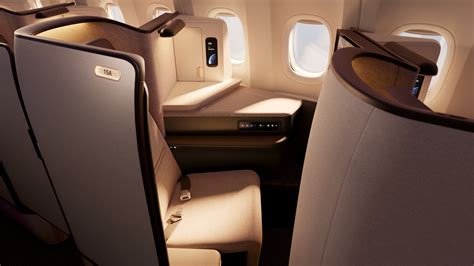
Unlike incremental upgrades, this represents a step-change in passenger experience, signaling Cathay’s intent to reclaim its reputation as a leader in premium travel.
The airline has also shown confidence by expanding its order in 2025, adding 14 more aircraft. This move, made despite ongoing delays, suggests that Cathay sees long-term value outweighing short-term uncertainty.
Deliveries are expected to ramp up from 2027, with a significant portion arriving in subsequent years. The scale and timing align with Cathay’s broader recovery and expansion strategy, particularly as long-haul demand rebounds across Asia-Pacific.
In essence, the 777X is not just a fleet upgrade for Cathay—it’s a brand reset at 35,000 feet.
Korean Air: A Merger-Driven Fleet Transformation
Korean Air’s 777X order is inseparable from its merger with Asiana Airlines—a move that has reshaped the aviation landscape in Asia. With 48 Boeing 777X aircraft on order, including both passenger and freighter variants, the airline is building a unified, modernized fleet designed for long-term efficiency.
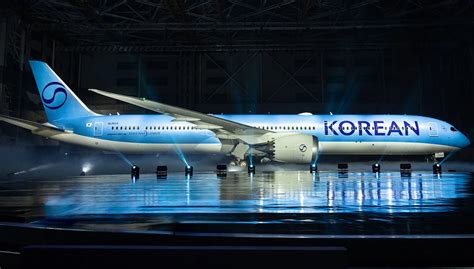
The logic behind this order is straightforward: simplification and scale. The combined fleet of Korean Air and Asiana includes a diverse mix of widebody aircraft, creating complexity in maintenance, training, and operations. The 777X offers a pathway to consolidation.
Additionally, the aircraft is expected to replace Airbus A380s and Boeing 747-8 Intercontinentals, both of which are costly to operate and increasingly out of step with modern economics.
Korean Air has also made it clear that the 777X will serve as its future flagship, depending on delivery timelines relative to the Airbus A350-1000. That uncertainty adds an interesting competitive dynamic within the fleet itself.
Deliveries are projected to begin around 2028, with integration extending into the 2030s. This long horizon reflects a broader vision: the 777X is not just a purchase—it is a foundation for decades of operations.
Qatar Airways: Scaling Up at Unmatched Speed
Qatar Airways has turned its 777X commitment into a masterclass in aggressive expansion. With approximately 124 aircraft on order, spanning both passenger and freighter variants, the airline has built one of the largest positions in the program.
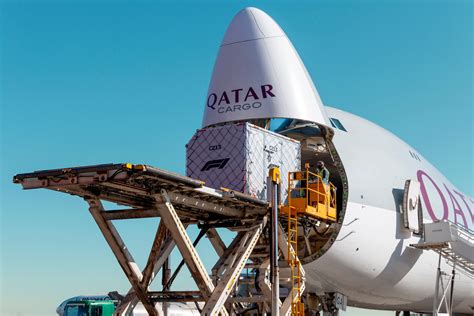
What sets Qatar apart is not just volume, but velocity. In a short span, the airline dramatically increased its orders, culminating in a landmark deal that included additional 777-9 aircraft alongside a massive Dreamliner purchase.
The freighter component—777-8F—is particularly significant. Qatar was the launch customer for this variant, signaling confidence in the future of air cargo. These aircraft are expected to replace its existing 777 freighter fleet, offering improved efficiency and capacity.
On the passenger side, the 777-9 will gradually replace older 777-300ERs and Airbus A380s, aligning with Qatar’s strategy of maintaining one of the youngest and most advanced fleets globally.
Qatar Airways’ approach reflects a clear philosophy: scale creates leverage. By committing heavily, the airline positions itself as a key partner for Boeing, potentially influencing delivery priorities and product evolution.
Emirates: The Undisputed Giant of the 777X Era
No airline comes close to Emirates when it comes to the Boeing 777X. With a staggering 270 aircraft on order, the Dubai-based carrier has effectively tied its future to this single program.
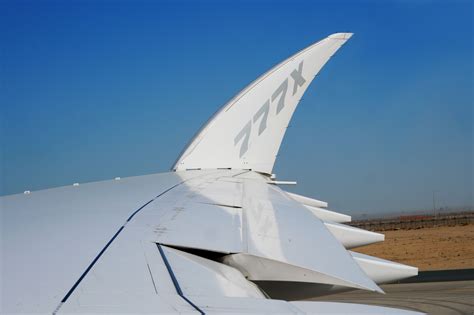
This is not just a fleet decision—it is a strategic declaration. Emirates already operates the world’s largest Boeing 777 fleet, and the 777X represents the natural continuation of that dominance.
The order includes 235 Boeing 777-9 aircraft, making Emirates the largest customer by a wide margin. The remaining orders include the smaller 777-8 variant, adding flexibility for different route profiles.
One of the key advantages for Emirates lies in the GE9X engines, which are optimized for challenging conditions like the high temperatures of Dubai. This performance edge is critical for maintaining efficiency on ultra-long-haul routes.
However, the delays have not been painless. Emirates has had to extend the life of older aircraft, manage rising maintenance costs, and adjust growth plans. Yet the scale of its commitment leaves little room for doubt.
For Emirates, the 777X is not just another aircraft—it is the backbone of its next-generation global network.
Why These Airlines Haven’t Walked Away
At first glance, the prolonged delays of the Boeing 777X might seem like a deal-breaker. In most industries, a multi-year delay on a flagship product would trigger cancellations and strategic pivots. Yet in aviation, the calculus is different.
The 777X promises a combination of capacity, efficiency, and range that few alternatives can match. For airlines operating high-demand, long-haul routes, this combination translates directly into profitability.
Equally important is the lack of true substitutes. While aircraft like the Airbus A350-1000 offer strong competition, they do not fully replicate the high-capacity niche that the 777-9 is designed to fill.
There is also a psychological dimension at play. Large aircraft orders are not just transactions—they are long-term partnerships involving training, infrastructure, and brand identity. Walking away is not just costly; it is disruptive at a systemic level.
In that context, the persistence of these six airlines begins to make sense. They are not ignoring the delays—they are betting that the payoff will justify the wait.
The Future of the Boeing 777X Program
As the 777X edges closer to certification, the stakes could hardly be higher. This aircraft is expected to define the next era of long-haul travel, particularly as airlines seek to balance capacity with sustainability.
The airlines highlighted here are not merely customers—they are co-authors of the 777X story. Their decisions, strategies, and patience will shape how the aircraft is deployed, perceived, and ultimately judged.
If the program delivers on its promises, these carriers will be positioned at the forefront of global aviation. If it falls short, the consequences will ripple across fleets, networks, and balance sheets.
Either way, one thing is clear: the Boeing 777X is no ordinary aircraft. And the airlines that have committed to it are not making ordinary bets.