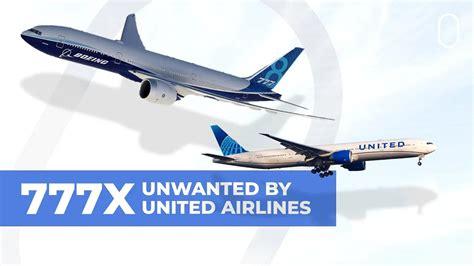
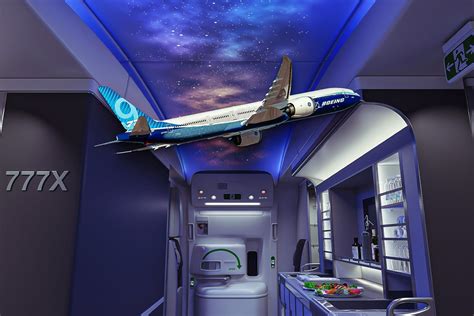
The Boeing 777X, the world’s largest twinjet, was supposed to be the next iconic chapter in Boeing’s widebody dominance, designed to succeed the 747 and compete directly with Airbus’s A350 family. But in a surprising twist, no U.S. airline has placed a single order for the 777X—despite Boeing’s historic foothold in North America and the massive potential of the aircraft. The situation raises critical questions about strategy, demand forecasting, and the future of long-haul travel in the United States.
The Disconnect Between U.S. Airlines and Boeing’s Vision
The three major U.S. legacy carriers—American Airlines, Delta Air Lines, and United Airlines—have completely bypassed the 777X, choosing instead to double down on smaller widebody aircraft such as the Boeing 787 Dreamliner and Airbus A350. This is not a simple oversight or temporary hesitation; it reflects a fundamental mismatch between the aircraft’s size, range, and the evolving business models of American carriers.
While global carriers like Lufthansa, Emirates, and Qatar Airways have invested heavily in the 777X to serve their high-volume international hubs, U.S. airlines operate within a more fragmented and competitive domestic and transatlantic landscape. The U.S. hub-and-spoke model is not ideally suited to consistently fill a massive twinjet with up to 426 passengers. Instead, American carriers are prioritizing flexibility, fuel efficiency, and operational simplicity.
Oversized for American Networks
One of the central reasons for the lack of U.S. interest is the enormous capacity of the 777X. Its size makes it an ideal fit for routes like Dubai to Los Angeles or Frankfurt to Tokyo, but problematic for the point-to-point and secondary city routes more common among American carriers. United Airlines has ordered Airbus A350-1000s. Delta already operates the A350 and A330neo, and American is focused on expanding its 787 and 737 MAX fleets.
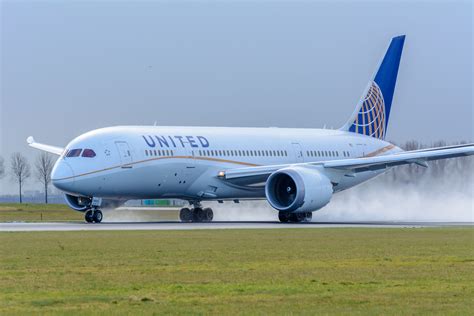
These choices are strategic. Filling a 777X to breakeven levels requires near-perfect load factors, a risky proposition amid seasonal demand changes and rising fuel costs. Conversely, a Boeing 787-9 or A350-900 offers a more manageable seat count with better per-flight efficiency and less exposure to yield volatility.
Boeing 777X: Ambition Meets Adversity
Beyond market misalignment, the 777X program has been mired in developmental setbacks and credibility issues. Originally scheduled for delivery in 2020, the program is now delayed until 2026. Boeing has blamed a variety of factors: GE9X engine issues, FAA scrutiny post-737 MAX disasters, and a four-month halt in certification testing.

The infamous cargo door blowout during a test flight in 2021 and performance concerns raised by Emirates—Boeing’s largest 777X customer—have only deepened skepticism. For cautious U.S. airlines already scarred by production flaws, delivery delays, and compliance uncertainty, these red flags make the 777X a hard sell.
Why the 777-8 Isn’t Making Waves
Boeing planned two passenger versions of the 777X: the 777-8 and the 777-9. The 777-8, a smaller but ultra-long-range model, was expected to appeal to operators replacing aging 777-200LRs. But reality has proven otherwise. Only 43 orders for the 777-8 have been secured to date—none from U.S. airlines.
Part of the issue is competition. The Airbus A350-900, already in widespread service, outperforms the 777-8 in terms of fuel efficiency, environmental metrics, and operating costs, all due to its lighter composite structure. And unlike the A350, which was already flying at the start of the pandemic, the 777-8 remains a paper plane.
The Stretched Giant: 777-9’s Uphill Battle
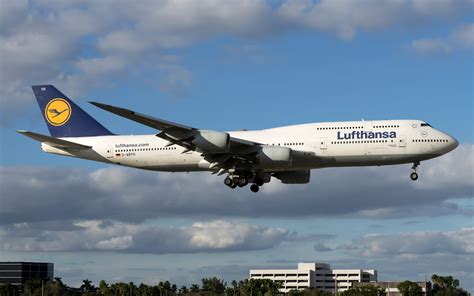
While the 777-9 has fared better in sales—340 orders from international airlines—its challenges remain considerable. Emirates alone accounts for 170 units, with the rest scattered across carriers such as Lufthansa, Qatar Airways, British Airways, and All Nippon Airways. The jet is aimed at long-haul, high-density routes, ideally replacing the retired 747-400s and A380s.
For U.S. carriers, however, these ultra-long-haul routes are exceptions, not the rule. Very few U.S. airports generate the sustained international traffic needed to make the 777-9 profitable. With a maximum seating capacity of 426 and a range exceeding 7,200 nautical miles, the aircraft is effectively overkill for most of the U.S. network.
Freighter Variant: A Glimmer of Hope?
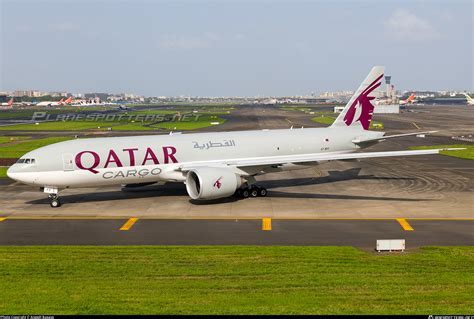
Even the freighter version—the 777-8F—has failed to attract U.S. air cargo giants like FedEx or UPS. This is despite Boeing’s plan to end production of the 747-8F and eventually phase out the 767F. With 55 orders, the 777-8F has found a foothold in the Middle East and Europe, including Qatar Airways Cargo and Lufthansa Cargo.
U.S. air freight companies, however, appear to be eyeing smaller, more flexible aircraft, especially in the face of fluctuating global logistics patterns and the rise of regional e-commerce. Moreover, Airbus A350F is emerging as a strong rival, promising quieter, cleaner, and more efficient cargo solutions.
Delays That Damage Confidence
The U.S. market is particularly sensitive to manufacturing credibility, especially after the 737 MAX crisis exposed systemic lapses in oversight. The 777X program—already nearly eight years behind schedule—has done little to restore that trust. Boeing’s own executives admit that certification remains a moving target, with complex FAA review protocols slowing progress.
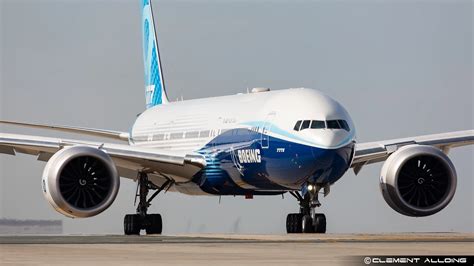
Each delay gives Airbus more time to entrench its A350 dominance, with the -1000 model already flying transoceanic missions for major airlines. The longer the 777X remains grounded, the harder it will be to convince risk-averse buyers like American, Delta, or United to reconsider.
Twinjet Future, But Not for Now
Despite all setbacks, the 777X is not without value. It is, after all, the only aircraft capable of filling the gap left by the retired 747 and A380. Its folding wingtips, composite materials, and next-gen avionics make it one of the most technologically advanced widebodies ever conceived. For global carriers flying ultra-long-haul routes to and from megahubs, it remains a critical component of fleet renewal.
But for now, U.S. airlines are playing the long game. With hundreds of 787s and A350s already flying or on order, there is simply no immediate need to gamble on the 777X. When older 777-200ERs and 777-300ERs approach retirement in the early 2030s, the calculus may change. But until Boeing can guarantee reliability, performance, and on-time delivery, the 777X will remain a plane admired from afar.
Conclusion: A Flagship Without a Home in America
In an era defined by fuel efficiency, fleet flexibility, and risk minimization, the Boeing 777X is a mismatch for U.S. airline strategies. While it promises to carry more passengers further than any twinjet in history, that promise is dulled by delays, doubts, and a demand disconnect. For American carriers, the skies are better served—for now—by smaller, leaner jets that fly more routes with fewer risks.
Only time will tell if the world’s largest twinjet will ever wear the colors of an American flag carrier. Until then, the 777X remains a titan in waiting—massive, magnificent, but misaligned with U.S. aviation’s present-day priorities.