The idea of food descending from the sky straight to your doorstep once belonged to science fiction. Today, it is edging closer to reality as Grubhub pushes drone delivery into mainstream conversation, challenging long-held assumptions about convenience, safety, and trust. With its partnership with Dexa, the company is testing whether consumers are ready to swap human couriers for autonomous aerial systems—and the answer is far more complex than a simple yes or no.
At the center of this innovation is a tightly controlled pilot program in Green Brook, New Jersey, where drone deliveries are being tested within a 2.5-mile radius. The ambition is clear: eliminate traffic delays, reduce delivery times, and create a frictionless customer experience. For users accustomed to late arrivals or mishandled meals, the promise of a precision-guided delivery system feels undeniably appealing. Yet, convenience alone does not guarantee trust.
Skepticism remains deeply rooted. If customers already question whether a driver can keep their order intact, placing that responsibility in the hands of a machine introduces a new layer of doubt. Concerns extend beyond spilled drinks or cold fries. Safety incidents, such as drone malfunctions or collisions, highlight the real-world risks of scaling this technology. The memory of recent drone accidents serves as a reminder that even advanced systems are not immune to failure.
The Technology Behind Autonomous Food Delivery
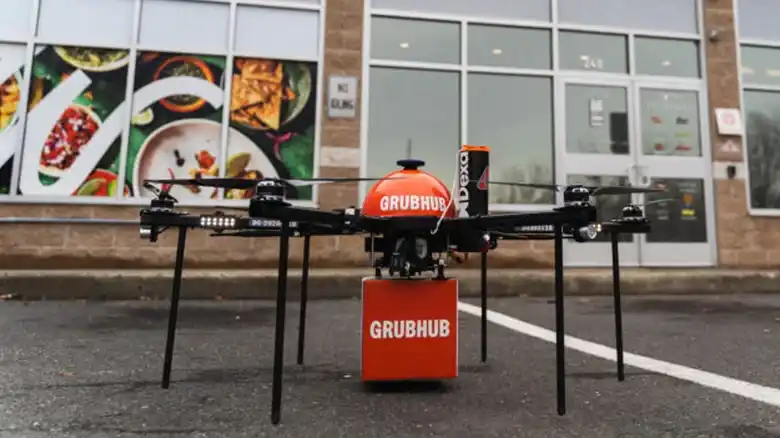
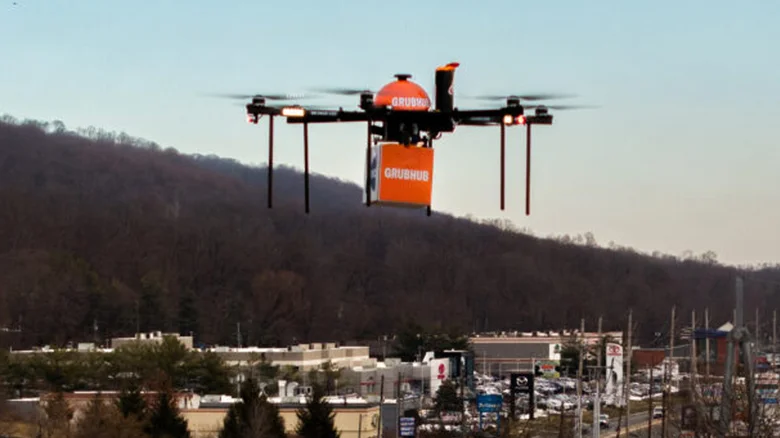
The drones used in this pilot are not consumer gadgets; they represent a highly specialized class of aviation technology. Dexa’s DE-2020 hexacopter is engineered for stability, redundancy, and compliance with strict aviation standards. Certified under the Federal Aviation Administration’s Part 135 regulations, these drones operate within a framework designed to prioritize operational safety and accountability.
Unlike hobby drones, these systems rely on advanced navigation algorithms, obstacle detection, and real-time data processing. Each delivery is carefully orchestrated, from takeoff to landing, ensuring that food arrives not just quickly, but intact. This level of sophistication signals a broader shift: drone delivery is no longer experimental—it is becoming infrastructural.
Privacy, Perception, and Public Trust
Technology alone cannot overcome the psychological barriers tied to drone adoption. For many, drones evoke associations with surveillance and military applications. This perception complicates public acceptance, as consumers weigh convenience against concerns over privacy and data collection. The presence of cameras and sensors, essential for navigation, raises questions about how much of daily life is being observed from above.
Trust, in this context, becomes a multidimensional challenge. It is not just about whether the food arrives safely, but whether the system respects personal boundaries. Companies entering this space must address these concerns transparently, or risk alienating the very customers they aim to serve.
Global Momentum and the Future of Delivery
While skepticism persists in some regions, other parts of the world are rapidly embracing drone logistics. In cities like Hefei, large-scale drone fleets already handle routine deliveries, demonstrating that integration at scale is achievable. Crucially, these advancements are supported by evolving regulatory frameworks that define responsibility, safety standards, and operational limits.
This combination of innovation and regulation is accelerating the maturity of drone delivery systems. As reliability improves, the conversation will shift from “if” to “when” these services become commonplace.
A Leap of Faith or the Next Logical Step?
Grubhub’s initiative is more than a technological experiment—it is a test of consumer psychology. Trust is not built overnight, especially when it involves machines navigating shared airspace. Yet history shows that once unfamiliar technologies prove their value, adoption can happen rapidly.
The question is no longer whether drones can deliver your food. It is whether you are ready to look up, hear the hum of rotors, and accept that your next meal might arrive from the sky.