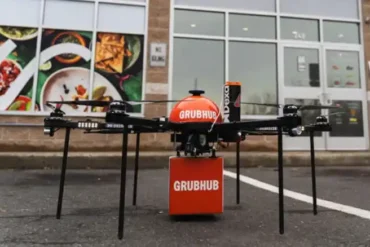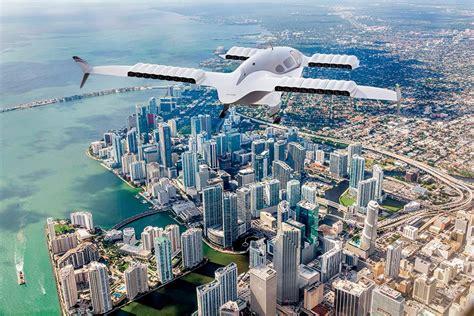
The era of autonomous drone delivery has moved from the realm of speculation to selective implementation. What began as a futuristic fantasy of packages dropped from buzzing quadcopters has matured into a pragmatic, precision-driven logistics solution. By mid-2025, drone delivery is no longer just a tech demo — it’s a real, scalable service in targeted industries. However, the road to mainstream adoption remains winding, paved with regulatory caution, engineering complexity, and the challenge of public perception.
The Technological Maturity Behind Drone Delivery
Today’s drone delivery systems are built on the back of decade-long R&D into aviation-grade systems. The transition from consumer-grade quadcopters to hybrid VTOL and fixed-wing drones marks a pivotal evolution. These aircraft offer superior range, speed, and payload capabilities compared to their hovering-only predecessors.
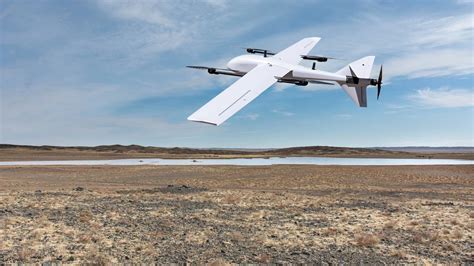
One of the defining elements enabling this progress is advanced sense-and-avoid systems. Instead of rudimentary proximity sensors, modern drones use a full sensory suite — LiDAR, stereo cameras, radar, and onboard AI. These systems enable drones to autonomously identify and reroute around obstacles such as power lines, tree canopies, or even other drones, achieving a critical prerequisite for regulatory clearance.
Navigation has also advanced beyond GPS. RTK (Real-Time Kinematic) GPS, offering centimeter-level accuracy, ensures precise takeoff and delivery even in tight urban environments. And as 5G coverage expands, drones gain access to ultra-reliable low-latency networks, providing real-time data flow essential for fleet coordination and UTM (Unmanned Aircraft System Traffic Management) systems.
Sophisticated delivery mechanisms — from retractable winches to automated landing hatches — now allow contactless, safe package drops from hovering positions. Combined with centralized UTM platforms, these features allow for the safe integration of thousands of flights into shared airspace, making commercial scalability a reality.
Regulatory Realities: A Deliberate Flight Path
The regulatory environment continues to be the principal drag on drone delivery’s ascent. In the U.S., the FAA’s Part 135 certification process defines the threshold for drone operators seeking to act as legal air carriers. While companies like Wing (Alphabet) and Zipline have secured waivers for BVLOS (Beyond Visual Line of Sight) operations, approvals remain piecemeal and tightly controlled.
This bottleneck is compounded by FAA staffing shortages, leading to long delays in reviewing applications and expanding certified flight zones. Meanwhile, the European Union’s EASA has taken a more harmonized and scalable approach with its U-space air traffic system, setting a framework for safe autonomous drone integration across all EU member states.
For investors and stakeholders, every regulatory waiver or certification isn’t just a formality — it’s a market-enabling milestone. These permissions directly translate into geographic expansion and increased delivery volumes, particularly in densely populated regions or high-demand sectors like healthcare.
Proof of Concept: Real-World Deployments
Success stories are not just theoretical. Zipline, for instance, has turned its initial humanitarian mission in Rwanda into one of the most compelling case studies for drone logistics. By delivering blood, vaccines, and essential medicines within minutes to remote health centers, Zipline has slashed delivery times and saved lives.
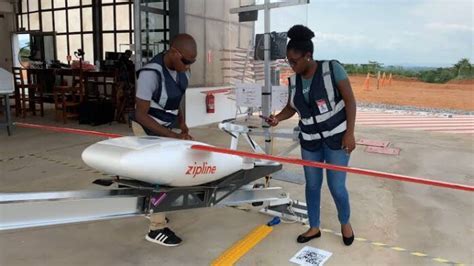
In the U.S., Zipline’s partnerships with Walmart and Intermountain Health underscore the versatility of its platform. Meanwhile, Wing has carved out a niche delivering consumer goods in suburban areas in Texas and Australia, with thousands of deliveries already completed. Its model features distributed hubs, app-based ordering, and hyper-local retail integration.
Europe isn’t lagging. Manna Drone Delivery, based in Ireland, has piloted drone food delivery at scale. By collaborating with restaurants, retailers, and Deliveroo, Manna is creating a town-by-town rollout model, focusing on speed, reliability, and consumer convenience. This strategy combines local engagement with cutting-edge tech.
The Remaining Hurdles to Scale
Scaling drone delivery from thousands to millions of daily deliveries involves overcoming interconnected barriers:
First is weather resilience. Even with modern airframes, drones are vulnerable to wind gusts, precipitation, and icing. To operate at scale, drones must function in all-weather conditions with minimal disruption. R&D in coatings, airframe durability, and AI-powered turbulence avoidance is underway.

Second, battery limitations continue to restrict payload capacity and flight range. Advances in lithium-silicon and solid-state batteries promise breakthroughs, but energy density is still a key choke point.
Third is economic feasibility. The ROI on drone delivery is strongest for lightweight, high-value, or time-critical goods over relatively short distances. While operating costs per delivery can be lower than traditional vans, the initial capital investment — in aircraft, docking infrastructure, and software platforms — remains high.
Most importantly, social acceptance is an unpredictable but critical variable. Urban dwellers are sensitive to noise, perceived safety, and privacy. The whirring sound of rotors, especially in large numbers, can quickly generate resistance. Companies are focusing on noise-reducing propeller designs and restricted flight corridors, but regulatory and public relations efforts must align.
The Path Ahead: Integrated Logistics Ecosystems
The most sustainable future for drone delivery lies not in replacing trucks or couriers but in integrating with them. Drones will excel in specific legs of the supply chain, particularly the “middle mile” or remote last mile, where roads are inefficient or nonexistent.
Future drone depots could be mounted on electric vans, serving as mobile launch platforms that extend delivery reach without requiring fixed infrastructure. Alternately, drone hives atop warehouses or commercial rooftops may become the standard in high-density areas.
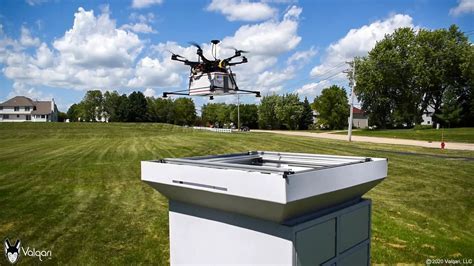
These hybrid logistics networks will blend autonomous drones, electric vans, sidewalk robots, and human couriers. Algorithms will dynamically assign delivery tasks to the most efficient mode, optimizing cost, time, and environmental footprint.
Where the Smart Money Is Going
For investors, betting on drone delivery doesn’t necessarily mean backing the drone operator. The true upside may lie in the underlying technologies and infrastructure that enable autonomy at scale:
- UTM Software Platforms: These orchestrate fleet movements and avoid collisions in increasingly busy airspace.
- Next-Gen Batteries: Companies developing ultra-dense, lightweight, and fast-charging batteries are key enablers.
- Cybersecurity for Drones: As drones become nodes in a vast IoT system, protecting them from interference is vital.
- Infrastructure: Investment opportunities include automated charging pads, secure delivery lockers, and modular drone ports.
What Engineers Should Be Building
The engineering frontier is still wide open. The next decade demands leaps in:
- Full Autonomy: Drones that can identify problems, reroute, and troubleshoot without human input.
- Swarm Intelligence: Coordinated drone fleets that deliver in tandem or cover large areas with a single control system.
- Airframe Innovation: Aircraft that are not only quieter and lighter but capable of flying in extreme conditions safely.
Each of these innovations pushes drone delivery closer to mainstream utility. Crucially, these advances must focus on safety, reliability, and social impact, not just technical prowess.
Conclusion: Beyond the Hype, Towards Real Utility
Drone delivery has finally moved past its inflated expectations and entered a stage of measured, strategic deployment. While not yet ubiquitous, it’s proving its worth in vital verticals — from healthcare to retail logistics — and in diverse geographies, from rural Africa to suburban America.
The focus in 2025 is realism: solving actual logistics pain points, navigating regulatory pathways, and building trust with the public. As enabling technologies mature and supportive ecosystems grow, the future of autonomous last-mile delivery looks less like science fiction and more like smart infrastructure.
The companies and visionaries who embrace this grounded, systems-based view of drone delivery — prioritizing long-term scalability over flashy demos — will define the logistics networks of tomorrow.