Airbus entered 2026 with a confident headline target: approximately 870 commercial aircraft deliveries, a step up from the 793 jets handed over in 2025. On paper, that trajectory signals steady recovery and industrial maturity after years of pandemic disruption. Airlines want lift. The backlog is deep. Demand is not the problem. The tension lies elsewhere — in the cold arithmetic of engines arriving late and production schedules bending under strain.
Two months into the year, the numbers are not catastrophic. They are simply uncomfortable. Airbus officially delivered 19 aircraft in January 2026. February improved, with industry tracking suggesting roughly 33 deliveries, yet the cumulative pace still trails last year’s early rhythm. That would put the total at about 52 aircraft across the first two months, compared with 65 deliveries during January–February 2025. A roughly 20% shortfall at the very moment Airbus is attempting to increase annual output by 10% is not a trivial statistical wobble.
This is where context matters. Airbus does not build airplanes in quarterly bursts. It depends on a steady cadence — a narrowbody delivery heartbeat that hums month after month. When that rhythm falters early, it raises deeper questions about the industrial system underneath.
Engine Constraints and the Pratt & Whitney Standoff
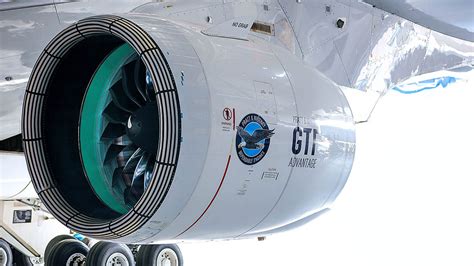
At the center of the 2026 delivery tension sits a familiar but unresolved constraint: engines for the A320neo family, particularly from Pratt & Whitney. Airbus leadership has been unusually direct about its frustration. Engines are arriving “very, very late,” and the tone between manufacturer and supplier has sharpened. When the chief executive publicly signals dissatisfaction and references contractual rights, it is not background noise. It is an industrial red flag.
The A320neo family is the economic engine of Airbus itself. More than 75% of Airbus deliveries in 2025 were A320 and A321 variants. Any bottleneck in that segment does not merely dent output — it distorts the entire annual trajectory. The early 2026 data underscores the vulnerability. While total deliveries trail last year by around 20%, the narrowbody core appears to be lagging closer to 30% relative to early 2025.
That discrepancy matters because widebodies, while strategically important, do not drive volume at the same scale. Airbus can deliver a handful of A350s, but it cannot compensate for dozens of delayed A320neo-family handovers with long-haul aircraft alone. Industrial math is stubborn that way.
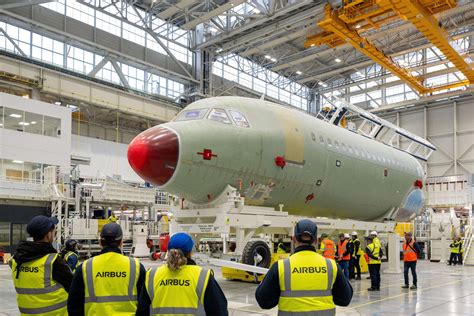
The A320neo Family: The Beating Heart of Airbus Production
A record year is not built on optimism; it is built on repetition. Airbus needs consistent monthly narrowbody output to approach 870 deliveries. The 2026 ambition rests squarely on maintaining a production climb toward roughly 70–75 A320-family aircraft per month by late 2027. Yet output targets are abstractions until engines physically arrive on the final assembly line.
Early 2025 offered a healthier baseline. Airbus delivered 20 A320neo-family aircraft in January 2025 and 33 in February 2025. By contrast, January 2026 saw approximately 15 narrowbody deliveries, followed by around 23 in February. That gap may look manageable in isolation, but manufacturing does not tolerate chronic lag. Every underperforming month compounds pressure on the remainder of the year.
Industrial systems behave less like light switches and more like ecosystems. A shortage upstream — forged metal components, castings, turbine disks, inspection cycles — cascades downstream. The engine supply chain in particular remains under strain from post-pandemic workforce shortages, quality inspections, and the competing demands of maintenance shops retrofitting aircraft already in service. Airbus may have orders secured years in advance, but an aircraft without engines is a highly sophisticated glider.
Why the Early Delivery Gap Feels Larger Than the Numbers Suggest
Aviation observers are seasoned. They understand that January can be slow. They understand that February can wobble. What unsettles the market in 2026 is not simply the arithmetic deficit but the narrative alignment: Airbus had already warned about engine constraints, and the year has begun exactly where the warnings pointed.
In 2025, early softness could be explained by scheduling shifts and prior-year timing adjustments. In 2026, the explanation is more structural. The dispute with Pratt & Whitney remains unresolved, and output ambitions have subtly shifted from crisp targets to broader ranges. When a manufacturer replaces precision with flexibility, it signals accommodation of uncertainty.
Airbus still retains a powerful strategic advantage: demand. Airlines across Asia, the Middle East, and North America continue to chase fuel-efficient narrowbodies to replace aging fleets. The A321neo in particular remains one of the most sought-after aircraft in the world. But demand does not stabilize investor confidence — deliveries do. Revenue recognition, cash flow, and airline capacity planning all depend on actual handovers, not production intentions.
Widebodies as Stabilizers, Not Saviors
The early 2026 delivery slate shows only a handful of A350 deliveries and no recorded A330-900 handovers during the opening months. Widebody aircraft can smooth totals, but they cannot offset systemic narrowbody underperformance. Their production rates are lower by design, and each aircraft involves longer lead times and more complex certification and customization cycles.
Still, widebodies play a psychological role. A steady stream of A350 deliveries reinforces the perception of industrial health. If widebody output becomes more consistent in the second quarter, it could help anchor confidence even if narrowbody production remains uneven. Industrial momentum, after all, is partly about optics. Markets respond not just to totals but to trendlines.
The Tightrope Toward 870 Deliveries
From this vantage point, Airbus’s path to 870 deliveries in 2026 resembles a high-wire act rather than a wide runway. The mathematics are clear. To compensate for the slower start, monthly output must rise meaningfully by spring. A “late-year surge” strategy leaves little margin for disruption. Summer maintenance cycles, labor constraints, or additional supply hiccups could quickly compress recovery time.
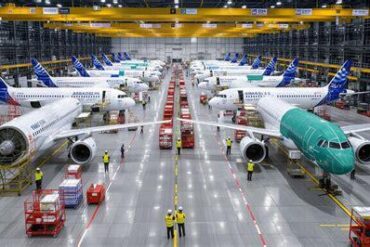
The underlying issue is industrial synchronization. Airbus must align fuselage production, wing assembly, cabin outfitting, avionics installation, and engine delivery with near-perfect timing. Even small deviations propagate. If engines arrive weeks late, completed aircraft occupy space, capital is tied up, and subsequent production slots shift. It becomes a logistical chess game played at global scale.
The tension also reverberates beyond Airbus. Airlines planning new route launches or capacity expansions depend on predictable delivery slots. Lessors structure financing agreements around specific handover dates. Every delayed aircraft sends ripples through scheduling, crew training, and revenue planning. This is why early-year softness matters more than it appears. It is not about optics alone. It is about ecosystem stability.
Confidence Versus Capacity
Airbus has not failed in 2026. It has stumbled into the year under a spotlight of its own making. The manufacturer warned that engines would define the pace. The opening months have confirmed that reality. Now the question shifts from diagnosis to demonstration.
If engine deliveries accelerate meaningfully in the second quarter, the early deficit will fade into a footnote. If they do not, each monthly delivery update becomes a stress test. Investors will parse the narrowbody counts. Airlines will scrutinize production forecasts. Analysts will recalibrate expectations in real time.
Industrial history suggests that recovery is possible. Aerospace manufacturing has endured deeper troughs. Yet modern supply chains operate with minimal slack. Efficiency is optimized; buffers are thin. That makes resilience harder to summon on demand.
The story of Airbus in 2026 is not one of collapsing demand or vanishing ambition. It is a story of friction — mechanical, contractual, and logistical. The backlog remains vast. The market remains hungry. The production system, however, must prove it can translate aspiration into aluminum, composite, and turbine metal at a rhythm that feels boringly reliable.
For now, the numbers whisper caution. And in aviation, whispers have a way of becoming very loud if not addressed with thrust.