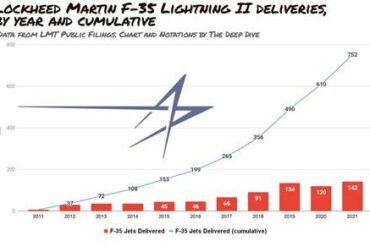
In 2025, Lockheed Martin’s F-35 Lightning II program crossed a symbolic threshold that once felt perpetually out of reach. Nearly 200 aircraft delivered in a single year signaled industrial momentum, political confidence, and a production system that finally appeared to be running at scale. For partner nations watching from Europe to the Indo-Pacific, the surge looked like proof that the world’s most ambitious combat aircraft had matured at last.
Yet production triumphs can be deceptive. Beneath the headline numbers sits a program still wrestling with availability gaps, sustainment friction, and software-driven fragility that no delivery chart can conceal. The F-35 is not failing in the traditional sense. It is flying, fighting, and reshaping allied airpower doctrine. But it is also struggling to convert its undeniable technological brilliance into consistent, repeatable combat readiness across a rapidly expanding global fleet.
The tension between industrial success and operational strain defines the F-35’s present moment. Understanding that tension requires stepping away from factory gates and into hangars, logistics hubs, and mission planning rooms where the aircraft’s real performance is measured not in units shipped, but in sorties generated.
A Record Year for Deliveries That Changed the Narrative, Not the Reality
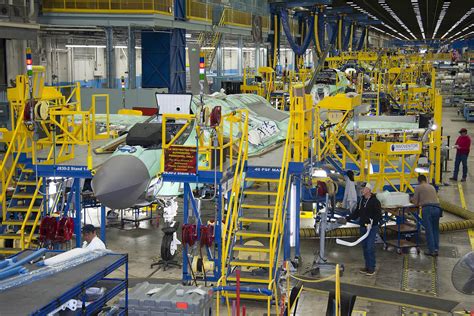
Lockheed Martin’s confirmation that 191 F-35s were delivered in 2025 marked the strongest annual output in the program’s history. After years of production slowdowns tied to Technology Refresh 3 (TR-3) certification delays and pandemic-era supply chain disruptions, the milestone was celebrated as evidence that the Lightning II had finally entered a stable manufacturing phase. Facilities in Fort Worth, Cameri, and Nagoya were operating in synchronized rhythm, feeding a global appetite for fifth-generation airpower.
Strategically, the timing mattered. Heightened tensions in Eastern Europe and the Indo-Pacific pushed governments to accelerate procurement timelines. The F-35 became more than a fighter; it became a political signal of alignment with U.S.-led security architectures. Deliveries, in this context, served both military and diplomatic purposes.
Operationally, however, the surge created a paradox. Aircraft were arriving faster than maintenance ecosystems could absorb them. Several jets entered service with acknowledged software constraints, deferred upgrades, or sustainment dependencies that limited immediate combat usefulness. In other words, the fleet expanded numerically while its effective strength lagged behind.
Why the World Keeps Buying the F-35 Despite Its Headaches
The F-35’s global appeal remains unmatched. More than a dozen countries now operate or have ordered the aircraft, making it the most widely adopted fifth-generation fighter in history. For the United States, it is the backbone of future air dominance across the Air Force, Navy, and Marine Corps, spanning all three variants. For allies, it offers something equally valuable: interoperability at scale.
European air forces such as those in the United Kingdom, Italy, Norway, and the Netherlands have embraced the F-35 as a direct replacement for aging fourth-generation fleets. In the Indo-Pacific, Japan, South Korea, and Australia see it as a hedge against rapidly modernizing regional competitors. Israel’s customized F-35I variant underscores the platform’s adaptability when national industrial capacity is strong.
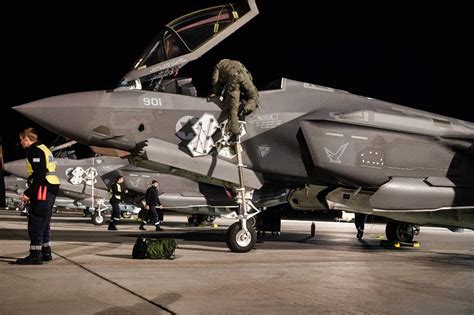
This popularity persists because, when available, the F-35 delivers extraordinary situational awareness, sensor fusion, and survivability. Pilots routinely describe its ability to see, process, and share information as transformational. The problem is not what the aircraft can do, but how often enough aircraft can do it simultaneously.
Mission-Capable Rates: The Metric That Refuses to Improve
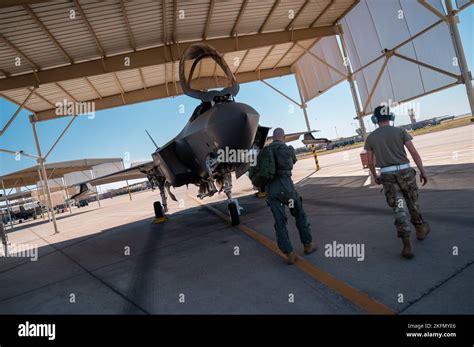
For defense planners, mission-capable rates matter more than delivery totals. Here, the F-35’s record is stubbornly disappointing. Pentagon Inspector General reports in 2025 showed that roughly half of the U.S. F-35 fleet was unable to perform assigned missions at any given time. Full mission-capable rates fell even further below Department of Defense targets.
These numbers translate directly into operational risk. When availability hovers around 50 percent, commanders must either accept reduced combat power or compensate by deploying more aircraft, more crews, and more support assets than originally planned. That workaround inflates costs and strains personnel, creating a feedback loop that further erodes readiness.
What alarms analysts most is the longevity of the problem. Similar concerns surfaced nearly a decade ago. The persistence suggests structural issues embedded in the aircraft’s sustainment model rather than temporary growing pains.
Complexity as Both Strength and Weakness
The F-35 was conceived as a flying combat system, not merely an airframe. Its eight million lines of software code integrate radar, electronic warfare, communications, and weapons into a single fused picture. This design delivers unprecedented combat awareness, but it also creates a maintenance burden unlike anything seen in previous fighter generations.
Traditional aircraft could often be fixed with mechanical intervention alone. The F-35 rarely allows such simplicity. Hardware, software, and data are intertwined, meaning a fault in one domain can ground the entire jet. Software updates require extensive testing, cybersecurity validation, and fleet-wide coordination. Each improvement risks introducing new incompatibilities.
The sustainment architecture compounds the challenge. Centralized logistics systems, originally intended to streamline global support, have struggled with transparency and responsiveness. Spare parts shortages persist, forcing operators to cannibalize grounded aircraft to keep others flying, a practice that boosts short-term availability while degrading long-term health.
Global Operators, Shared Friction
As more nations field the F-35, sustainment problems propagate internationally. A part shortage or software delay rarely affects a single operator in isolation. Smaller air forces feel the pressure most acutely. Limited budgets collide with high sustainment costs, forcing difficult tradeoffs between training hours, deployment readiness, and fleet size.
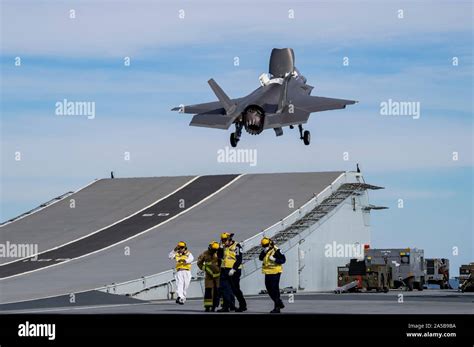
In the United Kingdom, parliamentary reviews have highlighted constraints on how many F-35Bs can deploy simultaneously from carriers. In Europe, air forces balancing modernization with fiscal restraint face similar bottlenecks. Even Japan, with substantial industrial capacity, relies heavily on U.S. supply chains to maintain acceptable availability.
Israel’s experience offers a partial counterexample. By investing aggressively in local maintenance expertise and integrating indigenous systems, it has achieved comparatively stronger readiness. Still, even Israel operates within the broader F-35 ecosystem, where systemic issues cannot be fully isolated.
Software Delays and the TR-3 Shadow
The resolution of the TR-3 configuration backlog unlocked the 2025 delivery surge, but it did not eliminate software as a limiting factor. Some aircraft continue to operate with restricted capabilities while awaiting future upgrades. Training pipelines must adapt continuously, as pilots and maintainers learn systems that are still evolving.
This perpetual upgrade cycle blurs the line between operational aircraft and development platforms. While such evolution is inherent to modern combat systems, it places heavy demands on organizations accustomed to clearer distinctions between fielded and experimental hardware.
Industrial Success Versus Operational Sustainability
From an industrial perspective, the F-35 is a triumph. Production efficiency has improved, unit costs have declined, and global demand remains strong. From an operational perspective, the picture is more ambivalent. Buying aircraft has proven far easier than sustaining them at scale.
Improving readiness will require more than incremental fixes. It demands sustained investment in logistics reform, decentralized maintenance capacity, and software stability. Governments must accept that fifth-generation airpower carries fifth-generation sustainment costs, both financial and organizational.
A Program Still Ascending, Not Yet Settled
The F-35 is neither a failure nor a finished success. It is a program still finding equilibrium between technological ambition and practical usability. Record deliveries confirm its central role in allied airpower for decades to come. Persistent shortfalls remind operators that complexity has consequences.
History is unlikely to judge the Lightning II solely by how many aircraft rolled off assembly lines. Its legacy will hinge on whether those aircraft can be kept reliably ready, in sufficient numbers, when crises demand more than promises and production records.