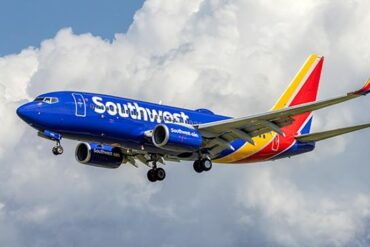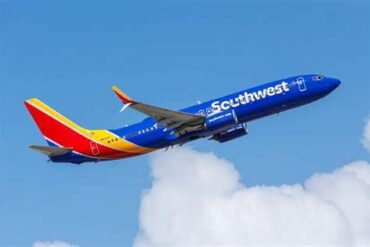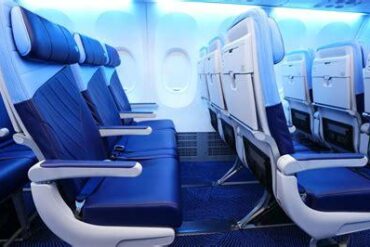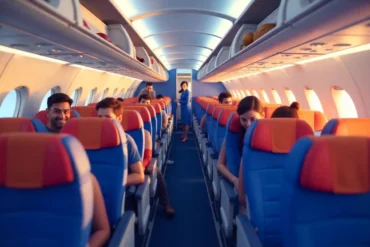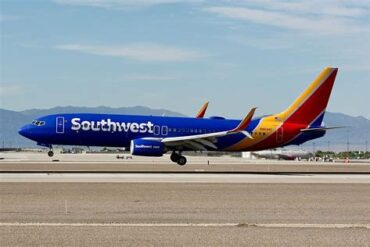
For more than half a century, Southwest Airlines built its identity on something deceptively simple: speed. Not speed in the air—every airline flies at roughly the same cruising pace—but speed on the ground, where minutes determine margins. Its now-fading open seating model was never a quirky passenger perk. It was a mathematical engine, carefully tuned to extract maximum productivity from a fleet of more than 800 Boeing 737 aircraft.
Now that system is being dismantled. Assigned seating, premium rows, and a more complex boarding structure are replacing a process that once flowed almost organically. The shift looks cosmetic from the outside, but underneath lies a dense web of operational math—one that could either unlock new revenue streams or quietly erode one of the most efficient airline models ever built.
The Hidden Equation That Powered Southwest’s Rise
Southwest’s original boarding model functioned like a finely tuned algorithm. Every design choice—from open seating to minimal fare classes—was built to reduce “ground time,” the period when aircraft generate zero revenue.
Aircraft economics are brutally simple: planes make money only when they fly. Every extra minute at the gate is a minute of lost earning potential. Southwest turned this constraint into a competitive advantage by designing a system where passengers effectively self-organized.
Instead of waiting for assigned rows to fill in sequence, travelers boarded in groups and dispersed themselves across the cabin. The result was a fluid, decentralized movement pattern that minimized bottlenecks.
This model worked even better because of Southwest’s operational consistency. Flying an all-737 fleet meant standardized boarding layouts, predictable passenger flow, and fewer variables to manage. Pilots, crews, and ground teams operated within a tightly controlled system where repetition bred efficiency.
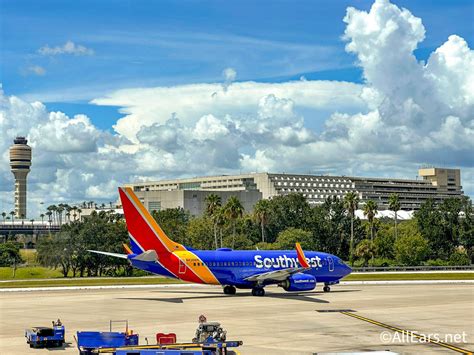
By the mid-2020s, this system allowed Southwest aircraft to achieve turnaround times as low as 25 minutes—an industry benchmark that competitors struggled to match. Multiply that across five to seven daily flight segments per aircraft, and the math becomes staggering.
Assigned Seating: A Behavioral Shift With Operational Consequences
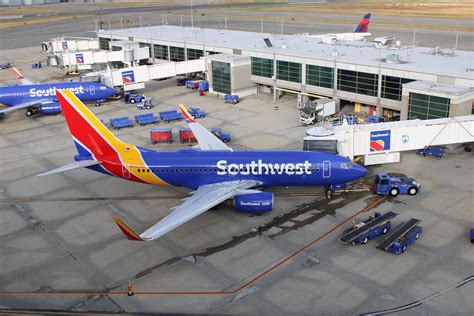
Assigned seating doesn’t just change where passengers sit—it fundamentally alters how they move.
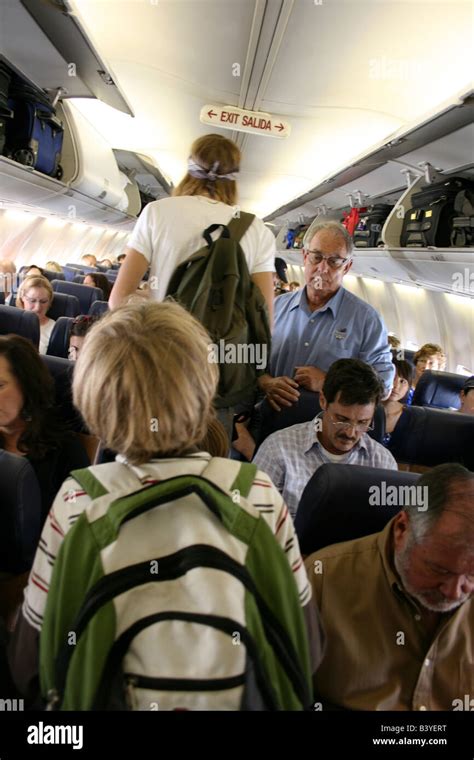
Under the old model, passengers behaved like particles in a fluid system, constantly adjusting and flowing around each other. With assigned seating, that fluidity disappears. Movement becomes linear, rigid, and interruption-prone.
Passengers now:
- Stop at specific rows instead of dispersing naturally
- Block aisles while confirming seat numbers
- Compete for overhead bin space near assigned seats
- Move backward when bins fill up
These behaviors introduce friction at every stage of boarding.
The most critical constraint is no longer seat availability—it’s overhead bin space. Modern travelers increasingly avoid checked baggage, turning cabin storage into a scarce resource. Once nearby bins fill, passengers reverse direction, creating counterflows that disrupt the entire boarding stream.
This isn’t just inconvenient—it’s mathematically inefficient. Each interruption compounds across dozens of passengers, turning seconds into minutes.
Flight attendants also become more involved, assisting with seating disputes, baggage placement, and confusion over row numbers. The cabin transforms from a self-regulating system into one that requires active management.
The Multiplication Effect: When Minutes Become Aircraft Days
The real story isn’t what happens on a single flight—it’s what happens across an entire network.
Consider a conservative scenario. If assigned seating adds just five minutes to each turnaround:
- 800 aircraft
- 5 flights per day per aircraft
- 5 extra minutes per flight
That results in 20,000 additional minutes of ground time daily.
Converted into operational terms, that equals:
- 333 lost aircraft hours per day
- Nearly 14 full aircraft days of productivity removed every 24 hours
Even a three-minute delay produces a massive impact—around 200 lost aircraft hours daily.
This is where the math becomes unforgiving. Airlines operate on thin margins, and efficiency gains are often measured in seconds, not minutes. A system-wide increase of even a few minutes per turn represents a structural shift in productivity.
Over a year, those lost hours compound into tens of thousands of idle aircraft hours—time that could have been used to generate revenue.
Network Fragility: The Domino Effect of Small Delays
Airline networks are not static systems—they are dynamic chains of interdependent events.
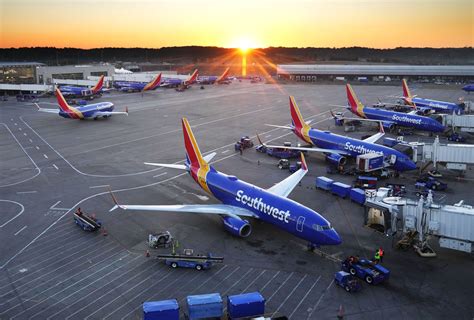
Southwest’s model is particularly sensitive because it relies on continuous aircraft rotation. A single aircraft may operate six or seven flights across multiple cities in one day, with minimal buffer time between segments.
When boarding slows down, the effects ripple outward:
- A delayed departure pushes back the next arrival
- Gate availability becomes constrained
- Crew schedules begin to tighten
- Passenger connections become riskier
Unlike hub-and-spoke airlines, which can absorb delays through centralized scheduling buffers, Southwest’s point-to-point network offers fewer opportunities to recover lost time.
What begins as a five-minute delay in one city can cascade into system-wide disruptions by evening. Aircraft end up out of position, crews approach duty limits, and airports experience congestion during peak hours.
This fragility becomes especially dangerous during irregular operations—weather disruptions, air traffic control delays, or mechanical issues. In those scenarios, every minute of lost flexibility reduces the airline’s ability to stabilize its network.
Engineering a Solution: Bigger Bins and Structured Boarding
Southwest isn’t ignoring the problem. The airline is investing heavily to counteract the inefficiencies introduced by assigned seating.
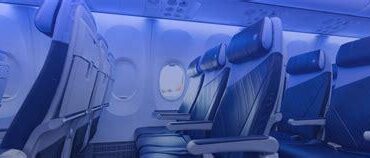
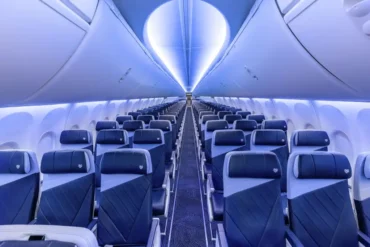
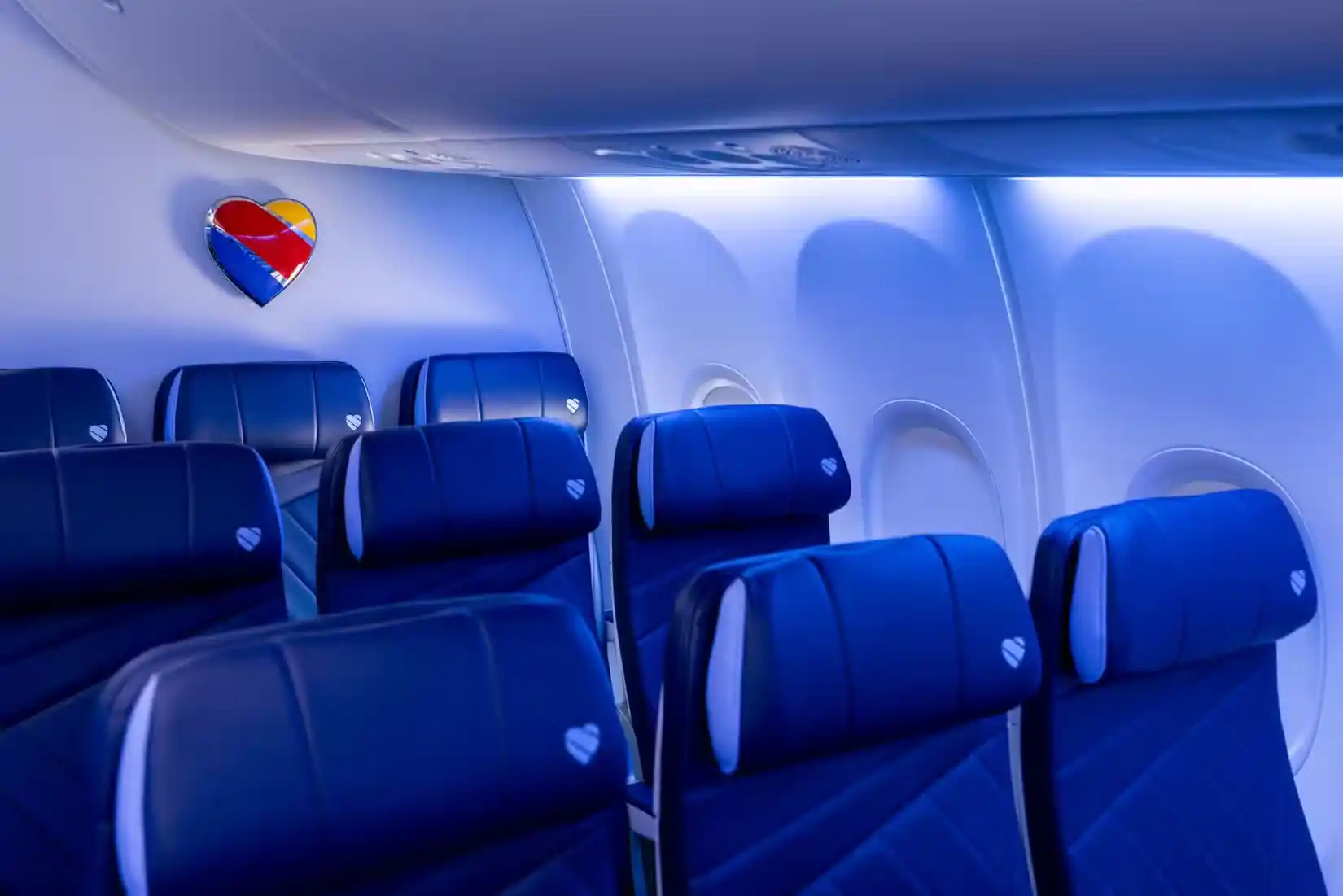
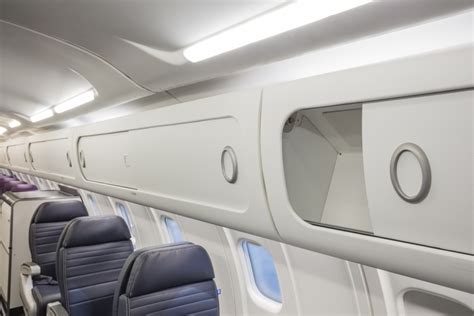
One of the most significant upgrades is the installation of larger overhead bins across roughly 70% of its fleet. These bins can hold up to 50% more carry-on luggage, directly targeting one of the biggest sources of boarding delays.
This isn’t about passenger comfort—it’s about restoring flow. By increasing storage capacity, Southwest aims to reduce the number of passengers who need to search for space away from their assigned seats.
The airline is also redesigning its boarding process, expanding from the traditional A/B/C grouping to an eight-group system. The goal is to distribute passengers more evenly throughout the cabin, minimizing clustering in specific zones.
However, these solutions introduce their own complexity. More boarding groups mean more coordination, more announcements, and more opportunities for confusion.
The system is becoming more structured—but also more rigid.
The Revenue Equation: Why Southwest Is Taking the Risk
This shift isn’t happening in a vacuum. It’s driven by a fundamental change in airline economics.
For decades, Southwest prioritized simplicity over ancillary revenue. It avoided seat assignment fees, premium seating tiers, and complex fare segmentation. That strategy worked when cost efficiency alone could sustain profitability.
But the industry has evolved.
Legacy carriers generate billions from:
- Preferred seat fees
- Extra-legroom upgrades
- Fare class segmentation
By maintaining an open seating model, Southwest effectively left that revenue on the table.
Assigned seating unlocks these opportunities. The airline can now monetize:
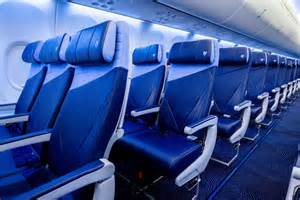
- Front-of-cabin seats with faster boarding and deplaning
- Extra-legroom rows for higher-paying passengers
- Tiered fare products with differentiated benefits
This shift aligns Southwest more closely with competitors—but it comes at a cost.
The airline is trading operational simplicity for revenue complexity.
The Core Trade-Off: Utilization vs Monetization
At the heart of this transition lies a delicate balance.
Southwest’s historical model relied on maximizing aircraft utilization. By keeping planes in the air longer each day, the airline generated more revenue without increasing fleet size.
Assigned seating challenges that model. If boarding slows down, aircraft spend more time on the ground, reducing daily utilization.
The critical question becomes:
Can additional revenue from seat monetization outweigh the loss of operational efficiency?
This is not a theoretical debate—it’s a measurable equation.
On one side:
- Increased ancillary revenue per passenger
- Higher yield from premium seating
- Greater pricing flexibility
On the other:
- Longer turnaround times
- Reduced aircraft productivity
- Increased risk of delays
If the revenue gains exceed the efficiency losses, the strategy succeeds. If not, Southwest risks undermining the very system that made it successful.
A System Under Stress: Early Signs From the Field
Initial passenger feedback suggests the transition is far from seamless.
Reports describe:
- Congested aisles during boarding
- Passengers struggling to find bin space
- Increased boarding times on full flights
These observations align with the underlying math. When passenger movement becomes constrained, inefficiencies naturally emerge.
What’s less visible—but more important—is how these micro-delays accumulate across the network.
A few extra minutes here and there may seem insignificant, but across thousands of daily flights, they form a pattern. And patterns, in aviation, translate directly into financial performance.
The Strategic Gamble That Could Redefine Southwest
Southwest Airlines is not simply changing how passengers board. It is recalibrating a system that has been optimized for decades.
This is a rare move in aviation—an industry where operational models are notoriously resistant to change. Once a system proves efficient, airlines tend to refine it incrementally rather than replace it outright.
Yet Southwest is doing exactly that.
The airline is betting that:
- Passengers will accept a more structured boarding experience
- Operational inefficiencies can be mitigated through engineering and process changes
- New revenue streams will outweigh any loss in productivity
It’s a high-stakes calculation.
Because if the math doesn’t balance, the consequences won’t be immediate—but they will be cumulative.
Minutes will turn into hours. Hours into days. And days into a measurable shift in profitability.
Conclusion: When Efficiency Meets Evolution
Southwest Airlines built its reputation on a simple principle: keep airplanes moving. That principle was supported by a boarding system that minimized friction and maximized flow.
Assigned seating disrupts that equilibrium.
The shift introduces complexity into a system that once thrived on simplicity. It changes passenger behavior, slows boarding dynamics, and creates new operational challenges.
But it also opens the door to higher revenue potential.
This is the essence of the gamble: a trade-off between time and money, between efficiency and monetization, between legacy identity and future competitiveness.
The outcome will not be determined by passenger perception alone. It will be decided by the numbers—quietly accumulating across thousands of daily flights.
And in those numbers lies the true story of Southwest’s transformation.