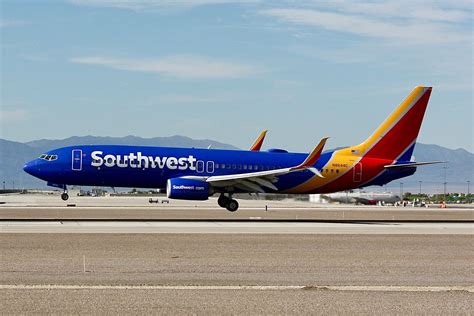
Southwest Airlines has claimed the No. 1 position among U.S. carriers in the latest Wall Street Journal airline rankings, a notable achievement that arrives just as the airline prepares to roll out one of the most consequential changes in its history: assigned seating. For decades, Southwest’s open-seating policy has been as recognizable as its blue-and-red livery. That legacy is now being reshaped, yet the airline’s operational performance has propelled it to the top of the industry at a moment of transition rather than stability.
The ranking places Southwest ahead of eight other major U.S. airlines, including Allegiant Air and Delta Air Lines, the latter having dominated the list for four consecutive years. The timing is striking. Southwest is simultaneously adjusting its product, revisiting long-held customer promises, and seeking to extract more productivity from its fleet, all while outperforming competitors on the metrics that most directly affect travelers’ real-world experiences.
How the Wall Street Journal Determined the Best U.S. Airline
The Wall Street Journal evaluated the nine largest U.S. commercial airlines across seven performance categories, using data collected between June 2024 and December 2025. These categories focused on reliability and customer impact rather than brand perception, with scores assigned for on-time performance, cancellation rates, severe delays exceeding 45 minutes, tarmac delays over two hours, mishandled baggage, involuntary denied boarding, and customer complaints submitted to regulators.
Southwest emerged with the lowest overall point total, meaning fewer operational failures and fewer customer-facing disruptions than any rival. The airline ranked first for avoiding tarmac delays and for recording the fewest customer submissions, while also placing second in on-time performance, cancellation avoidance, and limiting extreme delays. In an industry where small percentage differences can translate into millions of affected passengers, Southwest’s consistency across categories proved decisive.
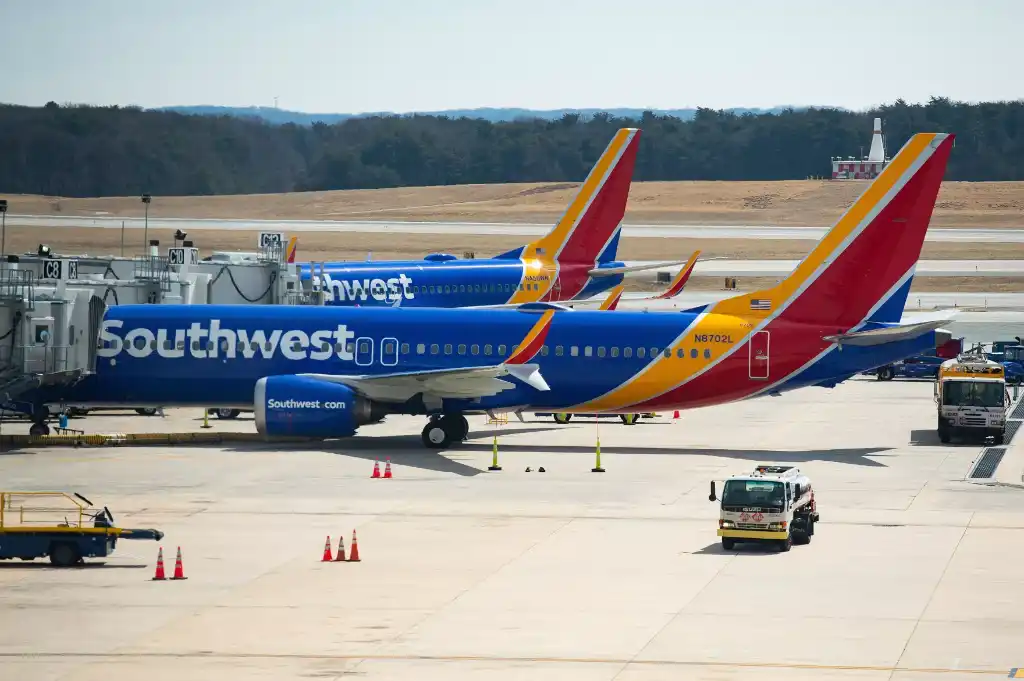
Operational Reliability as a Competitive Weapon
Reliability has long been Southwest’s quiet advantage, and this year’s ranking reinforces that reputation. The airline posted a cancellation rate of just 0.84%, one of the lowest in the country, surpassed only by Allegiant Air. While ultra-low-cost carriers often trim schedules aggressively to protect performance metrics, Southwest has achieved comparable reliability while operating one of the largest domestic route networks in the United States.
Andrew Watterson, Chief Operating Officer at Southwest Airlines, credited the ranking to relentless operational focus, describing reliability as “hard to copy.” That statement resonates in an era when weather disruptions, air traffic control staffing constraints, and aircraft delivery delays have strained airline schedules nationwide. Southwest’s ability to buffer those pressures without cascading failures has become a defining strength.
Leadership and Workforce Behind the Ranking
President and Chief Executive Officer Bob Jordan framed the achievement as a reflection of Southwest’s people rather than its policies. With more than 72,000 employees across its network, the airline’s workforce remains central to its operational model. From flight crews to ground operations, Southwest’s emphasis on cross-functional efficiency has allowed it to maintain fast turn times and absorb irregular operations with less disruption than many competitors.
Jordan’s public remarks highlighted consistency and commitment, reinforcing a message that the airline’s culture, not just its cost structure, underpins its performance. In a period when labor relations have strained several U.S. carriers, Southwest’s internal cohesion appears to be translating directly into measurable results.
Assigned Seating and the End of a Defining Tradition
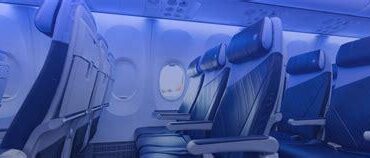
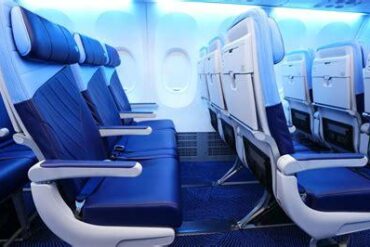
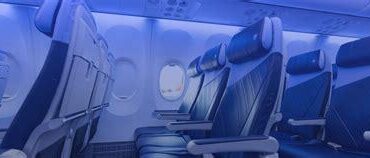
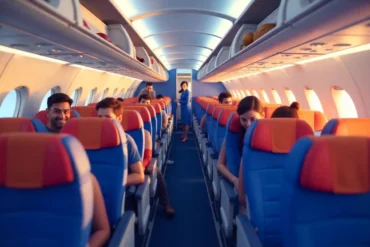
The ranking arrives just ahead of Southwest’s most controversial shift: the move away from open seating toward assigned seating. For loyal customers, the free-for-all boarding process has been both a quirk and a philosophy, rewarding punctuality and strategy. Its removal signals a broader recalibration as Southwest seeks to increase aircraft utilization, improve schedule predictability, and appeal to travelers accustomed to traditional seat assignments.
This change follows other significant adjustments, including the introduction of red-eye flights and the decision to end the long-standing “bags fly free” policy. Together, these moves reflect a carrier adapting to competitive pressures while attempting to preserve its operational edge. The Wall Street Journal ranking suggests that, at least operationally, the transition has not diluted Southwest’s core strengths.
Surpassing Delta and Reshaping the Rankings Landscape
Delta Air Lines, which finished third overall, had occupied the top spot for four consecutive years. Southwest narrowly missed first place last year, making this year’s result both a breakthrough and a symbolic shift. The final standings placed Allegiant Air second, followed by Delta, Alaska Airlines, Spirit Airlines, United Airlines, JetBlue, and a tie between American Airlines and Frontier Airlines.
What distinguishes Southwest’s victory is not dominance in every category but balanced excellence across all of them. In an industry where specialization often comes at the expense of consistency, Southwest’s broad-based performance has allowed it to outpace both legacy and ultra-low-cost rivals.
A Scale Few Airlines Can Match
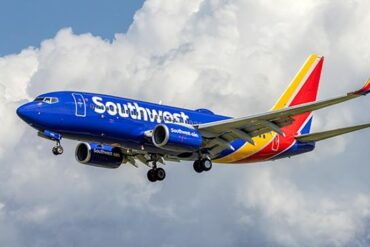
Southwest operates the world’s largest all-Boeing 737 fleet, flying to 117 airports across 11 countries and offering more nonstop routes within the United States than any other airline. In 2024 alone, the carrier transported over 140 million passengers, underscoring the scale at which its operational decisions ripple through the aviation system.
Founded in 1967 and launching service in 1971, Southwest has grown from a Texas intrastate airline into a national powerhouse with major operating bases in cities including Dallas–Love Field, Denver, Las Vegas, Phoenix, and Chicago–Midway, with Austin set to join the list in 2026. That expansion has been guided by a point-to-point network strategy that continues to differentiate it from hub-and-spoke competitors.
What the Ranking Signals for Southwest’s Future
Being named the best U.S. airline at a moment of cultural and operational change gives Southwest strategic breathing room. The ranking validates its execution while the airline redefines parts of its identity. Assigned seating may alter the customer experience, but the data-driven assessment from the Wall Street Journal suggests that reliability, efficiency, and workforce alignment remain firmly intact.
For Southwest, the message is clear: transformation does not have to come at the expense of performance. In fact, this year’s results imply that disciplined change, when anchored in operational fundamentals, can coincide with industry-leading outcomes.