Boeing’s annual aircraft delivery numbers have become a kind of aviation weather vane. When deliveries rise, the commercial aerospace climate feels calmer. When they fall, turbulence is usually close behind. Over the past decade, and especially since 2019, Boeing’s delivery figures have reflected a company wrestling with certification delays, quality control resets, supply-chain fragility, and an unforgiving regulatory environment. Yet by 2025, a clearer picture began to emerge: Boeing is not sprinting, but it is moving forward again.
Understanding how many new aircraft Boeing delivers annually requires more than a single headline number. It demands context—product mix, regulatory caps, factory throughput, and the difference between what Boeing can build and what it is allowed to deliver. The story is one of gradual recovery rather than sudden resurgence, shaped by lessons learned the hard way.
In 2025, Boeing delivered approximately 600 commercial aircraft, its strongest performance since 2018. That figure alone signals a meaningful turnaround, especially compared to the 348 aircraft delivered in 2024. Still, it remains well below the levels Boeing once considered routine, underscoring how profoundly the last half-decade reshaped the manufacturer’s operating reality.
Boeing’s Current Aircraft Portfolio and Why It Matters for Deliveries
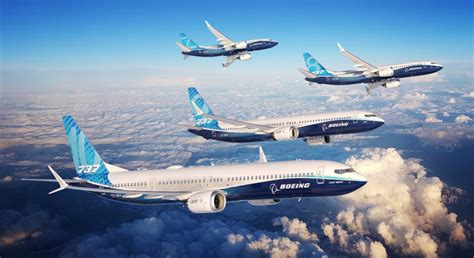
Boeing’s annual delivery total is inseparable from its current product lineup. Unlike Airbus, which leans heavily on a single narrowbody family, Boeing’s output is spread across several programs, each with its own constraints.
The Boeing 737 family, sold today exclusively as the 737 MAX, is the backbone of Boeing’s delivery volume. Four variants exist on paper—MAX 7, MAX 8, MAX 9, and MAX 10—but in practice, only the MAX 8 and MAX 9 are being delivered. Certification delays for the MAX 7 and MAX 10 continue to suppress potential output, leaving Boeing dependent on a narrower slice of its own catalog.
Beyond the 737, Boeing’s widebody lineup includes the 787 Dreamliner, the 777 freighter and 777X, and the 767, now largely confined to freighter and military roles. Each program contributes differently to annual delivery totals, not only because of demand, but because widebodies take longer to build, certify, and deliver.
This mix explains why Boeing’s recovery looks incremental. Narrowbodies drive volume, widebodies drive value, and both are constrained by different bottlenecks.
Annual 737 MAX Deliveries: The Engine of Boeing’s Volume
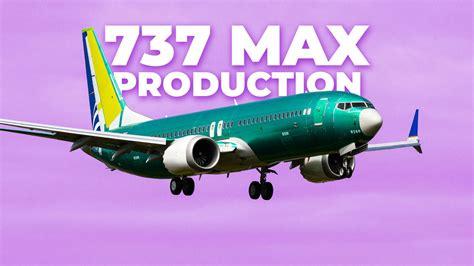
No aircraft influences Boeing’s annual delivery figures more than the 737 MAX. Before its 2019 grounding, the 737 routinely delivered well over 500 aircraft per year. The grounding, followed by the pandemic and later quality-related production caps, shattered that rhythm.
By 2025, Boeing delivered around 440 new 737 MAX aircraft, almost entirely MAX 8s and MAX 9s. This marked a substantial improvement over previous years but still reflected limits imposed by regulators. The FAA production cap, originally set at 38 aircraft per month, was cautiously raised to 42 per month in late 2025, giving Boeing room to grow but not to surge.
What makes this figure significant is not just the number itself, but the direction of travel. Boeing expects to deliver more than 500 737 MAX aircraft in 2026, assuming planned rate increases hold and supplier stability improves. Long term, Boeing aims to exceed 600 737 MAX deliveries annually, a level that would once again make the aircraft the dominant contributor to Boeing’s total output.
The irony is hard to miss. Demand for the 737 MAX remains strong, especially as Airbus’s A320neo family is sold out for years. Boeing’s constraint is not market appetite, but execution.
The 787 Dreamliner: Widebody Deliveries Regaining Altitude
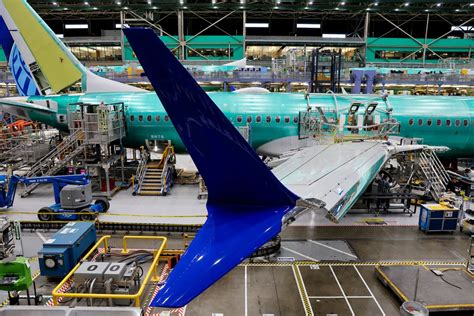
If the 737 MAX is Boeing’s volume engine, the 787 Dreamliner is its emotional barometer. The program endured repeated production halts earlier in the decade, driven by quality inspections that forced Boeing to re-examine finished aircraft down to microscopic tolerances. For a time, deliveries slowed to a trickle.
In 2025, the narrative shifted. Boeing delivered 88 787s, making it one of the program’s strongest post-pandemic years. Production stabilized at roughly eight aircraft per month by year’s end, a notable improvement from the four to five per month seen earlier.
The strategic move to consolidate 787 assembly in North Charleston, South Carolina, is now paying dividends. Boeing plans to open a second final assembly line in 2026, targeting ten Dreamliners per month initially, with long-term capacity rising to 14–16 per month. At those rates, Boeing could eventually deliver between 168 and 192 787s annually, matching or exceeding pre-2020 performance.
For annual delivery totals, this matters enormously. Widebodies do not inflate numbers as quickly as narrowbodies, but they stabilize revenue and restore confidence in Boeing’s manufacturing discipline.
Boeing 777 and 767 Deliveries: Low Volume, High Significance
The Boeing 777 occupies an unusual place in Boeing’s delivery statistics. Passenger variants are effectively paused pending certification of the 777X, while the 777F freighter continues to sell briskly. In 2025, Boeing delivered around 35 new 777Fs, averaging roughly three per month.
The significance lies in what comes next. Boeing has already built more than 20 customer-ready 777-9 aircraft, waiting for certification. Once the 777X is approved, expected in late 2026, deliveries could spike as Boeing clears this backlog. Initially, combined 777 production is expected to rise to four aircraft per month, adding a meaningful, if not dominant, contribution to annual totals.
The 767, meanwhile, is nearing the end of its commercial life. Boeing delivered around 30 767s in 2025, split between the 767-300F freighter and the KC-46 Pegasus military tanker. Commercial 767 production is set to end in 2027, meaning its role in future annual delivery figures will gradually fade.
Boeing’s Total Annual Aircraft Deliveries: Recent History and Near-Term Outlook
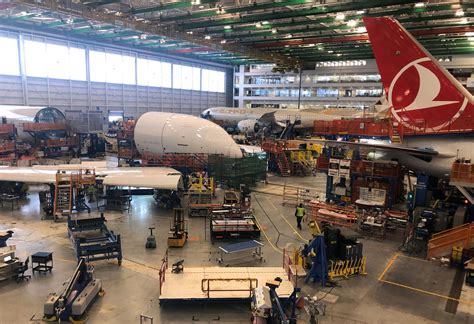
Looking at the numbers holistically clarifies Boeing’s trajectory. In 2024, deliveries stalled at 348 aircraft, reflecting ongoing production resets and regulatory scrutiny. In 2025, that number jumped to approximately 600 aircraft, a year-over-year increase that signaled regained operational control.
For 2026, projections suggest Boeing could deliver well over 650 aircraft, assuming planned production increases materialize. The breakdown is expected to be heavily skewed toward the 737 MAX, supplemented by a growing number of 787s and steady freighter output from the 777 and 767 lines.
Longer term, Boeing’s internal targets point to 800–900 aircraft annually once production systems mature and certification hurdles clear. Reaching that level would not merely be a return to form; it would represent a re-engineered Boeing, operating under tighter oversight but with greater resilience.
How Supply Chains and Quality Control Shape Delivery Numbers
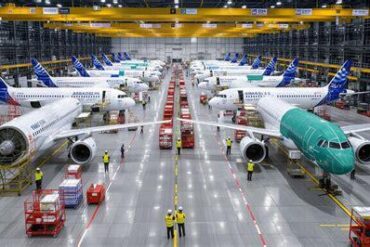
Annual delivery figures are often misread as simple production metrics. In reality, they are the final output of a complex ecosystem. In 2025, Boeing, like the rest of the aerospace industry, faced persistent supply chain constraints, from engine components to avionics and structural parts. Lead times remain longer than they were in 2019, making schedule precision harder to achieve.
Quality control has become an equally powerful governor. Inspections now occur earlier and more frequently, reducing the risk of post-delivery issues but slowing throughput. This trade-off explains why Boeing’s recovery feels cautious rather than explosive.
From a strategic perspective, this restraint may be healthy. Annual deliveries that grow steadily are more sustainable than those driven by aggressive rate hikes that outpace oversight.
Boeing Versus Airbus: Annual Delivery Numbers in Perspective
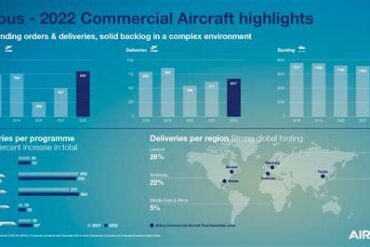
Comparing Boeing’s annual deliveries to Airbus provides essential context. In 2025, Airbus delivered 793 commercial aircraft, significantly more than Boeing’s 600. The gap is driven almost entirely by Airbus’s dominance in the narrowbody segment, where the A320neo family alone accounted for over 600 deliveries.
Airbus plans to increase A320neo production to 75 aircraft per month by 2027, enabling up to 900 narrowbody deliveries annually. Combined with A220 output, Airbus could exceed 1,000 aircraft per year, a figure Boeing is unlikely to match in the near term.
However, the comparison is not one-dimensional. Boeing’s widebody output, particularly from the 787 and future 777X, remains competitive and in some segments superior. While Airbus leads in volume, Boeing continues to hold strategic ground in long-haul and freighter markets.
What Boeing’s Annual Delivery Numbers Really Tell Us
Boeing’s annual aircraft deliveries are no longer just a scoreboard against Airbus. They are a measure of trust regained, both from regulators and customers. Each delivered aircraft represents dozens of internal sign-offs, thousands of inspected parts, and a manufacturing system slowly relearning consistency.
In 2025, delivering around 600 aircraft marked a psychological turning point. It demonstrated that Boeing can increase output without triggering new crises. The climb toward 650 in 2026, and eventually 800–900 in the future, will depend on discipline rather than speed.
In the end, the most important number is not how many aircraft Boeing wants to deliver annually, but how many it can deliver reliably. On that front, the trajectory is upward, measured, and hard-earned—an unglamorous recovery, perhaps, but a durable one.