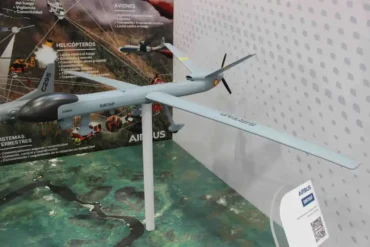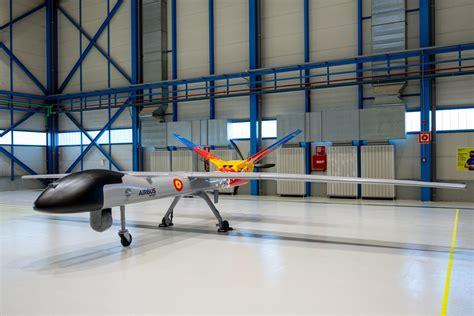
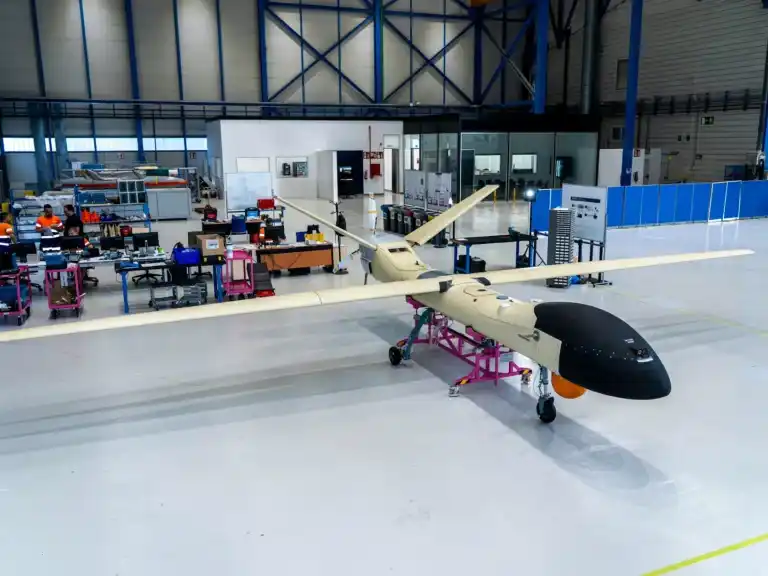
At the 2025 Paris Air Show, Airbus Defence and Space made a resounding statement with the official unveiling of its SIRTAP military drone prototype — a next-generation tactical unmanned aerial vehicle designed to set new benchmarks in surveillance, reconnaissance, and rapid-response operations. As the aerospace giant continues to evolve its military portfolio, the SIRTAP emerges as a critical step forward in European defense autonomy and global competitiveness in tactical unmanned systems.
The prototype, developed entirely in Spain, marks a significant milestone in the €495 million contract signed by the Spanish Ministry of Defence in late 2023. Comprising 27 drones and nine ground-control stations, the order also includes two high-fidelity simulators for operator training, now having cleared the Critical Design Review (CDR) stage.
SIRTAP: Tactical Precision with All-Weather Capability
The SIRTAP — short for Sistema RPAS Táctico de Altas Prestaciones — is a high-performance drone developed to excel in day/night and maritime ISR (Intelligence, Surveillance, and Reconnaissance) missions. Designed for both military and civil applications, it is capable of operating in extreme temperature ranges from -40°C to +50°C, supported by an ice protection system and a high-temperature amplitude operating envelope. This makes SIRTAP a versatile asset for deployments in Arctic, desert, and tropical zones alike.
With a ceiling exceeding 20,000 feet and an endurance of up to 20 hours, the SIRTAP is positioned in the Medium Altitude Long Endurance (MALE) segment but tailored for tactical operations. It bridges the operational gap between lightweight tactical drones and heavier strategic platforms like the Eurodrone.
Jean-Brice Dumont, Head of Air Power at Airbus Defence and Space, captured the moment succinctly at the unveiling: “It’s a beautiful beast, and we will fly the prototype by the end of this year. We have to deliver in the first half of 2027.” He emphasized the speed and efficiency of the program since the contract’s signing, stating, “It shows big companies can move fast – in three and a half years.”
Flight and Certification Roadmap: Eyes on 2026 Completion
The SIRTAP will begin ground testing in Getafe, Spain, over the coming months, focusing on structural evaluations, main systems, and software integrity checks. Its maiden flight is scheduled by the end of 2025 at the Unmanned Systems Test Centre (CEUS) operated by Spain’s National Institute of Aerospace Technology (INTA) in Huelva.
Following initial flight validations, Airbus will launch an intensive flight-test campaign throughout 2026, aiming to secure type certification by ensuring full compliance with European aerospace safety and performance standards. This phased approach ensures that all mission-critical systems are thoroughly vetted before the full-scale production and delivery phase begins.
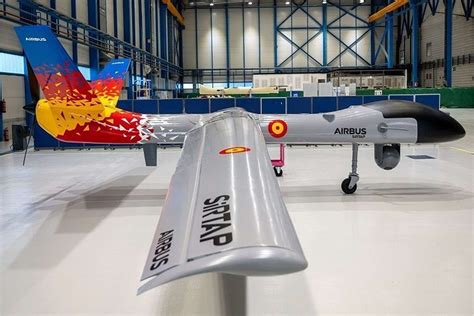
Strategic Sovereignty: A European Tactical Drone Born in Spain
One of SIRTAP’s most defining attributes is its ITAR-free architecture. Unlike many U.S.-origin platforms that are governed by the International Traffic in Arms Regulations, SIRTAP’s fully European design allows export flexibility. This opens the door for multi-national procurement and customization, including the development of potential naval variants or armed configurations depending on buyer needs.
The drone’s modular platform makes it inherently adaptable. Airbus has indicated plans to explore these alternate configurations in future iterations, positioning SIRTAP as a long-term scalable asset within both NATO and non-aligned military forces. For Spain, this autonomy translates into both strategic independence and industrial empowerment.
Advanced Capabilities for Modern Tactical Demands
SIRTAP’s role in the Spanish military will primarily center on reconnaissance and fast-reaction targeting, particularly in maritime and border-control missions. Designed to operate seamlessly in both day and night scenarios, the drone integrates high-resolution EO/IR sensors, a secure data link, and advanced onboard processing capabilities for near real-time intelligence.
The drone is optimized for:
- Persistent surveillance over hostile or remote regions
- Rapid deployment for target confirmation
- Support for maritime patrol and search-and-rescue (SAR) missions
- Tactical communications relay
The use of advanced synthetic aperture radar (SAR) and signal intelligence (SIGINT) payloads is also being explored, adding depth to the platform’s mission versatility. Additionally, SIRTAP’s stealth-optimized fuselage and low-acoustic signature enable it to conduct ISR operations with minimal detectability.
Spain’s Expanding Role in the Global Drone Ecosystem
The unveiling of SIRTAP at Paris not only affirms Airbus’s engineering excellence but also cements Spain’s rising influence in the global unmanned systems arena. By developing the platform in-country, Airbus is supporting local supply chains, job creation, and technology transfer while reducing reliance on non-EU defense equipment.
The collaboration between the Spanish Ministry of Defence, Airbus, and INTA represents a synergistic model of public-private defense innovation. Moreover, the integration of training simulators into the procurement package reflects a holistic approach to operational readiness — preparing drone pilots well ahead of SIRTAP’s 2027 deployment timeline.
Market Outlook: Europe’s Tactical Drone Race Heats Up
The SIRTAP enters a competitive but underserved segment in the European UAV market. While France’s Patroller and Germany’s Heron TP fill specific national roles, there is growing demand for interoperable tactical drones that can be exported widely without geopolitical red tape. SIRTAP’s ITAR-free advantage and flexible configuration options give it a unique selling point.
Airbus is expected to pitch SIRTAP to countries seeking a mid-tier ISR platform that balances cost, capability, and compliance freedom. Nations with maritime surveillance needs, irregular warfare environments, or constrained budgets could find the SIRTAP particularly appealing. Its 20-hour endurance and low logistical footprint make it suitable for operations from austere environments or forward-operating bases.
Conclusion: A Turning Point for Tactical UAV Innovation
With the successful rollout of its first SIRTAP prototype, Airbus has made clear its ambition to reshape the tactical drone market in Europe and beyond. Backed by state funding, industrial know-how, and rapid development cycles, the program stands as a bold testament to what is possible when strategic urgency meets technical excellence.
As ground testing proceeds and flight validation approaches, all eyes are now on CEUS in Huelva, where SIRTAP’s capabilities will be proven in real-time. Should the timeline hold, the Spanish Armed Forces will field one of the continent’s most advanced tactical drone systems by early 2027 — a system proudly designed, tested, and produced on European soil.
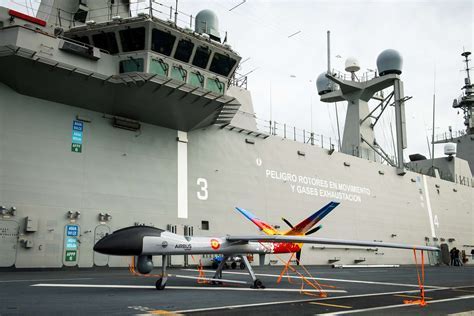
More than just a drone, the SIRTAP represents sovereignty, innovation, and operational advantage — elements that are increasingly non-negotiable in a rapidly evolving global security landscape.