LIFT Academy’s 39% success rate has sparked widespread debate among aspiring pilots, industry insiders, and aviation enthusiasts alike. To truly understand the factors behind this figure, it is essential to explore the intricate mechanisms that define the academy’s training philosophy, operational practices, and placement strategies. Rather than a simple metric of failure or success, this percentage reveals a complex, high-pressure system designed to sift the most capable candidates into Republic Airways’ hiring pipeline.
The Intense Structure Behind the Numbers
Operating under the rigorous guidelines of the Accrediting Commission of Career Schools and Colleges (ACCSC), LIFT Academy’s 18-month Career Pathways program reported its 39% graduation rate based on 82 enrolled students between January 1 and December 31, 2020. While at first glance this number may appear troubling, the context suggests a deliberate strategy: fast-tracking only the most capable students for airline careers while minimizing investment in candidates unlikely to meet the airline’s high standards.
Students are subjected to continuous performance evaluations, with expectations set against strict timelines and milestones. A student falling behind on checkrides, or failing to meet pace benchmarks, faces expulsion. Such an approach aligns closely with Republic Airways’ broader business model: weeding out underperformance early to maintain a pipeline of flight-ready first officers without incurring extended training costs.
Student Experience: High Pressure and High Expectations
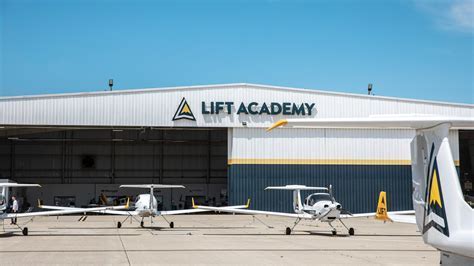
A significant number of criticisms from LIFT Academy students and alumni highlight a culture of intense pressure and limited support. Several common themes emerge across multiple forums:
- Pushing students to progress before they feel ready, often at the cost of true proficiency.
- Disorganization within the academy’s scheduling, maintenance, and administrative systems, leading to confusion and frustration.
- Poor maintenance of aircraft raising concerns about operational safety.
- Harsh policies surrounding checkride failures, with students often dismissed after two unsuccessful attempts.
These realities paint a picture of a school operating with the rigor—and sometimes the ruthlessness—of an airline rather than a traditional flight school. Students not only face the challenge of mastering technical skills but must also rapidly adapt to the operational tempo demanded by regional carriers.
The Republic Airways Connection: A Pipeline with Strings Attached
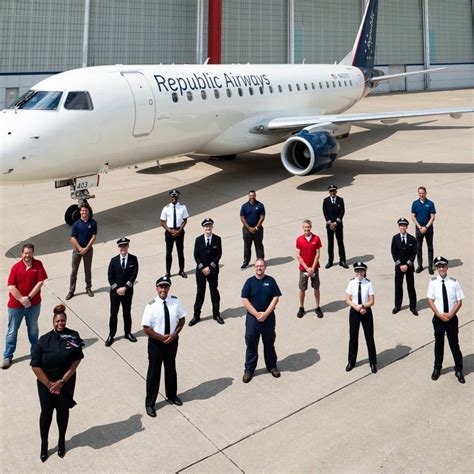
LIFT Academy’s ultimate purpose extends beyond merely training pilots; it serves as a strategic feeder for Republic Airways. The academy’s curriculum, assessment benchmarks, and even its disciplinary policies align tightly with the airline’s needs.
- Students who successfully graduate typically secure a First Officer position, often with Cape Air, gaining essential Part 135 experience before advancing to Republic.
- Those employed by Republic prior to enrolling at LIFT—such as former flight attendants receiving tuition discounts—face an accelerated, and equally unforgiving, progression.
This business model demands a high attrition rate. From Republic’s perspective, a 39% pass-through rate is not a sign of failure but evidence of rigorous selection, ensuring only those truly capable of handling airline operations proceed.
Post-Graduation Realities: Employment Outcomes and Compensation
While LIFT Academy proudly boasts a 100% placement rate, the nature of these placements deserves scrutiny. Most graduates find themselves flying for Cape Air in remote areas, earning approximately $17.50 per hour based on duty time rather than flight time. For many, this role serves as a stepping stone, but the financial reality can be harsh.
Aspiring pilots often grapple with substantial student debt accumulated during training, making low initial wages a formidable barrier. Despite the hardships, securing a paid flying job immediately after training remains a notable achievement, given the highly competitive nature of entry-level aviation employment.
The Selection Filter Perspective: A Different Interpretation
When viewed through the lens of selection and filtration, LIFT Academy’s 39% graduation rate represents a calculated outcome rather than a systemic failure. In fact, when compared to broader aviation training statistics, LIFT’s results are relatively favorable:
- General Private Pilot License (PPL) programs often experience dropout rates as high as 80%, driven by a combination of financial, academic, and personal factors.
- LIFT’s integrated model, though harsh, maintains a stronger retention rate relative to the industry’s PPL standard.
The academy’s approach reflects a strategic commitment to grooming only the most adaptable candidates. Those who cannot handle the pace, pressure, or expectations are cut loose early—a methodology that mirrors military pilot training pipelines rather than civilian flight schools.

Operational Complaints and Broader Safety Concerns
Despite its strategic merits, LIFT Academy faces credible criticisms regarding its operational standards and safety culture. Students and local pilots have reported:
- Disruptive traffic patterns and runway use violations at nearby airports such as KGGE.
- Poorly maintained aircraft leading to safety hazards.
- An atmosphere where haste compromises not only education but also risk management protocols.
Compounding these concerns, reports surfaced of a pending lawsuit involving the academy, further fueling anxiety about its operational integrity. Such issues raise critical questions about the long-term viability of LIFT’s training practices if quality and safety are sacrificed for expediency.
The Broader Aviation Industry Context
To fully grasp LIFT Academy’s model, one must also consider the broader realities of pilot training in the United States. The path to a professional pilot career is inherently fraught with high costs, academic rigor, and physical demands. Many aspirants simply cannot overcome the financial or personal hurdles, even under the best of circumstances.
Moreover, the airline industry’s insatiable demand for pilots—driven by retirements, expansions, and post-pandemic recovery—forces carriers to innovate aggressively in their recruitment and training strategies. LIFT Academy represents one such innovation: a low-cost, high-throughput pilot production facility with brutal efficiency baked into its DNA.
Conclusion: High Stakes, High Rewards—But Not for Everyone
The 39% success rate at LIFT Academy is neither an indictment nor an accolade on its own. Rather, it is a reflection of a high-stakes training environment that unapologetically prioritizes speed, efficiency, and end-product quality over student retention or satisfaction.
For those who succeed, LIFT offers a rare opportunity: a fast track into an airline cockpit without the traditional barriers of independent flight training, networking, and luck. For the majority who fall short, however, the experience can be both financially and emotionally devastating.
Understanding these dynamics is crucial for any prospective student considering enrollment. LIFT Academy is not merely a flight school—it is a crucible, and only those who can withstand the intense heat emerge with wings strong enough to soar into the professional ranks.