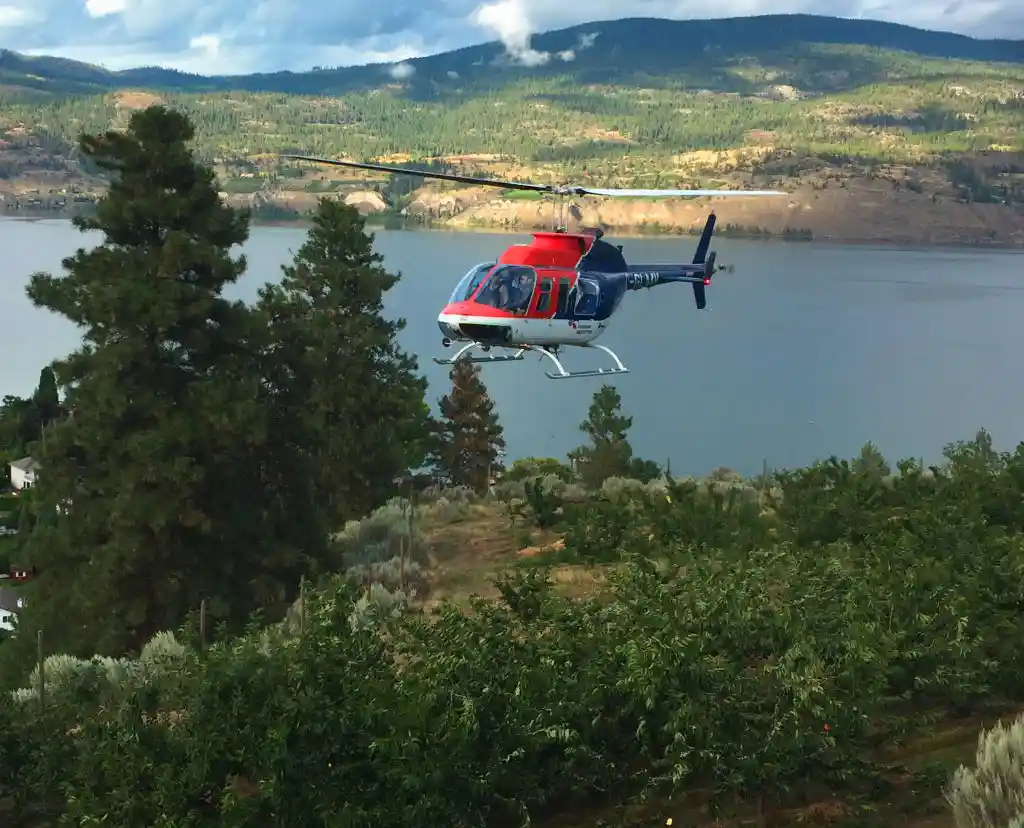
Cherry orchards across the Okanogan Valley of Washington rely on an unusual yet critical aerial operation: drying delicate cherries after rainfall using helicopters. As we delve into the unique experience of a pilot trained by both the FAA and the U.S. Army, flying a Korean War–era helicopter, we uncover a world where aviation meets agriculture in an intense, precision-demanding dance above the treetops.
The pilot’s background includes flying diverse aircraft such as the Robinson R-22, Bell 206, and even the formidable UH-60 Black Hawk. Today, however, their mission focuses on safeguarding harvests by flying a 1950s-vintage helicopter with manual twist-grip throttle and 1950s hydraulic controls. In this setting, modern automation is absent—there’s no Stability Augmentation System (SAS) or automatic RPM governor. Every input is deliberate, every correction manual, and every second of flight demands unwavering attention.
The Precision of Cherry Drying Operations
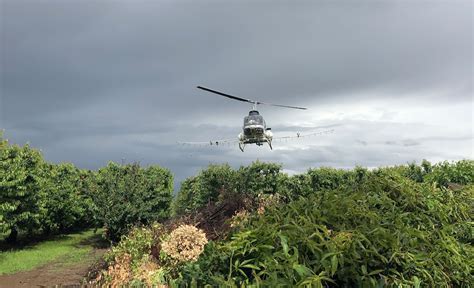
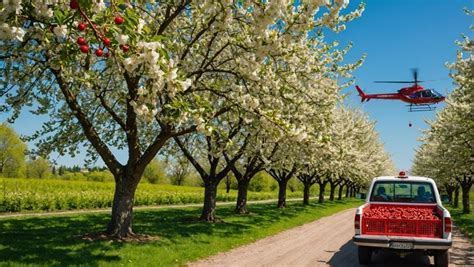
When rain threatens a cherry crop, time becomes the farmer’s fiercest enemy. The helicopter pilot must act swiftly, hovering 10 to 30 feet above the canopy, systematically moving across orchard rows much like mowing a vast aerial lawn. Each block requires one to three hours of continuous passes, the rotor’s powerful downwash displacing water droplets from fragile fruit skins to prevent splitting and rot.
Operating without modern flight aids transforms each mission into a high-workload balancing act. The pilot manages RPM manually, constantly adjusting the throttle while aligning perfectly over narrow orchard lanes. Deviations by mere feet could reduce drying efficiency or risk contact with treetops, utility poles, or irrigation equipment. Adding to the challenge, the aircraft operates deep within the avoid zone of the Height-Velocity Diagram, a precarious flight envelope where autorotation becomes impossible. Should an engine failure occur at such low altitudes, the outcome is not a textbook emergency landing, but a far slower, impact-laden descent.
Safety, Control, and Constant Vigilance
Maintaining low, deliberate airspeeds maximizes downwash effectiveness but amplifies danger. Each pass skirts obstacles—power lines, fence posts, terrain undulations—that demand moment-to-moment corrections. Wind shifts or rotor downwash can suddenly destabilize the helicopter’s alignment, pulling the aircraft off-course in mere seconds. There is no autopilot, no safety net. A hands-off moment is not a break but an invitation for disaster.
The workday rhythm unfolds as dictated by weather. If rain stops at night, flights commence at dawn to stave off mold and splitting. Every sortie operates under a race-against-time mentality, knowing that moisture trapped on cherries for mere hours could degrade a crop’s value. Surprisingly, while tasked with protecting cherries, the pilot must also navigate around adjacent apple orchards; the helicopter’s downdraft, if poorly managed, could harm neighboring fruits or uproot lighter plants.
Entering a Niche Aviation Role
The pilot’s entry into this specialized niche was serendipitous—a well-timed job posting led to direct hiring by a major farming enterprise. The company owns the aircraft outright and manages all maintenance internally, creating a tight-knit ecosystem between pilot, machine, and orchard.
Compensation is modest: roughly $10 per hour, supplemented by lodging and meals. However, the role is not pursued for financial gain, but rather for flight hours and critical hands-on experience. In the helicopter industry, building 1,000 to 1,500 hours is a prerequisite before accessing higher-paying jobs, which can eventually reach $100,000 annually in other sectors. For aspiring helicopter pilots, seasonal roles like this provide rare opportunities to log meaningful time while navigating real-world, complex flight environments.
Technical and Operational Challenges
Each mission pushes the limits of both machine and pilot endurance. Unlike modern helicopters equipped with automated RPM governors, this vintage aircraft demands constant, hands-on throttle management. Every turn, every maneuver must factor in not only positional accuracy but also powerplant stability—a momentary lapse could overspeed or underspeed the rotor system, with catastrophic results.
Yet, there’s an elegance in this analog complexity. The large rotor disc spans wide swaths of orchard with each pass, providing drying coverage that would take smaller aircraft multiple overlapping runs to achieve. For now, helicopters remain unmatched in their ability to deliver high-volume downwash at precision altitudes. While drones are frequently touted as future solutions, they currently lack the rotor diameter and downwash velocity needed to displace water effectively over large, mature orchards.
Balancing Fatigue and Focus
Each flight typically lasts around two hours before requiring refueling, offering intermittent breaks for the pilot to hydrate, stretch, and recalibrate. Over weeks of continuous operations, stamina builds, yet the physical and mental demands remain formidable. Pilots must remain vigilant not only for aerial obstacles but also shifting environmental factors such as sudden gusts, microclimates, or mechanical anomalies.
Safety records in the cherry-drying sector are sobering. While this pilot has avoided accidents, past seasons have seen fatal crashes, underscoring the unforgiving nature of low-altitude agricultural flying. Every sortie thus carries a quiet but persistent awareness of risk, woven into the fabric of daily work.
Reflections on a Unique Aviation Calling
Balancing this seasonal role with ongoing duties in the National Guard, the pilot finds a sense of freedom in agricultural flying—less bureaucracy, fewer layers of operational constraint, and a direct connection between action and result. Unlike military or corporate missions encumbered by extensive regulations, this job offers an unfiltered experience of flight mastery, responsibility, and trust.
There are perks beyond the cockpit too. Occasionally, grateful farmers share crates of cherries, a small token of appreciation that sweetens the end of grueling shifts. But ultimately, it’s the love of flying, the pursuit of precision, and the accumulation of skill that keep the pilot returning season after season.
As technological advances continue, the future may bring automation or alternate methods to orchard drying. Yet, for now, the job remains a fascinating convergence of vintage aviation, agricultural urgency, and human expertise—a testament to how specialized knowledge and daring still thrive in modern aviation’s most unexpected corners.