The global airline industry is in a constant state of renewal, even when it appears static to passengers. Aircraft arrive, aircraft leave, and behind each retirement decision sits a dense web of financial modeling, operational reality, and strategic foresight. In 2024 alone, more than 1,300 new commercial aircraft were delivered by Airbus, Boeing, Embraer, ATR, and COMAC. Yet only about half of those aircraft represented true fleet growth. The rest quietly replaced older airframes that airlines had decided were no longer worth keeping in the sky.
Aircraft retirement is rarely sentimental and almost never arbitrary. While age, cycles, and flight hours matter, airlines ultimately retire aircraft for one brutally simple reason: the numbers stop working. Every jet is a flying balance sheet, and when the costs begin to outweigh the revenue it can realistically generate, its fate is sealed.
Understanding how airlines decide when it’s time to retire aircraft requires looking far beyond the calendar. It demands a close examination of economics, maintenance, fuel efficiency, network strategy, market shocks, and the increasingly constrained supply of new airplanes.
Economics Is the Final Judge of an Aircraft’s Life
At the heart of every retirement decision is a basic profitability equation. Airlines calculate whether an aircraft can still generate sufficient revenue after accounting for operating costs, capital costs, and opportunity costs. Age alone does not kill an aircraft; unprofitability does.
A 28-year-old narrowbody can survive longer than a 15-year-old widebody if it fits the airline’s network and cost structure. Conversely, a relatively young aircraft can be retired early if it becomes financially burdensome in a competitive market. Airlines continuously model scenarios that factor in fuel prices, maintenance forecasts, lease obligations, and route yields. When those projections turn negative, retirement becomes the rational choice rather than a dramatic one.
The result is a global average retirement age of roughly 25–30 years for passenger aircraft and 30–40 years for freighters, though individual cases vary widely based on airline strategy and market conditions.
Aircraft Asset Value and the Burden of Capital Costs
An aircraft’s financial book value plays a surprisingly decisive role in its longevity. Jets that are fully paid off or approaching the end of a lease are much easier to retire than aircraft still carrying heavy debt obligations. Writing off a partially depreciated asset can damage an airline’s balance sheet, especially during periods of tight liquidity.
Ironically, once an aircraft is fully depreciated, it may gain a second lease on life. Without monthly lease or loan payments, the aircraft’s economics improve dramatically as long as maintenance costs remain manageable. This dynamic explains why some airlines operate older jets long after competitors have retired similar models.
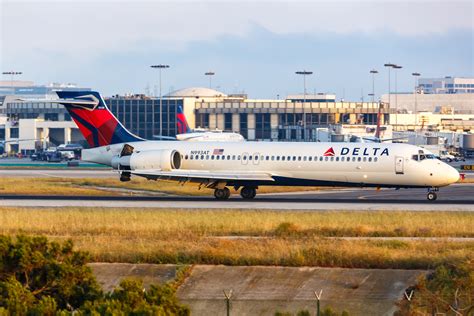
Delta Air Lines offers a textbook example. Its fleet of Boeing 717s, many inherited from AirTran, continues flying largely because the aircraft are owned outright. With no capital costs attached, Delta can operate these jets profitably while gradually transitioning to Airbus A220s. The decision is not nostalgic; it is financially disciplined.
Maintenance Costs and the Reality of Aging Airframes
As aircraft age, maintenance becomes the dominant cost driver. While routine checks are predictable, heavy maintenance events can radically alter the retirement calculus. The most significant of these is the D check, the most comprehensive inspection an aircraft undergoes.
D checks typically occur every six to ten years and involve stripping the aircraft down to its bare structure. Engines, landing gear, interiors, wiring, and systems are removed, inspected, repaired, or replaced. The process can ground an aircraft for up to six weeks and cost several million dollars.
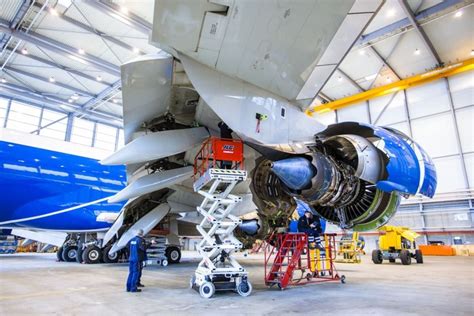
For many airlines, the decision to retire an aircraft coincides precisely with a looming D check. If the projected post-check operating life does not justify the investment and downtime, retirement becomes the financially responsible option. Airlines with extensive in-house maintenance operations, such as Delta TechOps, can stretch aircraft lives further by controlling costs and leveraging scale. Smaller carriers without those capabilities often cannot.
Fuel Efficiency and the Cost of Burning Yesterday’s Technology
Fuel is one of the largest variable costs in airline operations, and older aircraft almost always burn more of it. This reality has driven some of the most visible retirements of the past decade, particularly among four-engine widebodies.
Aircraft like the Boeing 747 and Airbus A340, once icons of long-haul travel, became economically untenable as fuel-efficient twins such as the A350 and Boeing 787 entered service. Even when maintenance costs were manageable, fuel inefficiency made it impossible for older aircraft to compete on thin margins.
Fuel efficiency matters even more during periods of high oil prices or intense competition. Airlines operating in crowded markets cannot afford to fly jets that burn significantly more fuel per seat than their rivals. In such environments, retirement is not optional; it is a survival mechanism.
Cabin Refurbishment and the Hidden Cost of Passenger Expectations
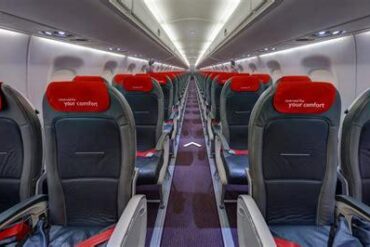
Aircraft interiors age faster than airframes. Seats wear out, inflight entertainment systems become obsolete, and cabin aesthetics drift away from brand standards. Refurbishing an aging aircraft can cost millions of dollars per unit, particularly for long-haul widebodies.
In a well-supplied market, airlines often choose retirement over refurbishment. However, persistent aircraft delivery delays have altered this logic. With replacement aircraft unavailable or years away, airlines are increasingly investing in cabin retrofits to extract additional value from aging fleets.
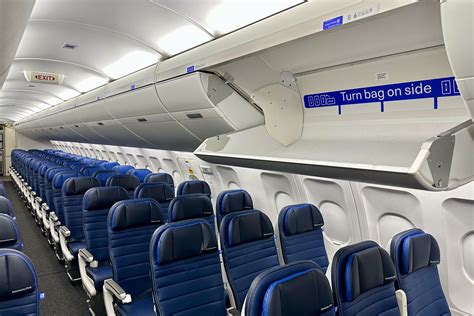
American Airlines’ decision to retrofit its A319 fleet, many of which are over 25 years old, reflects this new reality. Under normal circumstances, these aircraft might already be headed for retirement. Instead, constrained supply has turned refurbishment into a strategic necessity rather than a discretionary expense.
Availability of New Aircraft and Manufacturer Backlogs
Aircraft retirement planning assumes replacement availability. When that assumption breaks, airlines adapt. Manufacturer backlogs, certification delays, and engine reliability issues have made timely replacement increasingly difficult.
Airlines that planned to replace older jets with models like the A220, A321neo, or 787 now face extended delivery timelines. As a result, retirement decisions are delayed, even when operating margins are razor-thin. Aircraft that should have exited fleets years ago remain in service because there is simply nothing ready to take their place.
This bottleneck has reshaped fleet strategies across the industry, forcing airlines to balance short-term inefficiency against long-term network continuity.
Network Demands Can Override Pure Economics
Even when an aircraft is marginally unprofitable, airlines may keep it flying if the network demands it. Certain routes require specific aircraft types due to range, payload, or airport constraints. Retiring an aircraft without a suitable replacement can mean abandoning strategic markets altogether.
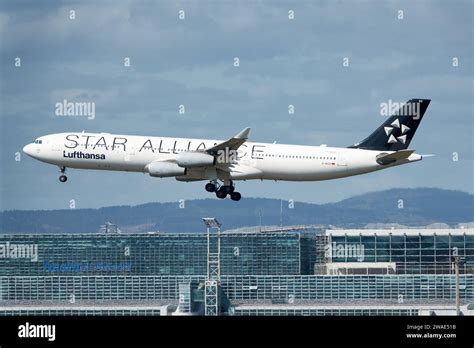
Lufthansa’s continued operation of the Airbus A340 illustrates this tension. While inefficient by modern standards, the aircraft remains essential for maintaining long-haul capacity until delayed 777X and 787 deliveries arrive. In such cases, retirement decisions are postponed not because the aircraft is ideal, but because the network cannot function without it.
Fleet Commonality and the Power of Scale
Airlines with large, standardized fleets enjoy economies of scale that can significantly extend aircraft life. Commonality reduces training costs, spare parts inventory, and maintenance complexity. It also allows airlines to rotate aircraft efficiently and absorb disruptions.
Southwest Airlines exemplifies this approach. Operating an all-737 fleet, the airline retired its last 737-300 only recently and continues to fly hundreds of 737-700s with high cycle counts. The aircraft remain viable because the surrounding ecosystem—pilots, parts, maintenance—has been optimized around them.
Upgauging Strategies Accelerate Retirement
Some retirements are driven not by failure but by ambition. As airlines upgauge fleets to larger aircraft, smaller variants are retired earlier than their economic lifespan would otherwise dictate.
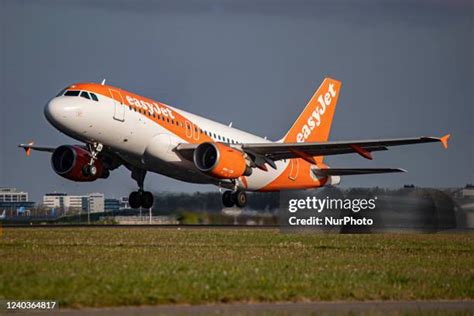
easyJet’s accelerated retirement of the A319 demonstrates this trend. By shifting toward A320neo and A321neo aircraft, the airline increases seat capacity and lowers per-seat costs. The smaller A319s, while still serviceable, no longer fit the airline’s growth strategy.
Macroeconomic Shocks Can Rewrite Every Plan Overnight
No fleet plan survives a global crisis intact. Major macroeconomic shocks can force airlines to retire aircraft en masse, regardless of age or condition. The bankruptcies following 9/11 triggered early retirements across U.S. fleets as airlines scrambled to cut costs and shed debt.
The COVID-19 pandemic amplified this effect on an unprecedented scale. With demand collapsing, airlines accelerated retirements that might otherwise have taken a decade. Entire aircraft types disappeared almost overnight.
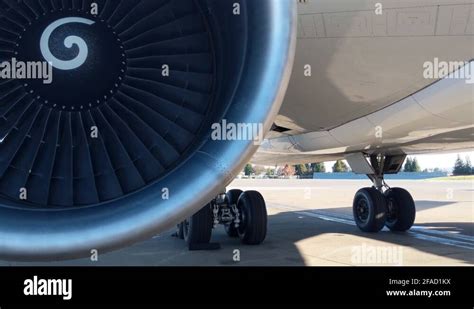
During the pandemic, airlines around the world retired fleets including Boeing 747s, Airbus A380s, A340s, 757s, and MD-88s, often years earlier than planned. The decision was not about efficiency alone; it was about survival.
What Happens After an Aircraft Is Retired
Retirement does not always mean the end of an aircraft’s story. Many jets find second lives through resale, leasing, or conversion.
Relatively young aircraft often transition to new operators. When Singapore Airlines retired its A330s, many were under ten years old and quickly entered service with carriers such as Air Canada, Brussels Airlines, and AirAsia.
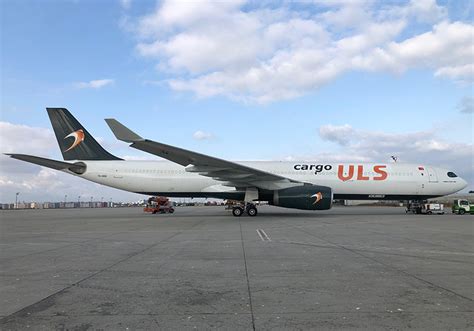
Others undergo passenger-to-freighter conversion, a booming segment of the market. More than 100 aircraft per year are converted, with A330 freighters rapidly gaining popularity. Amazon Prime Air’s growing A330 converted fleet highlights how retirement from passenger service can mark the beginning of a profitable second career.
When no viable reuse exists, aircraft are sent to desert storage and dismantling facilities such as Pinal County Airpark or the Mojave Air and Space Port. There, valuable components are harvested, and up to 90% of the aircraft is recycled.
Retirement as Strategy, Not Sentiment
Aircraft retirement is one of the most strategic decisions an airline makes. It blends economics, engineering, forecasting, and risk management into a single judgment call. Age is merely a data point; profitability is the verdict.
In an era of constrained supply, volatile fuel prices, and unpredictable global events, airlines are increasingly forced to extract maximum value from every airframe. Some aircraft will fly longer than expected, others will vanish abruptly, but none will leave service by accident.
Fleet retirement is not about letting go of the past. It is about making room for the future, one carefully calculated decision at a time.