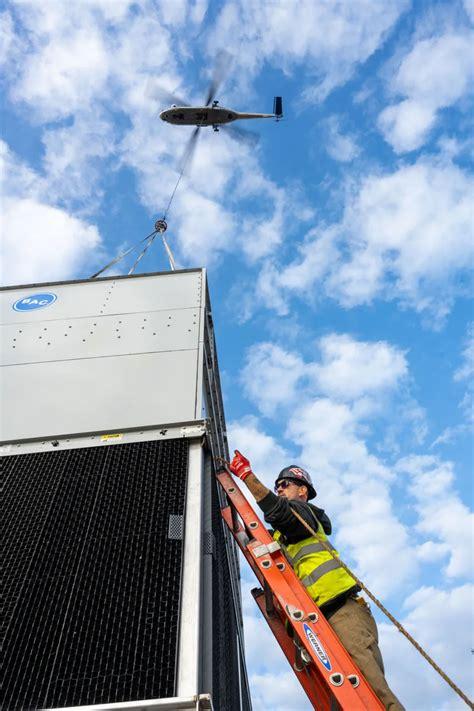
In the world of commercial HVAC installations, few operations demand the precision, coordination, and raw expertise of a helicopter lift. When traditional cranes fall short due to limited access, complex architecture, or height restrictions, helicopters emerge as the ultimate logistical solution. These lifts represent the convergence of aerial finesse, technical mastery, and rugged on-the-ground coordination, redefining how rooftop units (RTUs) are deployed in urban and remote environments alike.
The spectacle of a helicopter maneuvering massive RTUs onto rooftops with surgical accuracy captures both the imagination and respect of construction professionals. But beyond the visual drama lies a deeply technical process—where cost, safety, speed, and strategic foresight all intertwine to deliver unmatched performance.
Precision in Motion: The Art of the Helicopter Lift
Executing an HVAC helicopter lift is not just a matter of flying overhead and lowering a load. The process begins with meticulous pre-planning, accounting for factors ranging from rotor wash and fuel weight to rigging requirements and weather fluctuations. Helicopter pilots, often likened to aerial artists, demonstrate a rare balance of nerve and nuance.
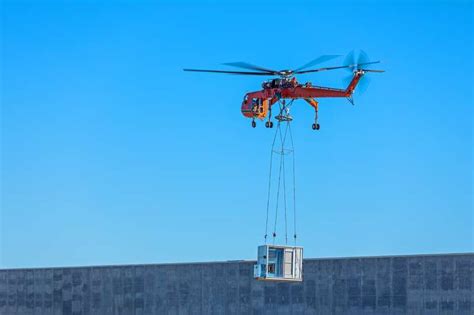
In one documented case, a skilled pilot was able to place fifty RTUs on a roof in a little over an hour, with cycle times averaging just ten minutes per unit. In another instance, 45 units were set in one afternoon, underscoring the unmatched pace that helicopters can deliver when compared to conventional crane lifts.
This level of efficiency comes from refined technique—applying just enough lift to clear obstacles without destabilizing the load or endangering ground crew. A moment captured between 1:35–1:38 of an on-site video shows a spotter warning a technician of a dangerous pinch point, where even a brief gust or unexpected rotor reaction could have turned fatal. The coordination between air and ground crews in these moments is nothing short of life-preserving.
Ground Crew Safety: Trust, Timing, and Tactical Awareness
On the ground, the crew must operate with synchronized precision. Personal Protective Equipment (PPE) debates abound, particularly around hard hat usage—with concerns that hats may be dislodged by rotor wash versus the undeniable need for head protection. Tactical decisions, such as using channel locks to release hooks, are often made to minimize time under load and exposure to risk.
Spotters, riggers, and lift supervisors must work in flawless unison. The dangers are real: a misstep near a pinch point could result in a worker being trapped, dragged, or crushed between a swinging unit and a rooftop wall. It’s here that the trust between pilot and crew becomes paramount. This is the domain of professionals, where hesitation has no place and communication is the invisible rope holding the team together.
Cost Calculations: More Than Meets the Eye
On the surface, helicopter lifts appear expensive, often billed as thousands of dollars per hour. However, seasoned contractors understand the deeper cost-benefit analysis. As one industry veteran puts it: “Expensive by the hour, cheap by the job.”
Where cranes might require extensive setup, road closures, and large crews, helicopters offer rapid deployment and minimal ground interference. In locations such as malls, tight urban environments, parking decks, and tree-dense areas, helicopters are often the only viable option.
Consider the following real-world comparisons:
- A crane job priced at $3,500 for 11 light rooftop units was outpaced by a helicopter lift costing $14,000 for 13 units—a significantly higher rate per hour, but with faster completion and no need for heavy ground equipment.
- In Connecticut, helicopter jobs have been completed at around $15,000 for 10-unit installations.
- A particularly compelling case saw a helicopter undercut a crane’s quote by $2,000, even for dual 150-foot lifts of two 5-ton gas packs.
These numbers illuminate the broader truth: in the right context, helicopter lifts can be not only competitive but cost-saving.
Extreme Environments and Specialized Use Cases
Helicopters aren’t just for standard rooftop HVAC replacements. Their agility allows them to serve high-altitude, remote, and uniquely challenging jobs.
In Oregon’s logging operations, helicopters have been employed with under 10-second turnarounds, extracting logs from thick canopies with no road access. One lift was even attempted to hoist a 100-foot antenna onto a 700-foot tower, an endeavor abandoned only due to shifting wind conditions—a vivid example of the helicopter’s role as the last resort for extreme precision jobs.
In offshore work, helicopters have been used for tasks like valve adjustments on oil rigs, where a single 12-hour day can mean success or catastrophe. These aren’t merely construction events—they’re tactical operations carried out under the pressure of time, terrain, and risk.
Aircraft, Equipment, and Operational Considerations
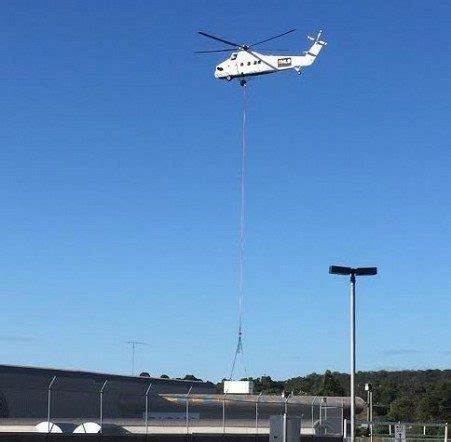
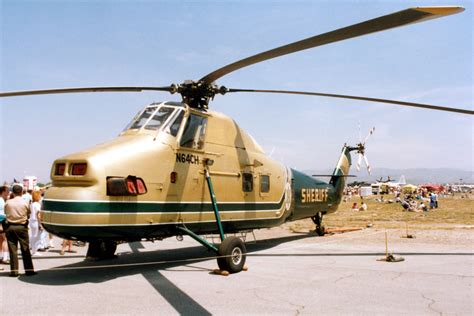
The most commonly used helicopters for HVAC lifts include models like the Sikorsky S58T, a turbine-powered workhorse favored for its power-to-weight efficiency. Rigging time is remarkably short, with crews often turning around units in minutes. Yet, fuel weight, static grounding, and rotor wash velocity all factor into delicate in-air decisions.
Helicopter teams must calculate every lift with mathematical precision. Overlooking rotor wash impacts could lead to damage of fragile building elements, while ignoring static buildup risks equipment shock or crew injury. These are not operations left to chance. A rigorous checklist governs every mission, where discipline and repetition meet innovation.
Navigating Limitations: When Not to Use a Helicopter
Despite their capabilities, helicopters aren’t always the best choice. Cranes may still win out in straightforward jobs with easy access and limited elevation. In scenarios where budget constraints dominate and time is more flexible, ground-based options retain their edge.
Some contractors resort to manual solutions such as rope teams for lightweight installations—like those sourced through Home Depot’s rental services—but these are seldom viable for anything beyond residential or light commercial scale. Similarly, gantry cranes, while cost-effective, are impractical on uneven rooftops or restricted urban lots.
Ultimately, helicopter lifts shine brightest where complexity and access converge—not as an everyday tool, but as a strategic asset.
Iconic Locations and High-Profile Lifts
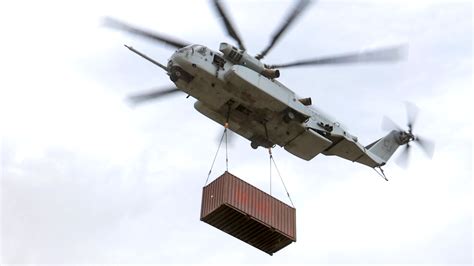
Helicopter lifts have graced the skies of Annapolis Mall, tackled skyscraper installs in Chicago, and delivered signage atop Cowboy Stadium. Each of these projects demanded more than brute force—they required elevated ingenuity and cross-disciplinary coordination.
These high-profile lifts have cultivated a kind of mythos in the industry. Workers talk of the “pucker factor”—that moment when all eyes are on the air, waiting to see a unit land squarely in place. Even seasoned crews admit a thrill, tempered only by trust in their aerial counterpart.
Community Reactions and Industry Respect
There’s a communal awe that surrounds helicopter lifts. Online videos and job site anecdotes are peppered with phrases like “That’s one smoove heli pilot” and “I’d give anything to be on a heli job.” These reactions aren’t just about spectacle—they reflect a deep respect for professionalism under pressure.
That respect is earned. Every successful lift represents a harmony of technology, planning, and execution—where failure is never an option, and success means doing the impossible on a tight deadline, within inches of error.
Conclusion: Elevating Possibility, One Lift at a Time
HVAC helicopter lifts are more than just high-stakes logistics—they are a pinnacle of construction artistry. When cranes can’t cut it, when time is of the essence, and when precision matters most, helicopters answer the call. Their cost is offset by unmatched speed, their danger tempered by elite skill, and their spectacle matched only by their results.
In an industry where the margin for error is narrow and expectations are sky-high, the helicopter lift stands as the ultimate expression of control, coordination, and confidence.