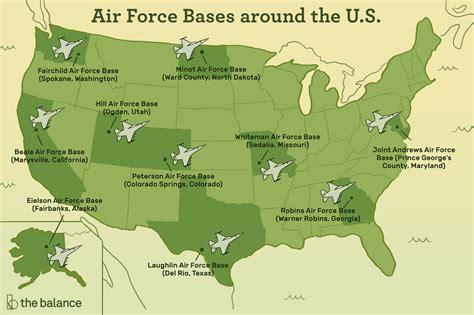
The United States Air Force (USAF) operates on a scale that is difficult to comprehend until you examine the sheer size of its largest installations. These bases are not just military outposts—they are self-contained cities, economic engines, training ecosystems, and strategic nerve centers that sustain American global airpower. With more than 300,000 active-duty personnel, the Air Force relies heavily on a handful of massive bases where operations, logistics, research, and training converge.
What makes these installations extraordinary is not just their size, but their population density and operational diversity. From pilot training pipelines and cyber warfare hubs to weapons development labs and rapid global mobility platforms, these bases form the backbone of U.S. military readiness. The following seven installations represent the largest Air Force bases in the United States by population, each with a mission profile as expansive as its workforce.
Joint Base San Antonio — The Largest Military Community in America
Joint Base San Antonio (JBSA) stands as the largest Department of Defense installation by population, a sprawling military complex that merges three historically significant facilities: Fort Sam Houston, Lackland Air Force Base, and Randolph Air Force Base. Together, they form a mega-installation supporting approximately 67,000 personnel, making it less of a base and more of a military metropolis.
This immense population includes active-duty members from every branch, along with tens of thousands of civilians, contractors, and reservists. JBSA is a prime example of how modern military infrastructure has evolved into joint-service ecosystems, where interoperability is not just encouraged—it is essential.
The base’s most recognizable function lies at Lackland, the sole training site for all Air Force and Space Force enlisted recruits. Every enlisted airman begins their journey here, passing through the rigorous Basic Military Training pipeline. The scale is staggering: over 80,000 trainees graduate annually, making it the busiest training hub in the Air Force.
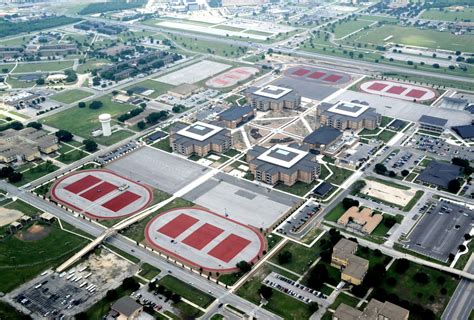
Meanwhile, Randolph Air Force Base serves as the headquarters for Air Education and Training Command, often referred to as the “First Command” because it shapes the future of the entire service. It is here that instructor pilots, drone operators, and sensor specialists are trained—roles that define modern warfare.
JBSA also hosts the Sixteenth Air Force, the service’s cyber and information warfare arm, signaling a shift toward digital dominance and intelligence superiority. Add to that the presence of international training programs and language institutes, and JBSA becomes a global military classroom as much as a warfighting hub.
Joint Base Elmendorf-Richardson — Arctic Power Projection at Scale
Located in Anchorage, Alaska, Joint Base Elmendorf-Richardson (JBER) represents one of the most strategically positioned installations in the world. With a population exceeding 40,000 personnel, it serves as a frontline defense platform for U.S. interests in both the Arctic and Indo-Pacific regions.
JBER’s importance lies in geography. Positioned at the crossroads of North America and Asia, it enables rapid response capabilities against potential threats approaching from the northern hemisphere. Its operational tempo reflects this reality, with fighter jets regularly conducting intercepts of foreign aircraft near Alaskan airspace.
At the heart of its airpower is the 3rd Wing, operating a diverse fleet including F-22 Raptors, C-17 transport aircraft, and E-3 AWACS surveillance planes. This combination allows JBER to deliver air superiority, strategic lift, and airborne command-and-control from a single location.
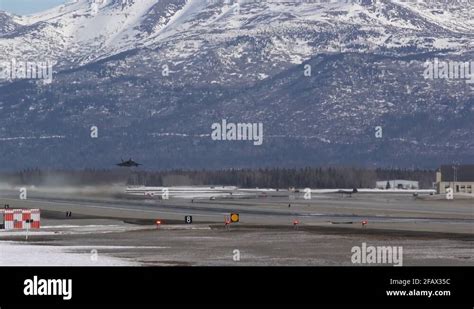
Beyond combat operations, JBER plays a critical role in search and rescue missions, particularly in the unforgiving Alaskan wilderness. Aircraft like the HC-130J and HH-60G helicopters conduct life-saving operations under extreme conditions, reinforcing the base’s humanitarian importance.
The integration of Air Force and Army units creates a joint operational environment where air and ground forces train together seamlessly. This synergy enhances readiness and ensures that JBER remains a cornerstone of U.S. defense strategy in the north.
Wright-Patterson Air Force Base — The Brain of the Air Force
Wright-Patterson Air Force Base, located near Dayton, Ohio, is not just large—it is intellectually dominant. With a workforce of around 38,000 personnel, this base is the epicenter of Air Force research, development, and acquisition.
Unlike other installations focused primarily on operations, Wright-Patterson is where the Air Force thinks, designs, and innovates. It houses the headquarters of Air Force Materiel Command, responsible for managing weapon systems from initial concept to final deployment. This “cradle-to-grave” oversight ensures that every aircraft, missile, and system meets the highest standards of performance and reliability.
The base is also home to the Air Force Research Laboratory (AFRL), a powerhouse of scientific innovation. From advanced propulsion systems to cutting-edge materials and artificial intelligence, AFRL drives the technologies that will define future air combat.
Equally critical is the National Air and Space Intelligence Center, which analyzes foreign aerospace threats. This intelligence capability provides decision-makers with actionable insights into adversary capabilities, ensuring that the U.S. maintains a strategic edge.
Wright-Patterson’s workforce is heavily civilian, highlighting the increasing role of technical expertise and industrial capability in modern warfare. This base is less about launching aircraft and more about building the future of airpower itself.
Hill Air Force Base — Logistics Powerhouse and F-35 Backbone
Hill Air Force Base in northern Utah is a logistical giant, supporting a workforce of approximately 27,000 personnel. It serves as one of the Air Force’s most important centers for maintenance, sustainment, and modernization.
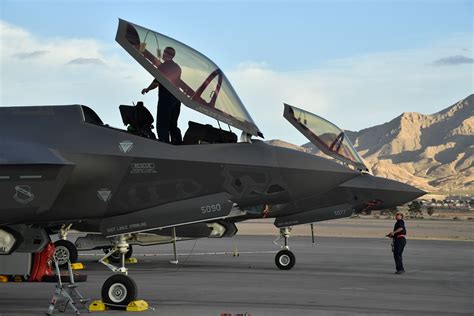
At the core of Hill AFB’s operations is the Ogden Air Logistics Complex, a massive industrial operation responsible for maintaining some of the Air Force’s most critical platforms, including the F-35 Lightning II, F-22 Raptor, F-16, and A-10. This is where aircraft are rebuilt, upgraded, and returned to combat-ready status.
Hill AFB also plays a central role in the nation’s nuclear deterrence strategy. It supports the Minuteman III intercontinental ballistic missile system and is deeply involved in the development of the next-generation Sentinel ICBM program.
The base’s operational reach extends to the Utah Test and Training Range, the largest overland supersonic test area in the continental United States. This vast airspace allows for realistic, high-speed weapons testing and combat simulations that cannot be replicated elsewhere.
Hill’s importance lies in its ability to keep the Air Force’s fleet ready, reliable, and technologically relevant—a mission that becomes increasingly complex as aircraft systems grow more advanced.
Eglin Air Force Base — The Testing Ground of American Firepower
Eglin Air Force Base, located in Florida’s panhandle, is unique in that it is the largest Air Force base by land area and supports a population of over 20,000 personnel. Its mission is centered on testing and developing air-delivered weapons, making it one of the most critical installations for combat readiness.
The base is home to the 96th Test Wing, which evaluates everything from bombs and missiles to navigation and targeting systems. This ensures that every weapon deployed by the Air Force is precise, reliable, and combat-effective.
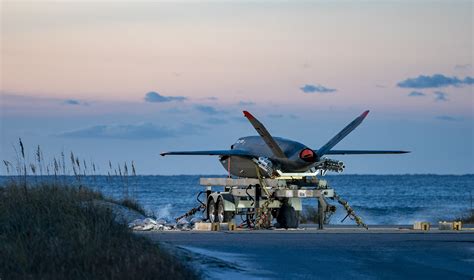
Eglin also hosts the Munitions Directorate, a global leader in weapons research. Here, engineers and scientists work on next-generation technologies that enhance lethality and survivability on the battlefield.
One of the base’s standout roles is training pilots and maintainers for the F-35 program. The 33rd Fighter Wing serves as a joint training unit for multiple branches, reflecting the aircraft’s importance across the U.S. military.
Eglin’s influence extends beyond the Air Force. It supports Army Special Forces and Ranger training, as well as Air Force Special Operations units. This makes it a multi-domain testing and training environment, where innovation meets real-world application.
Nellis Air Force Base — The Ultimate Combat Training Arena
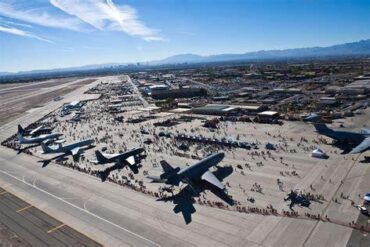
Nellis Air Force Base, located near Las Vegas, Nevada, is synonymous with elite combat training. With a population of around 14,000 personnel, it serves as the Air Force’s premier center for advanced aerial warfare exercises.
Known as the “Home of the Fighter Pilot,” Nellis hosts the legendary Red Flag exercises, where pilots experience realistic combat scenarios designed to replicate modern warfare. These exercises are widely regarded as some of the most challenging and effective training programs in the world.
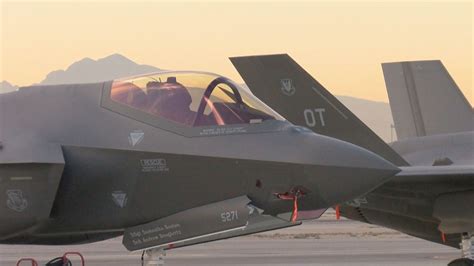
The base also oversees the Nevada Test and Training Range, a vast 5,000-square-mile area that provides unmatched opportunities for live-fire exercises and electronic warfare training.
Adding to its prestige, Nellis is home to the USAF Thunderbirds, the Air Force’s elite demonstration squadron. Their precision flying showcases not only pilot skill but also the capabilities of American fighter aircraft.
Nellis is where theory meets reality—where pilots transition from training to combat-ready warfighters in an environment that pushes them to their limits.
Travis Air Force Base — Gateway to Global Mobility
Travis Air Force Base in northern California rounds out the list with a population of approximately 13,000 personnel. Despite being the smallest on this list, its operational impact is immense. Known as the “Gateway to the Pacific,” Travis is the busiest air mobility hub in the U.S. military.
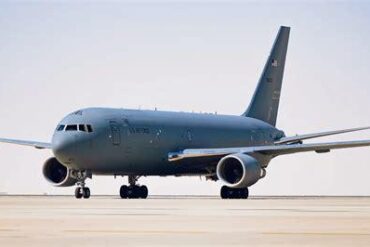
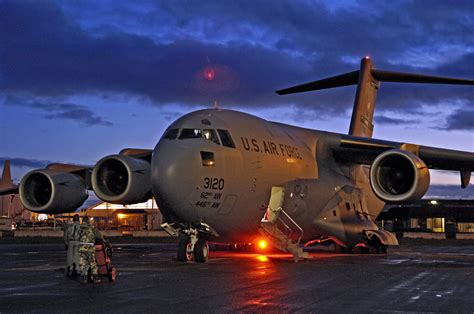
The base’s mission revolves around rapid global mobility, enabling the Air Force to transport troops, equipment, and supplies anywhere in the world at a moment’s notice. The 60th Air Mobility Wing operates a fleet that includes the C-5 Galaxy, C-17 Globemaster III, and KC-46 Pegasus, providing unmatched strategic reach.
Travis is also home to the David Grant Medical Center, one of the Air Force’s premier healthcare facilities. This adds a critical medical readiness component to its operational capabilities.
What sets Travis apart is its speed and flexibility. The base can deploy specialized teams within hours, ensuring that the U.S. can respond to crises—whether military or humanitarian—anywhere on the planet.
Why Population Size Defines Strategic Importance
The size of these bases is not accidental—it reflects the complexity of modern air warfare. Larger populations enable greater specialization, from cyber operations and intelligence analysis to aircraft maintenance and pilot training. These installations function as integrated ecosystems, where every role contributes to mission success.
In an era where warfare spans air, space, cyber, and information domains, the Air Force relies on these massive hubs to maintain its global edge. Population size becomes a proxy for capability, indicating how much operational, logistical, and technological power can be concentrated in a single location.
The Backbone of American Air Superiority
From the training grounds of Joint Base San Antonio to the research labs of Wright-Patterson and the combat arenas of Nellis, these seven bases collectively define the operational backbone of the United States Air Force. Each one plays a distinct role, yet all are interconnected in a vast network designed to project power, ensure readiness, and maintain technological superiority.
Their scale is a reminder that modern military strength is not just about aircraft or weapons—it is about people, infrastructure, and integration. These bases are where strategy becomes reality, where innovation meets execution, and where the future of airpower is continuously shaped.
Understanding them is not just about knowing where the Air Force operates—it is about recognizing how global dominance in the skies is built, sustained, and evolved.